

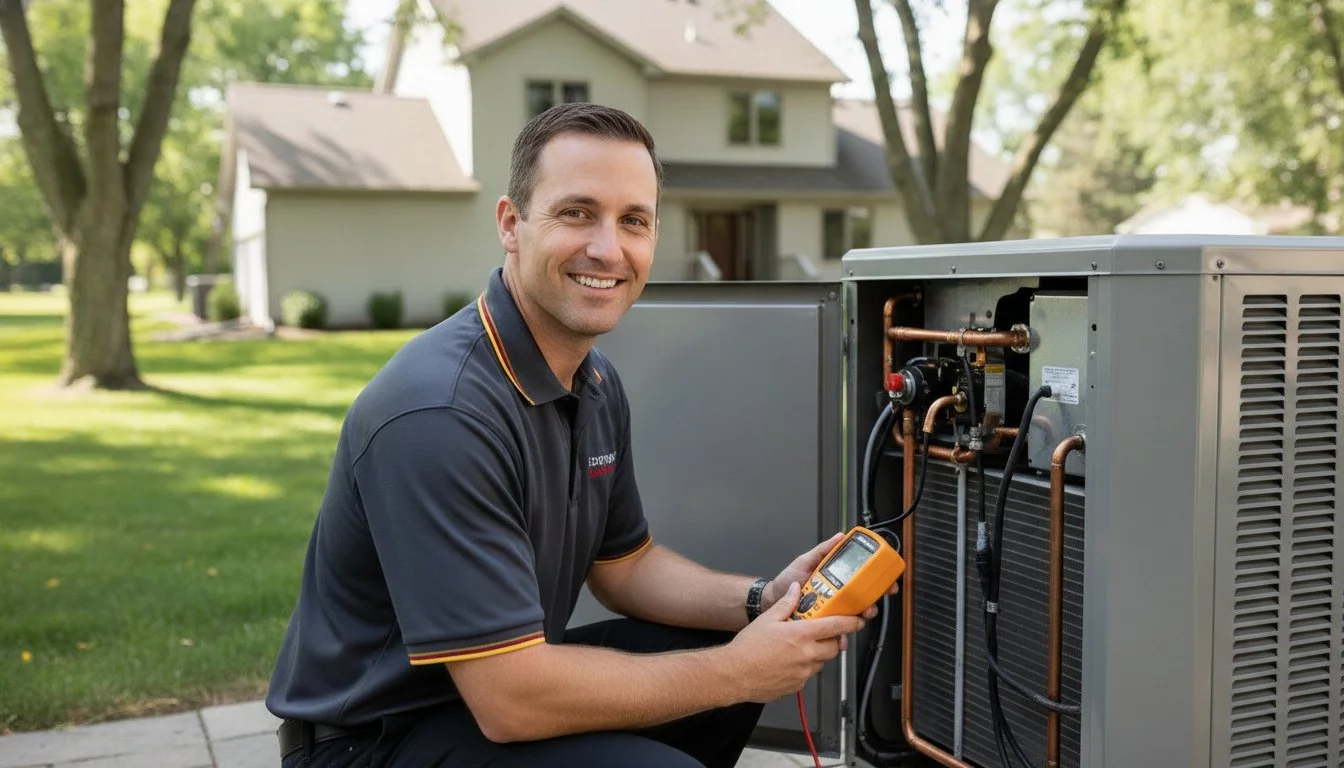
Air conditioner Blaine Best Practices and Expert Advice
Imagine tossing and turning at 2 AM because the heavy Blaine humidity has turned your bedroom into a literal sauna. It's a miserable experience that many of our neighbors face when a cooling system fails during the peak of a Minnesota summer. You want your home to be a sanctuary, but right now, it's just a source of heat and stress. When you're searching for reliable air conditioner repair in Blaine, you're often caught between the need for immediate relief and the fear of being pressured into an expensive full system replacement you might not actually need.
We understand that transparency is just as important as technical skill. You deserve an honest assessment of whether your unit can be saved or if 2026 energy standards make a replacement the wiser long-term choice. This guide provides expert troubleshooting tips and local insights to help you restore your cooling quickly. We'll walk you through the latest refrigerant regulations, explain local permitting requirements, and give you the confidence to make an informed decision for your family's comfort.
Key Takeaways
Use the Rule of 5,000 to determine if your cooling system is worth fixing or if a replacement is the more cost-effective path.
Perform four simple troubleshooting steps, like checking for a frozen coil, to potentially resolve issues without a service fee.
Learn why an honest air conditioner repair in Blaine starts with a neighborly diagnostic visit that values transparency over aggressive sales tactics.
Understand how Blaine’s specific climate and high summer humidity impact your system’s evaporator coil and overall cooling efficiency.
Table of Contents
Common Causes for Air Conditioner Failure in Blaine, MN
Air conditioner repair in Blaine is about more than just making the air feel cold. It's the technical process of restoring your system’s ability to move heat out of your home while simultaneously managing indoor moisture levels. Modern HVAC systems are designed to balance temperature and air quality. When one component fails, it often impacts your home's entire climate. In our North Metro community, we see specific patterns of failure that differ from other regions, largely due to our unique environmental stressors and high seasonal humidity.
When we perform an inspection, we look at the system as a whole. Effective repair involves addressing cooling capacity, air filtration, and moisture control. If your system isn't pulling water out of the air, your home won't feel comfortable regardless of what the thermostat says. Local factors like heavy pollen and frequent summer storms add layers of complexity to these mechanical systems.
The Role of Humidity in Minnesota Cooling Systems
Minnesota summers are famous for their "sticky" days. Your air conditioner acts as a giant dehumidifier for your Blaine home. As warm air passes over the cold evaporator coil, moisture condenses and drains away through a specialized line. High humidity puts immense strain on this process. If airflow is restricted or refrigerant levels are off, that moisture can actually freeze on the coil. You might see ice on the unit even when it's 90 degrees outside. Signs of a humidity struggle include a musty smell, damp-feeling skin despite a low temperature setting, or water pooling around the indoor furnace base. These drainage clogs are common culprits that require professional attention to prevent water damage.
Environmental Factors: Cottonwood and Dust in the North Metro
Blaine is a beautiful place to live, but the local flora can be brutal on mechanical equipment. The "Cottonwood Effect" is a major local issue we see every year. During late spring and early summer, white fluff from cottonwood trees acts like a thick blanket for your outdoor condenser unit. It clogs the delicate fins and prevents the unit from releasing heat into the outside air. A clogged condenser is a primary cause of compressor overheating and eventual motor failure. Regular condenser cleaning is the most effective way to prevent an emergency air conditioner repair in Blaine. Beyond seeds, summer storms often bring power surges that fry sensitive circuit boards. We often find homeowners left in the heat after a lightning strike or utility flicker damages the system's electrical components.
Repair vs. Replace: Making the Right Call for Your Cooling System
One of the biggest stresses for homeowners is the fear of being pressured into a full system replacement when they only called for a quick fix. We believe in providing the facts so you can make the choice that fits your budget and comfort. Not every breakdown requires a new unit. In many cases, a targeted air conditioner repair in Blaine can get your system back to peak performance without the high cost of a total overhaul. Our goal is to be your trusted neighbor, not a high-pressure salesperson.
To help our neighbors decide, we often suggest the Rule of 5,000. It's a simple calculation where you multiply the age of your unit by the estimated repair cost. If the result is over 5,000, the investment in a new system often outweighs the cost of keeping an aging unit on life support. For example, a $600 repair on a 10 year old unit equals 6,000, suggesting that your money might be better spent on an upgrade. If you are unsure where your system stands, getting an honest HVAC assessment from a local professional is the best first step.
The industry is also undergoing significant regulatory shifts that impact this decision. As of January 1, 2025, new residential units are prohibited from using R-410A refrigerant. The new standard focuses on R-454B or R-32, which are more environmentally friendly. If your current system uses the older R-22 refrigerant, which was phased out in 2020, repairs involving the cooling agent have become incredibly expensive due to limited supply. In these cases, even a minor leak might make a replacement more logical than a temporary patch.
Minnesota homeowners should also consider the long-term energy savings of modern equipment. As of 2026, new central air conditioners in our state must meet a minimum SEER2 rating of 13.4. Older systems often operate at much lower efficiency levels, meaning you pay more every month just to keep the house at the same temperature. Following basic AC maintenance tips from Nationwidecan often extend the life of your unit, but it won't change the underlying efficiency of an outdated model.
When a Repair Makes Perfect Sense
Minor component failures are often very affordable to fix. We frequently see issues with capacitors, contactors, or fan motors that can be swapped out quickly to restore cooling. If your system is under 10 years old and still covered by a manufacturer warranty, a repair is almost always the best path. A simple recharge and leak fix can sometimes buy you two or three more seasons of reliable comfort while you plan for a future upgrade.
Signs It Is Time for a New AC Installation
If your system breaks down during the hottest July weeks in Blaine for the third year in a row, it's telling you something. Reliability is a major factor in home comfort. When the cost of a single repair exceeds 50% of the value of a new, high-efficiency unit, you're likely throwing good money after bad. For those ready to explore more reliable options, we provide detailed information on AC Installation Blaine MN: Professional Cooling Solutions.
What to Expect During a Professional AC Repair Visit
When your cooling system fails, the last thing you need is a technician who talks down to you or hides the final price until the job is finished. We believe a service call should feel like a visit from a helpful neighbor who happens to be an expert in mechanical systems. Professionalism without the ego is our standard. When you schedule an air conditioner repair in Blaine, our goal is to provide a clear, stress-free path back to a cool home. We prioritize transparency, which is why we always provide a firm, upfront quote after the diagnosis but before any actual repair work begins.
Every visit starts with a diagnostic fee. This fee is necessary because it covers the time, expertise, and specialized equipment required to perform a comprehensive system health check. Rather than just guessing which part failed, we conduct a multi-point inspection that looks at refrigerant levels, electrical connections, and system airflow. This thoroughness ensures we fix the root cause of the problem, not just the most obvious symptom. By the time we present our findings, you'll have a complete picture of your unit's condition.
The Diagnostic Phase: Finding the Root Cause
Our technicians start by testing your thermostat for proper calibration. It's common for a perfectly good AC unit to "fail" simply because the thermostat is sending the wrong signals. From there, we move to the "brain" of the unit, inspecting the control board and internal wiring for signs of wear or electrical damage. If we suspect a leak, we use electronic leak detectors and other specialized tools to find microscopic holes in the evaporator or condenser coils. This precision prevents you from paying for multiple "recharges" that never actually solve the underlying issue.
The Repair and Testing Phase
Efficiency is key when you're stuck in a hot house. Most common issues encountered during an air conditioner repair in Blaine, such as a bad capacitor or a clogged drain line, are resolved in under two hours. Once the component is replaced, we don't just pack up and leave. We perform post-repair testing to verify the "Delta T," which is the temperature drop across the cooling coil. This confirms the system is actually performing at its rated capacity. Finally, we focus on the details, cleaning up our workspace and treating your home with the respect it deserves. You won't be left with a mess to clean up after we leave.
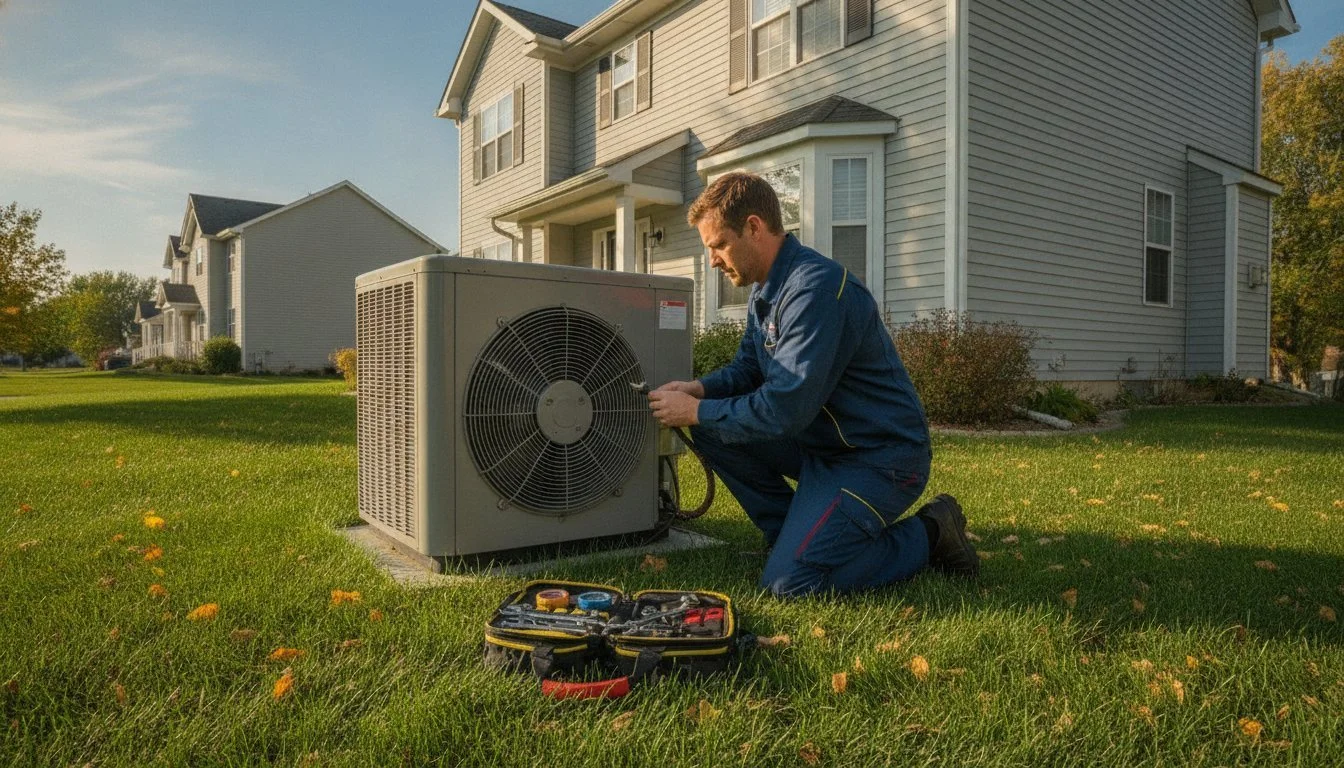
Comprehensive HVAC Maintenance Plans in Andover, MN: Protect Your Home’s Comfort
Would you rather invest in a predictable seasonal check-up or face a massive emergency repair bill during the next Minnesota polar vortex? For many families, the stress of a mid-winter furnace failure is a constant worry that keeps them up at night. Securing a reliable hvac maintenance plan Andoverneighbors depend on is the most effective way to turn that anxiety into peace of mind. You shouldn't have to deal with pushy sales tactics or confusing corporate jargon just to keep your home safe and warm.
We understand that your priority is a system that works without breaking the bank. Regular maintenance does more than just prevent breakdowns; it lowers your monthly utility bills and ensures your family is protected from carbon monoxide risks. In this article, you will discover how professional inspections validate your equipment warranties and provide priority service during the busiest times of the year. We will break down the specific benefits of local upkeep so you can make an informed decision for your home's long-term comfort and safety.
Key Takeaways
Discover how a proactive hvac maintenance plan Andover families rely on protects your home from the "Minnesota Stress Test" of extreme weather.
Learn the specific components checked during a multi-point inspection to keep your furnace, AC, and garage heaters running safely.
See how regular professional care can extend the lifespan of your heating and cooling systems by three to five years.
Find out the best times of year to schedule North Metro seasonal maintenance to avoid the rush and ensure priority service.
Understand the long-term value of partnering with a community-focused expert dedicated to honest advice and transparent pricing.
Table of Contents
Why Andover Homeowners Need a Proactive HVAC Maintenance Plan
The Real ROI: Maintenance Plan Costs vs. Emergency Repair Expenses
C&M Heating and Air: Your Trusted Partner for HVAC Maintenance Since 1984
Why Andover Homeowners Need a Proactive HVAC Maintenance Plan
Choosing a comprehensive Heating, ventilation, and air conditioning (HVAC)maintenance plan is more than just a quick check; it's a scheduled professional service agreement designed to keep your home's most vital systems running at peak performance. Think of it as a proactive partnership. Instead of waiting for a crisis, you're investing in the longevity of your furnace and AC. For families in the North Metro, an hvac maintenance plan Andover neighbors trust acts as a shield against the unpredictable climate we live in.
Our local equipment faces what we call the "Minnesota Stress Test." In January, your furnace might run for 20 hours a day to fight off -20 degree temperatures. By July, your air conditioner is battling heavy humidity and 90 degree heat. These extreme swings put immense strain on mechanical components. Common parts that fail under this pressure include:
Blower motors struggling with restricted airflow;
Capacitors that lose their charge in high heat;
Ignitors that wear out from frequent cycling;
Condensate lines that clog during humid spells.
Without regular intervention, these parts wear down prematurely. This leads to "The Big Breakdown" on the coldest night of the year when technicians are most in demand. Maintenance is your primary defense against these expensive and stressful emergencies.
The Safety Factor: Carbon Monoxide and Electrical Risks
Your furnace is a combustion appliance. If a heat exchanger develops a hairline crack, it can leak carbon monoxide into your living space. A professional tune-up includes a rigorous inspection to identify these hidden dangers before they become life-threatening. On the cooling side, we inspect electrical connections in your outdoor unit. Loose wiring or failing capacitors can lead to electrical fires or total system failure. Professional inspections catch 90% of safety issues before they ever trigger a carbon monoxide alarm or smoke detector.
Maximizing Energy Efficiency in the North Metro
Dirt is the enemy of efficiency. When dust accumulates on coils or within the blower assembly, your system has to work harder to move air. Industry data suggests that dirt and debris can increase your energy consumption by up to 15%. By ensuring proper airflow, we reduce the strain on the blower motor and help your system cycle correctly. This efficiency translates directly to lower monthly bills from your local utility providers. A clean system doesn't just run better; it costs significantly less to operate throughout our long heating and cooling seasons.
What’s Included in a Professional Andover HVAC Tune-Up?
Many homeowners believe that a quick DIY filter swap is the extent of necessary upkeep. While changing filters is vital, it doesn't address the complex internal components that actually drive performance. A professional hvac maintenance plan Andover service is a technical deep-dive into your system’s health. We don't just glance at the unit; we perform a professional deep-clean and precision calibration that a standard homeowner cannot do alone. At the end of every visit, you receive detailed documentation of our findings to keep for your warranty records and home history.
The Furnace Maintenance Checklist
Our heating tune-ups focus on efficiency and safety. We clean and adjust the burner assembly to ensure optimal combustion, which prevents fuel waste. Technicians also perform a rigorous inspection of the heat exchanger to look for cracks or fatigue that could lead to dangerous leaks. We finish by testing all safety controls and verifying that your thermostat is calibrated correctly so your home stays exactly at the temperature you set.
The Air Conditioning Maintenance Checklist
Summer in the North Metro brings heavy humidity that forces your AC to work overtime. Following federal guidelines for maintaining your air conditioner, we clean the condenser coils to ensure efficient heat transfer. We also check refrigerant levels and inspect the system for any potential leaks that could damage the compressor. Checking the condensate drain line is vital because it prevents moisture from backing up and causing unexpected water damage in your basement or utility room. If you want to ensure your system is ready for the first heatwave, you can schedule a comprehensive evaluation with our team today.
Indoor Air Quality and Specialized Systems
Minnesota homes require more than just basic heating and cooling. Our maintenance process includes specialized care for the systems that make our winters bearable. This includes:
Whole-home humidifiers: We clean and inspect these to prevent the dry, itchy skin and static electricity common in January.
Garage heaters: We ensure these specialized units are vented correctly and ready to fire up before the first hard freeze hits.
Smart technology: We test air purifiers and confirm your smart thermostat is communicating perfectly with your equipment.
This holistic approach ensures that every part of your climate control system works in harmony. By addressing these specialized systems alongside your main units, we provide a level of comfort that generic maintenance plans often overlook.
The Real ROI: Maintenance Plan Costs vs. Emergency Repair Expenses
Homeowners often ask if a service agreement is truly worth the recurring fee. When you look at the financial logic, the answer is clear. An hvac maintenance plan Andover residents invest in provides a predictable budget line item that replaces the financial shock of a midnight furnace failure. Instead of paying a premium for a technician to rush out during a blizzard, you pay for a planned visit that keeps your system stable. Investing in a plan is essentially an insurance policy for your home's mechanical heart.
Beyond immediate savings, there is the long-term benefit of equipment longevity. Regular professional care typically extends the average lifespan of a furnace or AC unit by three to five years. Replacing a full system is one of the largest expenses a homeowner will face. Pushing that replacement date further into the future saves you thousands of dollars over the life of your home. A well-maintained system simply doesn't have to work as hard to achieve the same results.
Priority service is another high-value perk that often goes overlooked until you need it. When the first major heatwave hits the North Metro, every HVAC company in the area gets flooded with hundreds of calls. Maintenance plan members move to the front of the line. You won't be stuck waiting for days in a sweltering house while a technician works through a massive backlog of non-member repairs. This level of responsiveness is vital when extreme Minnesota weather puts your family's comfort at risk.
Avoiding the "After-Hours" Premium
Emergency calls at 2:00 AM on a Sunday are almost always the result of a small, neglected issue that finally gave out under pressure. Maintenance plans often include discounted or waived diagnostic fees, which significantly lowers the barrier to calling for help when you first notice a strange noise or a slight drop in performance. Having a trusted neighbor on speed dial means you aren't gambling with a random corporate chain that might charge double for a holiday visit. Most emergency repairs are entirely preventable with the type of multi-point inspections we perform during the off-season.
Protecting Your Equipment Warranty
Many homeowners assume their 10-year manufacturer warranty is a blanket guarantee regardless of how they treat the unit. In reality, the fine print usually requires annual professional maintenance to keep that warranty valid. If a major component like a compressor or heat exchanger fails, the manufacturer may ask for documented service records before they honor the claim. C&M provides all the necessary documentation to satisfy these requirements. A failed warranty claim can cost a homeowner thousands in parts and labor; this is a massive financial risk that is easily avoided with a documented hvac maintenance plan Andover service history.
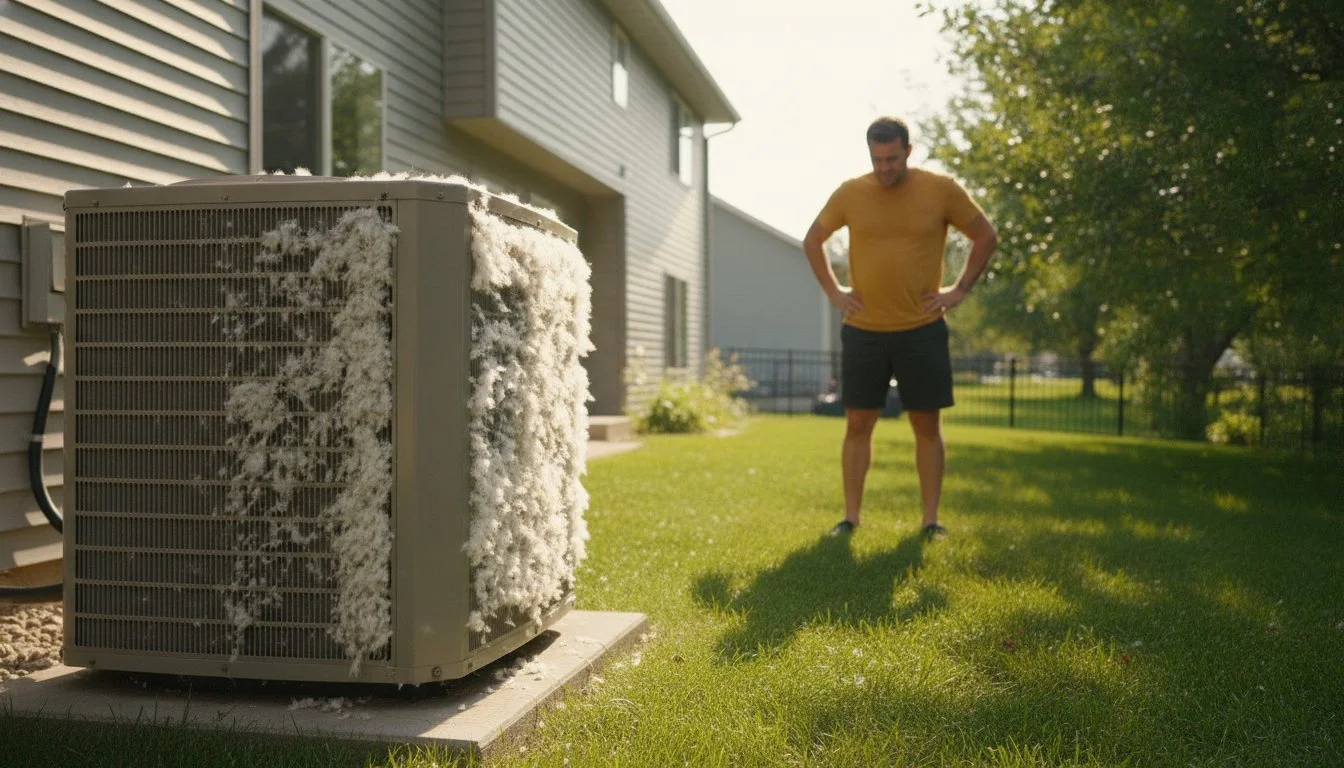
Air conditioner not cooling in house Ham Lake: Everything You Need to Know
You walk into your living room after a long day, expecting a burst of cool air, but instead, you're met with a wall of stagnant Ham Lake humidity. Dealing with no air conditioning in house Ham Lake is more than just an inconvenience; it's a stressful situation that leaves you wondering if you're facing a simple thermostat glitch or a total system collapse. It's completely normal to feel a bit of anxiety about high repair costs or the technical jargon that often comes with HVAC talk during a mechanical emergency.
We understand that you want honest answers and a fast path back to comfort. In this guide, we'll provide you with immediate troubleshooting steps to try before you call for help. You'll also learn about common local causes for AC failure, including how the average 12 to 15 year lifespan of Minnesota units plays a role. We will even cover how new EPA regulations regarding low-GWP refrigerants like R-454B might impact your future cooling choices. By the end, you'll have a clear plan to restore the peace and cool air in your home quickly and reliably.
Key Takeaways
Learn immediate troubleshooting steps, such as verifying thermostat settings, to keep your family comfortable while waiting for a solution.
Identify how local environmental factors like cottonwood seeds and high North Metro humidity lead to no air conditioning in house Ham Lake.
Use the "Rule of 5,000" to make an informed decision between a cost-effective repair and a long-term system replacement.
Understand the importance of a professional assessment that includes testing electrical components and inspecting coils for peak efficiency.
Discover why choosing a neighborly expert with over 40 years of experience ensures your home is treated with local accountability and care.
Table of Contents
Immediate Steps to Take When You Have No Air Conditioning in Ham Lake
Walking into a stifling home at the end of a long day is incredibly frustrating. When you realize there is no air conditioning in house Ham Lake, your first priority should be the safety of your family. High humidity levels in the North Metro can make indoor temperatures feel much higher than the thermostat suggests. Ensure that pets and elderly family members are moved to the naturally coolest part of the home, such as a basement. Stay hydrated while you perform a few quick checks to see if the fix is simpler than you expect.
Start with your thermostat settings. It sounds basic, but it's common for a thermostat to be accidentally bumped to "Heat" or "Fan Only" during cleaning or by a curious child. Confirm that the system is set to "Cool" and the fan is set to "Auto." If the fan is set to "On," it will blow air continuously even when the cooling cycle isn't running, which can make the air feel humid and warm. Next, check your circuit breaker panel. Look for the switch labeled "AC" or "Condenser." If the breaker has tripped to the middle position, flip it all the way to "Off" and then back to "On." If it trips again immediately, don't try to reset it a second time, as this indicates an electrical fault that needs expert attention.
Before heading back inside, take a quick walk to your outdoor condenser unit. Ham Lake yards often feature beautiful landscaping, but tall grass, weeds, or fallen debris can quickly choke your system. For those wondering What is Air Conditioning? in a mechanical sense, it's essentially a heat transfer process. If the outdoor unit is buried in debris, it can't release the heat from your home. Clear away any foliage within two feet of the unit to ensure proper airflow.
Checking Your Air Filter and Vents
A clogged air filter is one of the most frequent causes of a total cooling failure. When air cannot move freely through the filter, the evaporator coil inside your home can actually freeze into a block of ice. If you see frost or ice on the copper refrigerant lines leading into your house, turn the system off immediately. This allows the ice to melt. Replace the dirty filter and ensure all supply vents in your rooms are open and not blocked by furniture or heavy curtains. Blocking vents increases pressure and strain on the entire system.
Thermostat and Power Issues
If your thermostat display is blank or flickering, try replacing the batteries first. Many homeowners forget that these units often rely on battery power to send signals to the AC. You should also check the outdoor disconnect switch, which is usually located in a small metal box mounted on the side of your house near the condenser. Finally, verify that the furnace power switch, which often looks like a standard light switch in your utility room, hasn't been accidentally flipped off. If these steps don't resolve the issue, you likely have a more complex problem causing no air conditioning in house Ham Lake.
Common Causes of AC Failure in the Ham Lake Area
Understanding why you have no air conditioning in house Ham Lake often comes down to the unique environmental challenges of the North Metro. While basic troubleshooting can resolve simple power issues, our local climate and foliage present specific hurdles for HVAC systems. Mechanical failures are rarely random; they are usually the result of local conditions putting extra stress on your equipment. From the "summer snow" of cottonwood trees to the intense humidity near our wetlands, your system faces a daily battle to keep you cool.
Electrical surges during summer thunderstorms are a frequent culprit in Anoka County. These rapid power fluctuations can damage sensitive capacitors, which are the components that give your motors the "kick" they need to start. Additionally, refrigerant leaks can develop over time. Aging copper lines often suffer from vibration wear or corrosion, leading to a slow loss of cooling capacity. Many Common AC Problems, including these leaks and electrical faults, require a professional eye to diagnose before they turn into a permanent system failure.
The Impact of Minnesota Humidity
Minnesota summers are famously "sticky," and your air conditioner actually does double duty as a dehumidifier. High humidity levels in the North Metro cause excessive strain on blower motors as they work harder to pull moisture from the indoor air. If your home feels clammy or smells slightly musty even when the air is blowing, your system is likely struggling with this moisture load. This is a common issue for Ham Lake homes located near local lakes or wooded lots where humidity stays trapped. Proper system sizing is critical here; a unit that is too large will cycle off before it can properly dehumidify the space.
Local Debris and Outdoor Unit Health
If you live near any of the area's many cottonwood trees, you've seen the thick, white seeds that fill the air in June. These seeds are drawn into your outdoor condenser unit like a magnet. They act as a thermal blanket, trapping heat and causing the compressor to overheat. While it's tempting to use a pressure washer to blast them away, you should avoid this. High pressure can permanently bend the delicate aluminum fins. Instead, use a gentle garden hose to rinse the debris away. If the buildup is deep inside the coils, a professional air conditioning repair can safely restore the airflow needed for efficient cooling and prevent a total breakdown during the next heatwave.
Deciding Between AC Repair and New System Installation
When you're dealing with no air conditioning in house Ham Lake, the biggest question is whether to patch the current system or invest in a new one. It's a significant financial decision that impacts your comfort for the next decade. We recommend using the "Rule of 5,000" to bring some logic to a stressful situation. Multiply the age of your unit by the estimated repair cost. If the total exceeds $5,000, a replacement is usually the more responsible choice. For example, a 12 year old unit needing a $500 repair equals $6,000, suggesting that your money is better spent on a modern, high-efficiency system.
Energy efficiency is another major factor for North Metro homeowners. Older units often have much lower SEER ratings compared to today's SEER2 standards. Upgrading can lead to noticeable savings on your monthly Xcel Energy or Connexus Energy bills. Modern systems are designed to handle Common Air Conditioner Problems more effectively through advanced sensors and variable-speed motors. You should also evaluate how many times you've called for service over the last two summer seasons. If you're on a first-name basis with your technician, your system is likely signaling its retirement.
Environmental regulations are also shifting the landscape. As of January 1, 2026, the installation of systems using high-GWP refrigerants like R-410A will be illegal. If your current unit uses R-22 or even R-410A, finding parts and refrigerant will become increasingly difficult and expensive. New systems now utilize eco-friendly alternatives like R-454B or R-32, ensuring your home stays compliant and your cooling is sustainable for years to come.
When to Opt for Professional Repair
Repair is often the best path if your unit is less than 10 years old. Most manufacturers offer 10 year parts warranties, which can significantly lower your out-of-pocket costs. If the failure is a simple component like a capacitor or a contactor, a quick fix can get you back to comfort. A well-maintained system that has generally performed well in the past is usually worth saving, provided the repair doesn't involve the compressor or a major refrigerant leak.
Signs It Is Time for AC Replacement
If your system is 15 years or older, it has likely reached the end of its reliable lifespan. Minnesota units typically last 12 to 15 years before efficiency drops sharply. Frequent breakdowns during the hottest weeks of July are a clear red flag. You should also consider replacement if you notice significant "hot spots" throughout your Ham Lake home. This often indicates that the system can no longer maintain the static pressure needed to move air to every corner of your house, leaving some rooms stifling while others stay cool. This inconsistency is a primary reason for no air conditioning in house Ham Lake to feel like a recurring nightmare.
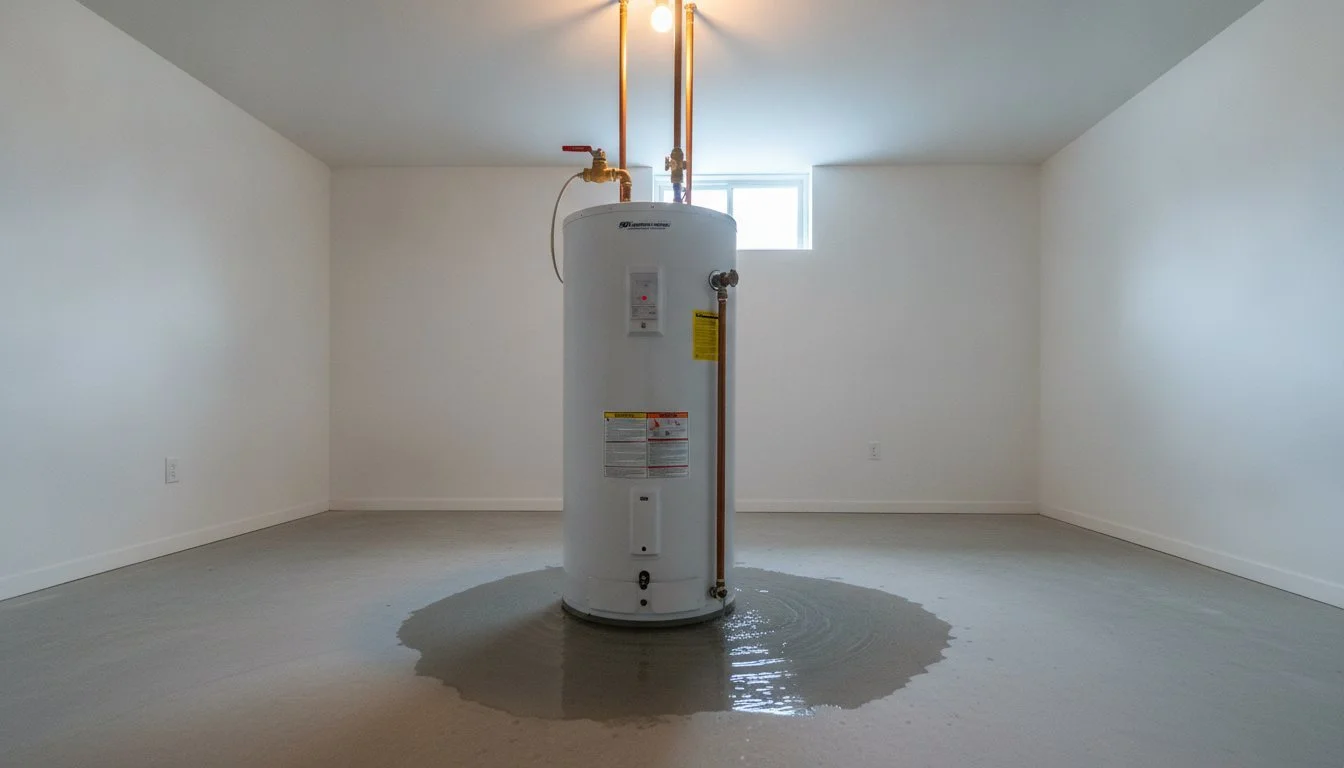
Hot Water Heater Leaking from Bottom? East Bethel Troubleshooting Guide
Imagine waking up on a Tuesday morning, heading to the basement for a load of laundry, and stepping into a cold, murky puddle surrounding your utility closet. It's a stressful sight that immediately triggers fears of expensive floor damage and the looming cost of a full appliance replacement. You aren't alone; many homeowners struggle with a hot water heater leaking from bottom East Bethel because of the heavy sediment and hard water common in our North Metro local supply.
This troubleshooting guide will help you identify exactly why your tank is failing, how to protect your home from further water damage, and whether you can get away with a simple repair or if it's time for a full replacement. We'll look at common culprits like the TPR valve and internal tank corrosion. We will also cover important local details, such as the $100 East Bethel plumbing permit requirement and how you might qualify for 2026 energy rebates from CenterPoint Energy or Minnesota Energy Resources to help offset your costs. By understanding these technical signs early, you can restore your family's hot water and protect your property from a total basement loss.
Key Takeaways
Learn the immediate safety steps to take when you spot water, including how to use the shut-off valve to protect your basement from flooding.
Discover why a hot water heater leaking from bottom East Bethel is often caused by heavy sediment buildup and how to diagnose the source using the "Dry and Wait" method.
Determine if your unit needs a simple repair or a full replacement by applying the 10-12 year age rule and comparing long-term energy costs.
Find out how to navigate East Bethel permit requirements and take advantage of 2026 utility rebates to save money on a high-efficiency upgrade.
Understand why a professional mechanical technician is the best choice for handling water heater mechanics and ensuring your system meets local safety codes.
Table of Contents
Emergency Steps: What to Do When You Spot a Leak
Stepping into a puddle in your basement is a stressful experience for any homeowner. If you discover your hot water heater leaking from bottom East Bethel, you must treat it as an urgent situation. Standing water isn't just a mess; it's a safety hazard that can lead to electrical shorts or structural damage. Understanding how water heaters workhelps you realize that the tank is a pressurized vessel. When the inner lining fails, that pressure can turn a small drip into a significant flood very quickly. Clearing the area around the unit is your first priority. Move any boxes, storage items, or laundry away from the water to prevent the growth of mold, which can take hold in damp North Metro basements in as little as 24 to 48 hours.
How to Safely Shut Off the Water and Power
Stopping the flow of water is the most effective way to limit damage. Look for the cold water supply pipe entering the top of your tank. You'll find a shut-off valve there. If it's a round gate valve, turn it clockwise until it's tight. If it's a lever-style ball valve, turn it 90 degrees so the handle is perpendicular to the pipe. This stops new water from entering the tank and feeding the leak.
Next, you need to disable the energy source. For gas water heaters, locate the thermostat dial on the front of the tank and turn it to the "Pilot" or "Off" setting. This prevents the burner from firing while the tank is empty or leaking. For electric units, don't touch the heater itself. Instead, go to your home's main electrical panel and find the circuit breaker labeled for the water heater. Flip it to the "Off" position. Cutting the power is vital because an electric heating element can burn out or become a fire hazard if it's not submerged in water.
Preventing Immediate Water Damage
Once the water and power are off, you should drain the remaining water from the tank to stop the active leak. Most East Bethel homes feature a floor drain located near the utility area. Attach a standard garden hose to the drain valve at the base of the water heater. Run the other end of the hose directly into the floor drain. Use a flat-head screwdriver or the built-in handle to open the valve.
Draining the tank relieves the internal pressure and contains the mess. If the water doesn't flow out easily, open a hot water faucet upstairs to let air into the system. This breaks the vacuum and allows the tank to empty faster. If you can't stop the flow or the water is spreading toward finished walls, it's time to call for professional assistance. Addressing a hot water heater leaking from bottom East Bethel immediately saves you from the much higher costs of basement remediation and secondary property damage.
Diagnosing the Source: Is it Really Leaking from the Bottom?
Just because you see a puddle at the base doesn't mean the tank has a hole in the bottom. Gravity is a powerful force. Water from a loose pipe at the top will travel down the side of the jacket and collect on the floor. This often creates the illusion of a hot water heater leaking from bottom East Bethel when the actual problem is much higher up. To be certain, use the "Dry and Wait" method. Thoroughly mop the floor and wipe down the entire outer shell of the heater. Place paper towels around the base and check back every hour to see where the dampness starts. If the towels on the floor get wet but the sides of the tank are dry, you likely have a bottom-tank issue.
Understanding the difference between a structural failure and a minor component issue is key. Periodic water heater maintenance can prevent many of these "phantom" leaks, but if you're already seeing water, you need to look at specific parts. In our North Metro climate, condensation is a frequent culprit. When cold groundwater enters a tank in a humid basement, the exterior can "sweat" just like a cold soda can. This moisture eventually drips down and pools, mimicking a serious leak. This is especially common during our humid Minnesota summers or when a basement is particularly damp in the winter.
Checking the Temperature and Pressure (T&P) Relief Valve
The T&P valve is a critical safety component located near the top or side of the tank. It features a discharge pipe that should run down toward the floor. If this valve fails or if the tank pressure gets too high, water will exit through this pipe. Because the pipe ends near the floor, it's easy to assume the tank is leaking from the bottom. Look for moisture at the very end of this discharge tube. If you find a drip, the valve might need replacement, or your home's water pressure might be set too high. You can test the valve by briefly lifting the lever, but be careful; sometimes an old valve won't reseal properly after testing.
Inspecting the Drain Valve and Top Connections
Don't forget to check the drain valve, which is the faucet-like attachment at the very bottom of the tank. These are often made of plastic and can develop slow drips over time, especially if they haven't been flushed recently. When investigating a hot water heater leaking from bottom East Bethel, check this area for a slow drip from the threads. Similarly, check the cold water inlet and hot water outlet pipes at the very top. A tiny pinhole leak in a copper line or a loose threaded connection can send a steady stream of water down the back of the unit. If you're unsure where the moisture is originating, having a professional water heater inspection can provide peace of mind and prevent a minor drip from becoming a major flood.
Common Causes of Bottom Leaks in East Bethel Homes
When you've ruled out the T&P valve and loose connections, a hot water heater leaking from bottom East Bethel usually points to a structural failure inside the tank itself. These leaks aren't just inconvenient; they're often the final stage of a process that has been happening silently for years. In the North Metro area, our local water chemistry plays a massive role in how quickly these systems degrade. Understanding the environmental factors at play helps you see why your unit might be failing earlier than expected.
The Impact of Hard Water and Sediment
East Bethel's water has a high mineral content, primarily calcium and magnesium. Over time, these minerals settle at the base of your tank, creating a thick layer of sediment. This buildup acts as an insulator, trapping heat at the bottom of the tank rather than letting it transfer to the water. If you hear a loud popping or rumbling sound when the heater is running, that's the sound of steam bubbles escaping through the sediment layer. This constant overheating weakens the steel tank and eventually causes the glass lining to crack. Regular flushing is a non-negotiable task for homeowners here if they want to avoid premature failure. Without it, the sediment becomes a permanent, crusty layer that slowly eats away at the metal floor of your appliance.
Internal Tank Failure and Corrosion
Inside every tank is a component called an anode rod. It's a sacrificial piece of metal designed to corrode so your tank won't. However, once that rod is completely dissolved, the water begins attacking the steel walls of the tank. This leads to internal rust-through, which is the most common reason for a hot water heater leaking from bottom East Bethel. A rusted-through tank cannot be repaired because the structural integrity of the pressurized vessel is gone. There's no patch or sealant that can safely withstand the 40 to 60 PSI of a standard home water system.
While the average lifespan of a water heater in Minnesota is about 10 to 12 years, failing to replace the anode rod every 3 to 5 years can cut that time in half. Thermal expansion also contributes to these cracks. When water is heated, it expands. If your home's water pressure is already high, this extra stress can create microscopic fractures in an already weakened tank bottom. Once that first pinhole appears, the internal pressure will continue to widen the gap until you have a steady pool of water on your basement floor.
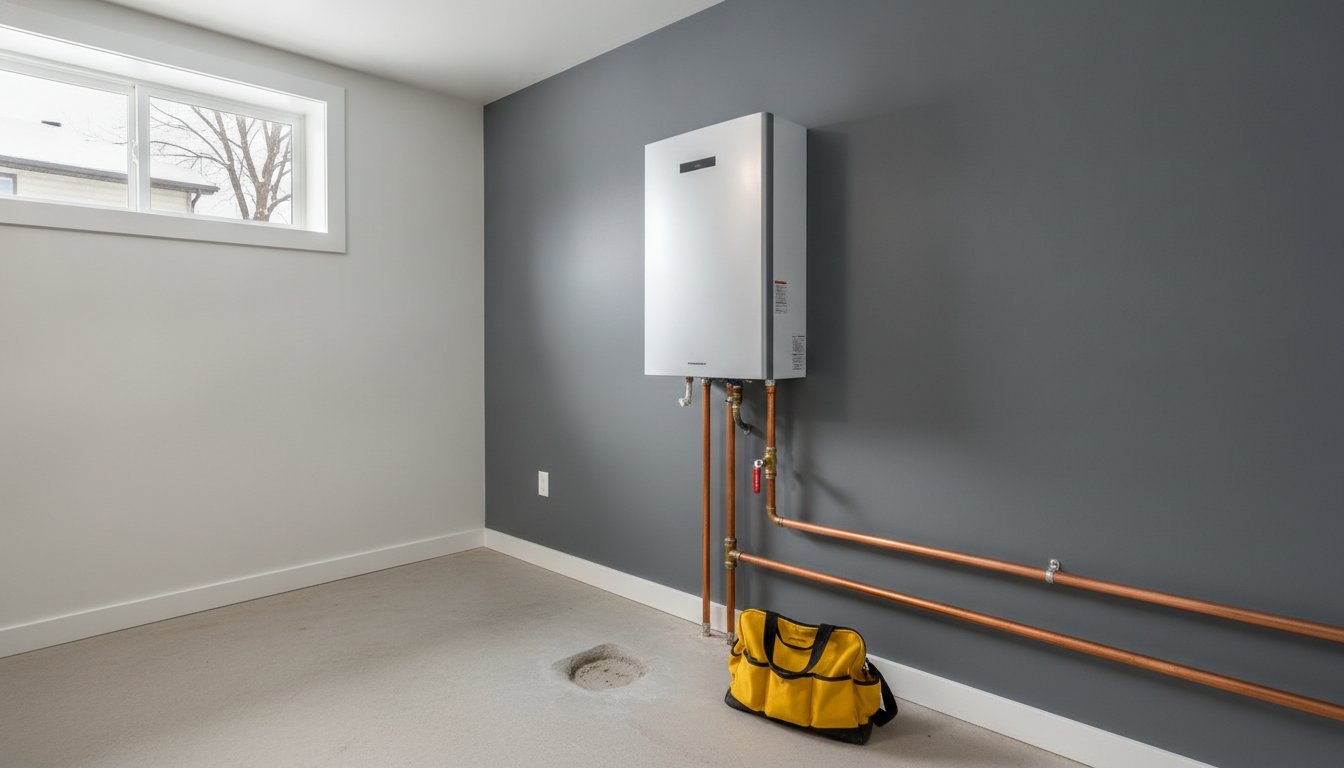
Reliable Tankless Water Heater Installation in Ramsey, MN: Unlimited Hot Water for Your Home
Imagine it's a typical Tuesday morning in Ramsey, and you're the third person in line for the shower. You've already braced yourself for the inevitable blast of icy water because the old 50-gallon tank just can't keep up. It's a frustrating routine that many of our neighbors deal with, along with the high energy bills that come from heating water you aren't even using. If you're tired of scheduling your life around a limited hot water supply, a professional tankless water heater installation in Ramsey might be the most rewarding upgrade you ever make for your home.
We understand that choosing a new system feels like a big decision, especially when you're worried about whether a tankless unit can handle our freezing Minnesota intake water during a January cold snap. You deserve a solution that offers both comfort and peace of mind without the fear of a basement flood from a leaking tank. In this guide, we'll show you how to choose a system sized for our local climate, explain the 2026 utility rebates from CenterPoint Energy and Minnesota Energy Resources, and detail the specific Ramsey building codes that ensure your installation is safe and efficient.
Key Takeaways
Learn how switching to a tankless system eliminates the "last person gets a cold shower" problem while reclaiming valuable floor space in your utility room.
Understand the critical role Ramsey's 40°F winter groundwater plays in correctly sizing your unit to ensure consistent performance during the coldest months.
Discover why a professional tankless water heater installation in Ramsey requires specialized gas line assessments and concentric venting upgrades to meet local safety codes.
Find out how high-efficiency models can reduce your water heating energy consumption by up to 34% and help you qualify for 2026 utility rebates.
See why an HVAC-led approach ensures your home's gas pressure and mechanical systems are perfectly calibrated for a reliable, long-term hot water solution.
Table of Contents
Is a Tankless Water Heater Right for Your Ramsey Home?
A tankless water heater, often called an on-demand heater, operates differently than the bulky unit you likely have in your basement right now. Instead of maintaining a reservoir of hot water, it uses a powerful heat exchanger to warm water only as it passes through the unit. Understanding how tankless water heaters work is the first step in deciding if this upgrade fits your lifestyle. For many families in our community, the decision to invest in a tankless water heater installation in Ramsey comes down to reliability. You won't have to worry about being the last person to the shower and finding only lukewarm water left.
Traditional tanks suffer from what we call "standby loss." This means your heater turns on periodically throughout the night to keep 50 gallons of water hot, even while you're asleep. It's a constant drain on your utility budget. Tankless systems eliminate this waste entirely. Beyond monthly savings, these units are a long-term investment. While a standard tank usually lasts between 10 and 12 years before the risk of a leak becomes a major concern, a well-maintained tankless system can easily provide service for 20 years or more.
Tank vs. Tankless: The Core Differences
Switching systems requires a shift in how you think about your water supply. With a tank, you're limited by storage capacity; with a tankless unit, we look at the flow rate, measured in Gallons Per Minute (GPM). This change allows you to reclaim significant floor space. Since these units are wall-mounted, you can finally use that corner of the utility room for storage or extra shelving. It's a cleaner, more modern approach to home mechanicals that fits perfectly in finished North Metro basements.
The Minnesota Winter Challenge
Our local climate presents a unique hurdle for water heating. In Ramsey, winter groundwater temperatures can drop to approximately 40°F. This means your heater has to work much harder to reach a comfortable 120°F compared to a unit in a warmer state. This is known as "temperature rise." Because of this 80-degree gap, a professional tankless water heater installation in Ramsey is essential. Generic sizing won't work here. You need a system calibrated to handle high demand when the intake water is at its coldest.
Sizing Your Tankless System for Ramsey Ground Water
Sizing a water heater in Minnesota is a different science than it is in warmer climates. When you plan a tankless water heater installation in Ramsey, we don't just look at the number of bathrooms in your home. We calculate the "peak demand" based on the coldest day of the year. This ensures that your "endless hot water" doesn't turn into a lukewarm trickle when you need it most. The energy efficiency of tankless water heaters is only realized when the unit is properly matched to the local environment.
The process follows four critical steps. First, we calculate your peak demand by adding up every fixture that might run simultaneously. Second, we determine the required temperature rise. In Ramsey, our winter groundwater averages about 40°F. To reach a standard 120°F, your system must jump 80 degrees instantly. Third, we match the unit's Gallons Per Minute (GPM) rating specifically to that 80-degree rise. Finally, we choose the fuel source. While electric and propane are options, natural gas is almost always the preferred choice for high-demand homes in the North Metro due to its heating power.
Calculating Your Gallons Per Minute (GPM)
To understand your needs, we look at standard flow rates. A typical shower uses 2.0 GPM, a kitchen faucet uses 1.0 GPM, and a dishwasher requires about 1.5 GPM. If you want to run two showers and the dishwasher at once, you need a system that handles 5.5 GPM. It is vital to remember that a unit advertised as "9 GPM" in a Florida climate might only deliver 4.5 GPM during a Ramsey winter because of the massive temperature gap it must overcome. GPM represents the volume of water the unit can heat to your desired temperature based on the specific 80-degree rise required during a Ramsey winter.
Gas vs. Electric Tankless Units
In the Twin Cities, high-output gas units are the industry standard for whole-home use. They provide the high BTU (British Thermal Unit) input necessary to flash-heat water during a blizzard. Electric units, while compact, often require a 200-amp or even 300-amp electrical service to function. Many older Ramsey homes aren't equipped for that kind of load without a costly panel upgrade. Natural gas also offers better reliability during winter storms, ensuring you have hot water even if the power flickers. If you're unsure which fuel source your home can support, you can request a professional mechanical assessment to see what fits your current infrastructure.
The Installation Process: What to Expect in Ramsey
A professional tankless water heater installation in Ramsey involves several technical upgrades that go beyond a simple plumbing swap. Because these units heat water instantly, they require a much higher energy input than a traditional tank. We start by assessing your existing gas lines; most standard tanks operate on about 40,000 BTUs, while a whole-home tankless unit can demand up to 199,000 BTUs. This significant difference means your home's infrastructure must be ready to support the load. According to the U.S. Department of Energy, Tankless or Demand-Type Water Heaters provide efficient service only when the installation environment is correctly prepared.
Our team handles the water line reconfiguration to adapt your plumbing to the new wall-mounted location. This often involves moving pipes from the floor level to the wall, which helps reclaim that valuable floor space mentioned earlier. We also install a condensate management system. High-efficiency condensing models produce a small amount of acidic runoff during operation. This runoff must be safely neutralized and drained according to local Ramsey plumbing codes to protect your home's pipes. Finally, we perform gas pressure calibration and rigorous testing to ensure the unit fires correctly every time you turn on a tap.
Why Gas Line Sizing Matters
When a tankless unit "starves" for fuel, it can lead to performance issues or cause the burners to fail. This happens if the gas pipe is too narrow to deliver the volume of fuel required for that 199,000 BTU surge. Ramsey municipal codes are very specific about gas line modifications to prevent these safety hazards. We verify that your existing gas meter and internal piping can handle the increased demand. C&M Heating and Air takes the guesswork out of this process by performing a full load calculation before the first pipe is turned.
Venting for Cold Climates
Venting is where many generic installations fail in Minnesota. Traditional tanks vent through metal chimneys, but high-efficiency tankless units use specialized PVC concentric venting. This system uses a single pipe-within-a-pipe design to pull fresh air in while pushing exhaust out. It's a critical safety feature that prevents the unit from using up the oxygen inside your home. Proper vent termination is vital to prevent ice buildup during -20°F Ramsey nights. If a vent becomes blocked by frost or icicles, the system will shut down for your safety. We ensure every vent is positioned to stay clear of snow drifts and freezing exhaust
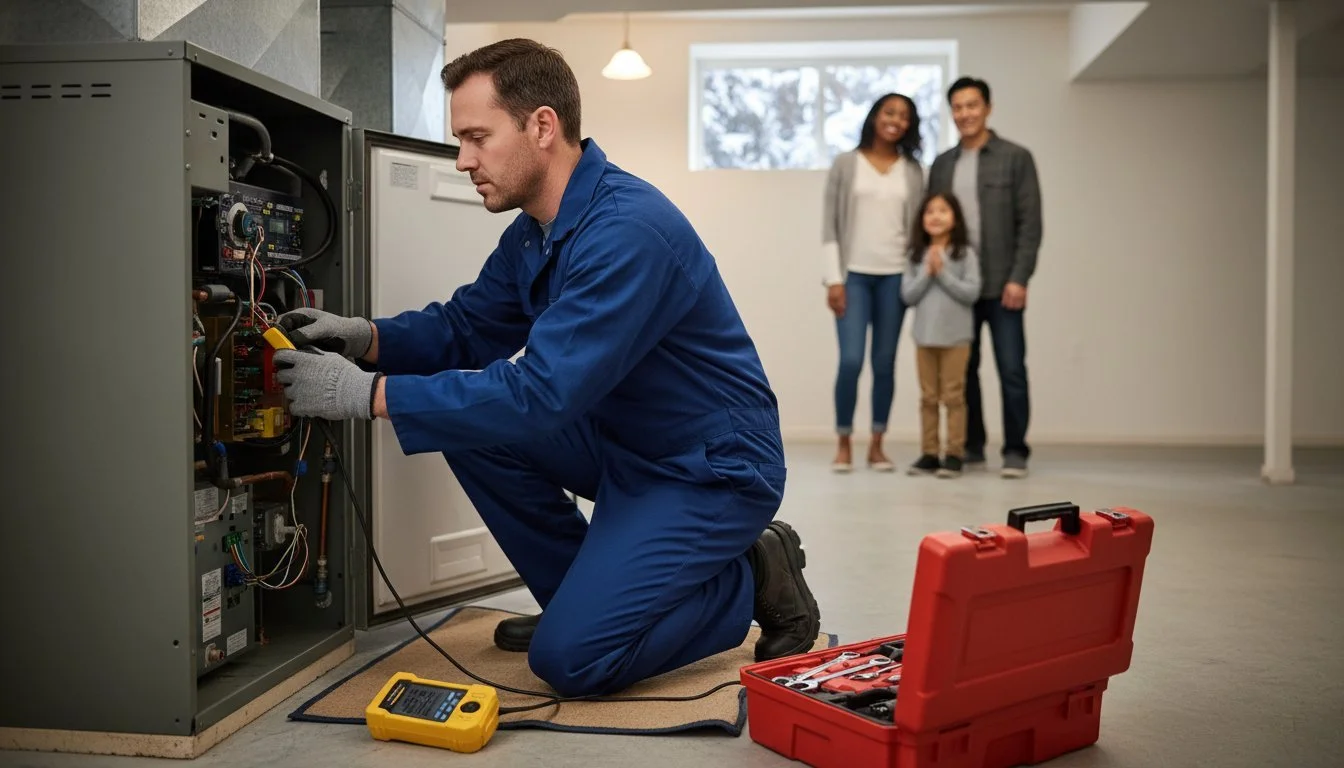
Furnace Repair Ramsey MN: Trusted Local Experts for North Metro Winters
Imagine waking up at 3:00 AM on a Tuesday in January to find your breath misting in the bedroom because the temperature in Ramsey has plummeted to -12 degrees Fahrenheit. You shouldn't have to choose between a freezing home and the anxiety of an unexpected, massive repair bill. Most homeowners in the North Metro feel that same knot in their stomach when the furnace starts making a strange rattling sound or stops blowing warm air during a sub-zero stretch. When you need the kind of furnace repair Ramsey MN families have relied on for over a decade, you deserve a team that shows up fast with honest answers and technical expertise.
We understand the confusion of wondering if a problem is a simple DIY fix or a major mechanical failure. This guide shows you why Ramsey neighbors trust C&M Heating and Air for fast, reliable furnace repairs and how to navigate the most common heating emergencies in Minnesota. You'll learn how to identify warning signs early, what to expect from a professional diagnostic, and how our transparent pricing ensures your family stays warm and safe all winter long. We'll also cover the essential maintenance steps that prevent 80% of mid-winter breakdowns before they even start.
Key Takeaways
Learn how to distinguish between a minor heating comfort issue and a true North Metro emergency to keep your family safe and warm during a Minnesota winter.
Identify the common mechanical failures and strange noises that signal your system needs professional attention before a total breakdown occurs.
Master the "50% Rule" to determine if investing in furnace repair Ramsey MN is the right move or if it's time for a high-efficiency replacement.
Discover simple DIY troubleshooting steps, like checking your filter, that can save you from an unnecessary service call.
Find out how proactive maintenance through the Comfort Club can prevent future failures and extend the life of your heating system.
Table of Contents
Immediate Furnace Repair in Ramsey, MN: Navigating Heating Emergencies
Common Furnace Failures in Ramsey Homes: Diagnostics and Solutions
The Repair vs. Replacement Dilemma: A Guide for Ramsey Homeowners
Why C&M Heating and Air is Ramsey’s First Choice for Comfort
Immediate Furnace Repair in Ramsey, MN: Navigating Heating Emergencies
When your heating system fails in the middle of a sub-zero January night, it feels like a race against the clock. Since 1984, C&M Heating and Air has served as a neighborly pillar for families across the North Metro. We understand that a broken furnace isn't just an inconvenience; it's a disruption to your home's safety. Our team brings 40 years of local experience to every call for furnace repair Ramsey MN, ensuring your family stays warm and protected. We've built our reputation on being the steady, competent experts who show up when the weather is at its worst.
A heating emergency in the Twin Cities is defined by safety risks rather than simple discomfort. While a slightly chilly room is frustrating, a total system failure during a deep freeze can lead to dangerous indoor temperatures within hours. Because we've worked in Ramsey for decades, we're familiar with the common split-entry and rambler layouts found in neighborhoods near the Rum River. We also understand the specific technical requirements and hookups prevalent with local utility connections, which allows us to diagnose problems faster than out-of-town contractors.
When to Call for 24-Hour Furnace Repair
You shouldn't wait for business hours if you encounter critical safety signs. Call for emergency service immediately if you smell gas, hear your carbon monoxide detector sounding, or have no heat when outdoor temperatures are below freezing. These situations pose direct health hazards to children and seniors. Delaying a repair in extreme cold also risks frozen pipe bursts, which can cause significant property damage. C&M provides responsive, 24/7 service throughout Ramsey and the surrounding Anoka County area to address these urgent needs.
The Ramsey Climate Factor: Why Our Winters Are Harder on Furnaces
Minnesota winters put immense pressure on mechanical systems. Sub-zero temperatures force furnaces to run longer cycles, which accelerates wear on blowers, sensors, and igniters. To understand how central heating furnaces work and why they fail under pressure, it's helpful to look at the mechanics of heat exchange and airflow. Heavy snow accumulation is another local factor; it often blocks high-efficiency intake and exhaust vents, causing the system to shut down for safety. Short-cycling is a common symptom of this extreme cold stress, occurring when a furnace turns on and off too frequently without ever reaching the thermostat's set temperature.
Common Furnace Failures in Ramsey Homes: Diagnostics and Solutions
Ramsey winters put immense pressure on local HVAC systems. When the thermometer stays below zero for a week straight, mechanical parts reach their breaking point. This is when most residents search for furnace repair Ramsey MN to handle sudden breakdowns. Understanding whether a banging noise is a loose duct or a failing motor requires professional tools. We often see systems struggle in late winter as components that worked fine in November finally succumb to the fatigue of a standard Minnesota heating season.
Ignition and Sensor Issues: The #1 Service Call
The flame sensor is a small but vital rod that confirms a flame is present. In North Metro homes, dust and microscopic debris often coat this sensor, causing the furnace to shut down after just a few seconds. Older Ramsey residences built before 1990 often utilize standing pilot lights, while newer homes typically feature hot surface igniters. If your furnace cycles on and off rapidly without producing lasting heat, a dirty sensor is the likely culprit. This is a common fix, but it requires precise cleaning to avoid damaging the sensitive metal rod.
Blower Motor and Belt Wear
During a typical January cold snap, blower motors may run for 18 to 22 hours per day. This constant operation causes friction and heat buildup within the motor housing. You might notice specific warning signs that your motor is struggling:
High-pitched screeching or whistling sounds indicating bearing failure.
Weak airflow at the registers furthest from the furnace.
A burning smell, which often points to an overheating motor winding.
In homes with pets, dander and fur can accumulate in the blower housing, further straining the motor and reducing indoor air quality. If you are considering Energy efficiency upgrades, a technician can explain how modern variable-speed motors offer better performance than older single-stage models. Identifying these mechanical blower failures early prevents a total system seizure during a blizzard.
The Critical Heat Exchanger Check
A cracked heat exchanger is the most serious issue a technician can find during a service call. In modern, airtight Minnesota homes, even a small fracture can allow carbon monoxide to enter your living space. These cracks often result from years of expansion and contraction cycles. C&M technicians prioritize safety inspections during every repair visit in Ramsey. We use specialized cameras to inspect these hidden components because a YouTube guess isn't worth the risk when dealing with gas appliances. If you hear a repeated banging noise as the furnace warms up, it's time to schedule a professional diagnostic to ensure your family's safety from potential leaks. Our team provides specialized furnace repair Ramsey MN diagnostics to catch these critical safety flaws before they become emergencies.
The Repair vs. Replacement Dilemma: A Guide for Ramsey Homeowners
Deciding between a quick fix and a total system overhaul is a common challenge for local families. In Ramsey, heating systems work overtime from November through March. This constant load means mechanical components often wear out faster than in milder climates. Most furnaces in the North Metro have a service life of 15 to 20 years. If your unit is approaching that two-decade mark, a furnace repair Ramsey MN might only serve as a temporary bandage on a larger, more expensive problem.
We suggest using the 50% Rule to guide your decision. If the cost of a single repair exceeds 50% of the price of a brand-new unit, replacement is usually the smarter financial move. C&M Heating and Air acts as an honest advisor during these high-stress moments. We provide clear, technical diagnostics and offer free estimates on replacements when a repair is no longer viable or safe for your home. Our team focuses on long-term reliability rather than just a quick furnace repair Ramsey MN visit that might fail again in a few months.
Calculating the ROI of High-Efficiency Systems
Modern heating technology has advanced significantly. Many older homes in the Twin Cities still operate with 80% AFUE (Annual Fuel Utilization Efficiency) units. This means 20 cents of every dollar you spend on gas is wasted. Modern 96% AFUE models, which are the standard for 2026 installations, keep nearly all that heat inside your living space. Ramsey residents often see a noticeable drop in monthly utility bills during peak heating months like January and February. Integrating a smart thermostat after your service can further boost these savings by optimizing run times based on your family's schedule.
Age-Specific Considerations for Ramsey Neighborhoods
The age of your neighborhood often dictates your specific HVAC needs. Homes built in the 1980s near Ramsey Elementary frequently feature original ductwork that may not be optimized for modern high-velocity airflow. In contrast, newer developments near The COR often have updated ventilation but may suffer from premature part failure due to lingering construction dust. Older ductwork can restrict a new, high-efficiency unit, which reduces its overall lifespan. Our technicians evaluate the entire system to ensure your home can handle an upgrade. If you're ready to explore your options, our Furnace Replacement guide offers a detailed look at the latest models available for your specific home layout.
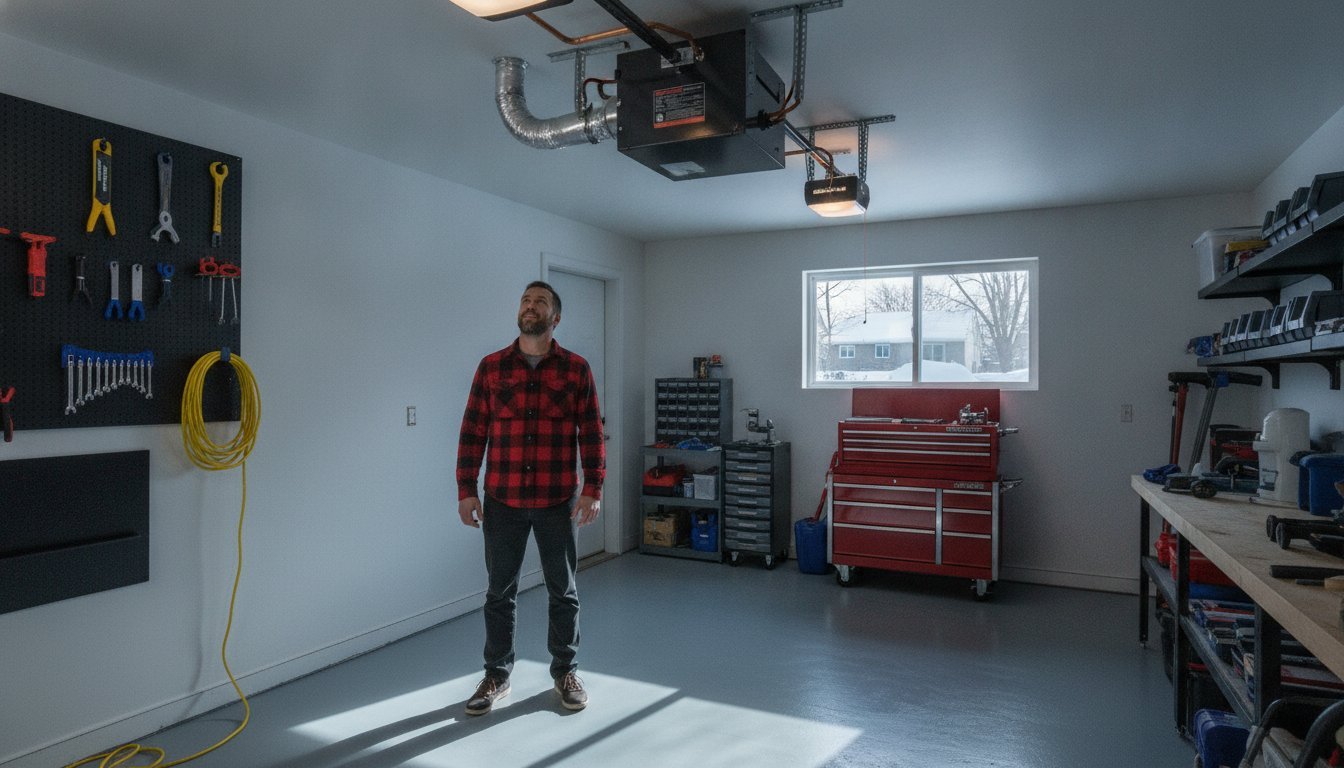
Professional Propane Garage Heater Installation in Coon Rapids, MN
Last winter, a neighbor in Coon Rapids watched their thermometer dip well below zero while their car engine struggled to turn over in a frozen garage. It's a frustrating reality for many homeowners in our community. When the Minnesota chill sets in, an unheated garage quickly becomes a wasted space where pipes are at risk and hobbies go on a six-month hiatus. You shouldn't have to wait until spring to use your workshop or protect your vehicles from the elements.
By investing in a professional propane garage heater installation Coon Rapidsresidents can count on, you'll transform that icy storage room into a comfortable, year-round workspace. We understand the hesitation that comes with gas line work, which is why we focus on precision and safety that meets the 2020 Minnesota Residential Code. In this guide, you'll discover how propane provides the high-output heating you need when natural gas isn't a practical option. We'll also explain how a permanent heating solution helps you avoid the high energy costs of inefficient electric heaters while keeping your home and vehicles safe all winter long.
Key Takeaways
Learn why propane is the most effective high-output heating solution for garages that lack existing natural gas lines.
Compare the benefits of forced air and radiant tube heaters to determine which system fits your specific garage layout and hobby needs.
Understand the essential venting requirements and safety protocols needed to keep your attached garage compliant with Minnesota mechanical codes.
Find out what to expect during a professional propane garage heater installation Coon Rapidshomeowners trust for a safe and efficient setup.
See how local expertise can turn your freezing winter storage area into a comfortable, functional workspace that protects your vehicles and your home.
Table of Contents
Why Propane Garage Heater Installation is Ideal for Coon Rapids Homes
Why C&M Heating and Air is Coon Rapids’ Trusted Garage Specialist
Why Propane Garage Heater Installation is Ideal for Coon Rapids Homes
Coon Rapids winters are relentless. If you've ever tried to work in your garage in January, you know that a standard space heater simply doesn't cut it. Propane garage heaters are high-output, independent units designed to handle these extreme conditions. They deliver a massive amount of heat quickly, making them the preferred choice for residents who need reliable climate control without the hassle of extending natural gas lines. These units operate as self-contained systems, giving you professional-grade warmth even in the coldest months.
Many homes in the North Metro have garages that weren't originally plumbed for gas. Running a new line from the main house can be a major construction project that involves tearing up landscaping or concrete. A propane garage heater installation Coon Rapidshomeowners choose instead allows for total independence from the municipal grid. You have your own fuel source right on your property. This setup is incredibly reliable; if a winter storm causes a municipal gas disruption, your propane system keeps running to protect your home and vehicles.
The performance difference is clear when you look at the "heat throw." While electric units struggle to push warm air more than a few feet, propane systems use powerful blowers to circulate heat throughout the entire space. This ensures that every corner of your garage stays warm, not just the area directly in front of the unit. It's the difference between shivering over a small heater and actually being able to work comfortably in a t-shirt while it's snowing outside.
Propane vs. Electric and Natural Gas: The Local Comparison
Choosing propane offers a distinct cost-per-BTU advantage over electric heating in Minnesota. Electric resistance heat is often the most expensive way to warm a large, uninsulated space like a garage. Propane units utilize advanced gas heater technology to convert fuel into heat with high efficiency. They also offer a much faster recovery time. When you open the big door to pull your SUV in, the temperature drops instantly. A propane heater can bring the room back to a comfortable level in a fraction of the time it takes an electric unit to catch up. You aren't tied to the municipal gas grid, which means no monthly service fees for a line you might only use six months of the year.
Benefits for North Metro Workshops and Storage
For car enthusiasts in the Twin Cities, a heated garage is about more than just comfort; it's about preservation. Consistent heat prevents the rapid temperature swings that cause condensation and rust on classic cars and expensive power tools. Professional propane garage heater installation Coon Rapids services help you maintain a stable environment that controls moisture levels. Whether you're a woodworker, a mechanic, or someone who just wants a warm place for a winter hobby, these systems turn a cold storage room into a functional extension of your home. You'll finally have the space to tackle projects year-round without waiting for the spring thaw.
Choosing the Right Propane Heater for Your Garage Size
Selecting the right equipment is the most critical step in a successful propane garage heater installation Coon Rapidsproject. You don't want a unit that's too small to fight back against a February blizzard, but an oversized unit will cycle on and off too frequently, wasting fuel and wearing out components. Modern propane units have come a long way. They now feature electronic ignition, which eliminates the old-fashioned standing pilot light that could easily blow out. These systems also integrate seamlessly with smart thermostats. This allows you to warm up the garage from your phone before you even put on your boots.
Efficiency should be your top priority when comparing models. Units with high-efficiency ratings ensure that more of your propane is converted into usable heat rather than being lost through the exhaust. Look for heaters specifically designed for the northern climate. These units are built to withstand the heavy duty cycles required when the mercury stays below zero for weeks at a time.
Forced Air vs. Radiant Propane Heaters
The first decision you'll face is the delivery method of the heat. Forced air heaters work like a miniature furnace. They use a fan to blow hot air into the room, making them perfect for quickly heating a space after you've been away. They're excellent for general car storage or multi-purpose garages where you need fast results. However, if you run a woodworking shop in your Coon Rapids home, a radiant tube heater might be the better choice. Radiant heaters warm objects and people directly through infrared waves rather than blowing air. This keeps sawdust from swirling around your finish and provides a silent, steady warmth that feels like standing in the sun. It's a premium choice for hobbyists who spend hours at a workbench.
Calculating BTUs for the Minnesota Climate
Sizing a heater for Minnesota is different than sizing one for a milder climate. To find your required BTUs (British Thermal Units), use this basic formula: (Square Footage x Ceiling Height) x Temperature Rise. In Coon Rapids, we often have to account for a massive temperature rise. If it's -20°F outside and you want your garage at 60°F, your heater has to work much harder than a unit in a southern state. Undersizing your unit leads to constant cycling, which skyrockets your fuel consumption and shortens the lifespan of the equipment. Since improper venting can lead to serious carbon monoxide risks, it's vital to pair a correctly sized unit with a professional venting strategy. If you aren't sure which capacity your space requires, our team can help you with a professional sizing assessment to ensure your new system is both efficient and safe.
Critical Safety Standards and Venting Requirements
Safety is the most common concern we hear from local homeowners. Is propane safe for an attached garage? The short answer is yes, but only when the system is installed by a qualified technician who follows strict protocols. A professional propane garage heater installation Coon Rapids residents can trust always prioritizes proper exhaust and fuel management. We strictly recommend vented units over vent-free models. Vented heaters discharge combustion byproducts directly outside, which is essential in a tightly sealed Minnesota garage. Without this ventilation, you risk moisture buildup on your walls and the dangerous accumulation of gases.
Installing a carbon monoxide detector is a non-negotiable requirement for any heated garage space. Even with high-end equipment, these sensors provide a vital layer of protection for your family. During the setup process, we perform a rigorous gas line pressure test. This step ensures every connection between your exterior tank and the indoor heater is airtight. We don't just "hook it up" and leave; we verify the integrity of the entire system to give you total peace of mind during those long winter nights.
Proper Ventilation for Propane Combustion
Ventilation isn't just about getting exhaust out; it's about bringing fresh air in. Modern sealed combustion units often use a "two-pipe" system. One pipe draws in oxygen from the outside to feed the burner, while the second pipe carries away the spent gases. This design prevents backdrafting, a dangerous situation where exhaust is accidentally pulled back into the living space. Depending on your garage's layout, we might use horizontal venting through a side wall or vertical venting through the roof. Horizontal venting is usually the most efficient and least intrusive option for standard two-car garages in our North Metro neighborhoods.
Propane Tank Placement and Coon Rapids Codes
Local safety is governed by specific regulations. According to OSHA standards for propane storage and the Minnesota Mechanical Code, your exterior tank must be placed a safe distance from windows, doors, and ignition sources. In Coon Rapids, you're required to obtain a mechanical permit through the City Building Inspections Department before the work begins. This ensures your propane garage heater installation Coon Rapids meets the 2020 Minnesota Residential Code. Once the project is complete, an official inspection is required. We always tell our neighbors to verify that these inspections are approved before making a final payment to any contractor. It's the best way to guarantee your system is legally compliant and safe for your home.
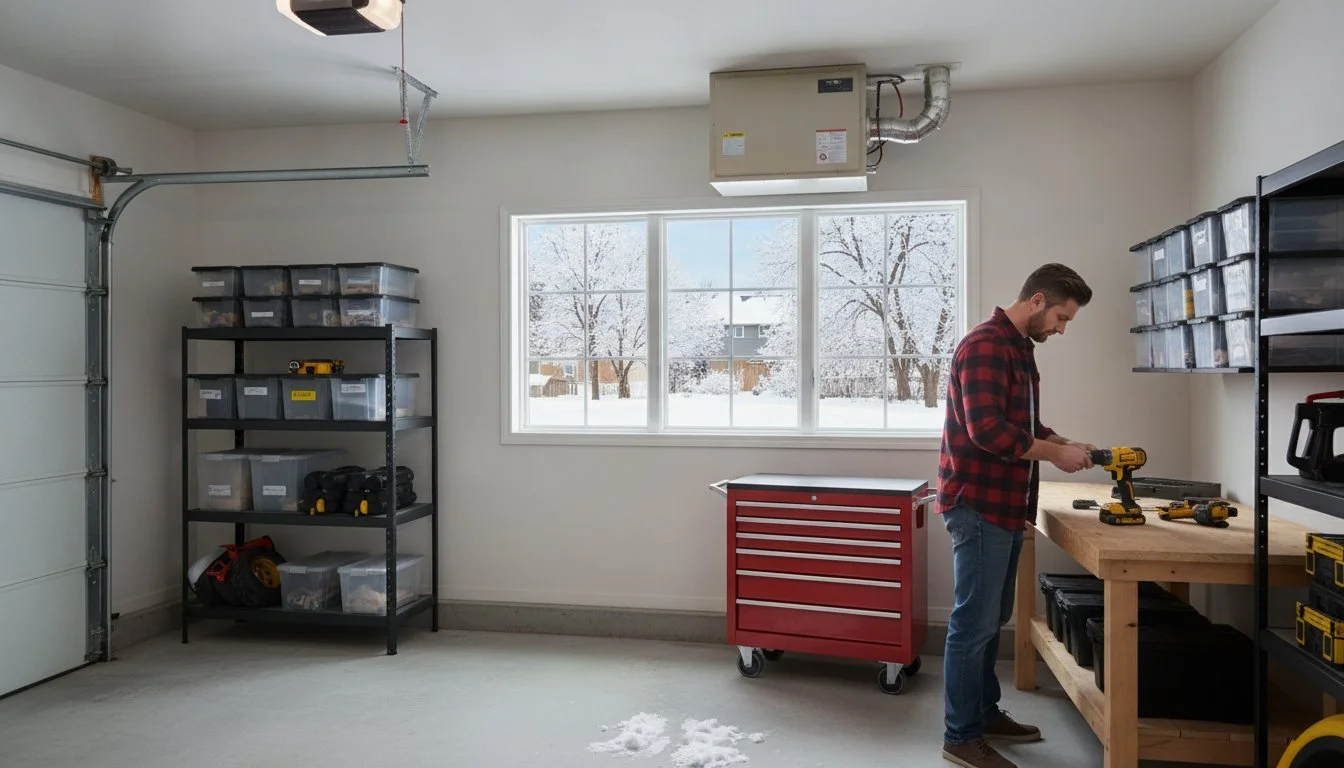
Natural Gas Garage Heater Installer Blaine: Professional Installation for MN Winters 2026
Imagine stepping into your garage on a sub-zero January morning in Blaine and finding your car warm, the engine starting instantly, and your workshop space feeling like an extension of your living room. We all know that Minnesota winters don't play fair, especially when temperatures plummet and your garage becomes a walk-in freezer that kills car batteries and halts your weekend projects. Finding a qualified natural gas garage heater installer Blainehomeowners can trust is the first step toward reclaiming that space and protecting your property.
It's understandable to worry about the safety of gas line work or the complexity of local permits, but you don't have to tackle those hurdles alone. Discover why a professional natural gas heater is the ultimate upgrade for your home and how to choose an expert who ensures a safe, warm winter. This guide previews the latest efficiency standards, explains how to navigate the 2026 Minnesota State Building Code requirements, and shows you how to achieve a year-round usable garage while keeping energy bills under control despite rising equipment costs.
Key Takeaways
Learn how professional garage heating protects your vehicle's battery health and fluid viscosity during sub-zero Minnesota nights.
Compare the superior BTU output and lower operational costs of natural gas units against standard electric heaters using local Blaine energy rates.
Identify the correct heating capacity for your specific space with our BTU sizing guide for one, two, and three-car garages.
Understand the critical safety steps and local building codes that a professional natural gas garage heater installer Blaine residents rely on will manage for you.
Discover why choosing a family-owned expert with over 40 years of local experience ensures a reliable and code-compliant installation.
Table of Contents
Professional Garage Heating in Blaine: More Than Just Comfort
Natural Gas vs. Electric Garage Heaters: A North Metro Comparison
Sizing Your Garage Heater: How Many BTUs Does Your Space Need?
The Professional Installation Process: Safety and Blaine Codes
Why C&M Heating and Air is Blaine’s Trusted Garage Specialist
Professional Garage Heating in Blaine: More Than Just Comfort
Many Blaine homeowners treat their garage as a simple storage area for vehicles and lawn equipment. In our harsh Minnesota climate, however, that space is actually a vital extension of your home's thermal envelope. When temperatures plummet in January, an unheated garage acts as a massive heat sink. It constantly saps warmth through the shared walls of your living space. Choosing an experienced natural gas garage heater installer Blainehomeowners rely on is about more than just personal comfort. It is a strategic move to protect your home's efficiency and structural health.
Cold starts are a major source of engine wear. When your car sits in a frozen garage, the battery loses significant cranking power and the engine oil becomes thick and sluggish. Maintaining a consistent temperature protects these mechanical components. It also safeguards your plumbing. Many homes in our community have water lines tucked into walls that border the garage. A properly installed Gas heater keeps these areas above the danger zone, preventing the stress and expense of burst pipes during a deep freeze. We believe your garage should work for you, not against your home's utility bills.
Protecting Your Blaine Property from Frigid Extremes
In neighborhoods like The Lakes or near the TPC Twin Cities, large attached garages are common. These spaces trap heavy, cold air that can make your entire house feel drafty. Without a dedicated heat source, the moisture from melting snow and ice on your vehicles lingers. This high humidity, combined with winter road salt, creates a perfect environment for corrosion. We see it all the time. A heated garage allows that moisture to evaporate and vent properly. This keeps your tools dry and your vehicle's undercarriage in much better shape over the long term.
The Value of a Year-Round Workshop or Home Gym
Living in the North Metro means being stuck inside for months at a time. Reclaiming your garage as a year-round workshop or home gym changes the dynamic of your winter. Blaine residents are increasingly turning these spaces into functional "man caves" or hobby rooms where the forecast doesn't dictate their schedule. There is a real psychological benefit to having a warm, bright space to escape to when it's dark at 4:30 PM. A professional natural gas garage heater installer Blaine specialist ensures your new retreat is safe, code-compliant, and ready for any hobby you choose to pursue.
Natural Gas vs. Electric Garage Heaters: A North Metro Comparison
Choosing between natural gas and electricity for your garage often comes down to the speed of warmth and the monthly cost of operation. While a portable electric heater might seem like a quick fix, it usually fails to keep up when Blaine temperatures drop below zero. A standard 240V electric heater typically produces around 17,000 BTUs of heat. In contrast, even a compact natural gas unit starts at 45,000 BTUs. This massive difference in power is what we call "recovery time." When you open your garage door to pull in your car, all that warm air escapes instantly. A gas heater can bring the space back to a comfortable temperature in minutes, whereas an electric unit might struggle for an hour or more to catch up.
The infrastructure requirements also differ significantly. Electric heaters of sufficient size often require a dedicated 30-amp or 50-amp circuit. For many older homes in the North Metro, this necessitates an expensive electrical sub-panel upgrade. A professional natural gas garage heater installer Blainehomeowners trust will instead look at your existing gas meter and line capacity. Extending a gas line is a straightforward process for an expert, and it provides a permanent, high-capacity fuel source that won't flicker or trip a breaker when the load gets heavy.
Operational Efficiency and Monthly Savings
In our region, natural gas remains the most cost-effective way to heat large volumes of air. Based on local energy rates, operating a natural gas heater is typically two to three times cheaper than using electricity. These units utilize a "forced air" design, using a powerful fan to circulate heat into every corner of the garage rather than relying on the slow, radiant heat common in electric models. According to the U.S. Department of Energy's guide on Home heating systems, selecting a fuel source that matches your local climate and utility rates is the best way to ensure long-term affordability. Gas units also tend to have a longer lifespan, often lasting 15 to 20 years with basic annual maintenance.
Infrastructure Considerations for Blaine Homes
Before moving forward, it's vital to evaluate your home's current utility setup. Our team checks the proximity of your existing gas lines to the garage and ensures your gas meter can handle the additional appliance without a drop in pressure for your furnace or water heater. If you're unsure which system fits your floor plan, you can schedule a professional assessment to see exactly what an installation would involve for your specific property. We focus on making sure your setup is both safe and capable of handling the coldest nights January can throw at us.
Sizing Your Garage Heater: How Many BTUs Does Your Space Need?
When it comes to heating your garage, bigger is not always better. An oversized unit will heat the space too quickly, leading to a problem called "short-cycling." This happens when the heater turns on and off in rapid succession, which puts unnecessary strain on the heat exchanger and wastes fuel. Conversely, a unit that is too small will run constantly without ever reaching your desired temperature. As a professional natural gas garage heater installer Blainehomeowners trust, we perform a detailed heat loss calculation to find the perfect balance for your specific floor plan.
One BTU is the amount of heat needed to raise one pound of water by one degree Fahrenheit. In the context of your garage, we look at the total cubic footage and how well that volume is contained. For a standard one-car garage, a 30,000 BTU unit is usually sufficient. A typical two-car garage in the North Metro generally requires about 45,000 BTUs. Larger three-car spaces or those with exceptionally high ceilings often need 60,000 BTUs or more to stay comfortable when the wind is howling off the open fields in Blaine.
Ceiling height and garage style play a major role in these calculations. If you have a "tuck-under" garage with a bedroom or living space directly above it, the insulation in the ceiling helps retain heat better than a detached garage with an open rafter system. However, high ceilings can trap warm air near the roof, leaving the floor level chilly. Safety is our priority during this process. The Consumer Product Safety Commission recommends a professional inspection of all fuel-burning heating systems to ensure that the unit you choose is properly sized and vented for your home's layout.
The Role of Insulation and Air Sealing
Your heater is only as good as the box it's heating. An R-18 rated garage door is the best partner for a new natural gas system, as it provides a thick thermal barrier against the elements. We often find significant air leaks around the bottom seal of the door or the service door leading outside. Sealing these gaps allows you to install a slightly smaller, more efficient unit. When you work with a natural gas garage heater installer Blaineexpert, we'll identify these "energy thieves" before we finalize your equipment selection.
Calculating Heat Loss in Minnesota
In Minnesota, we have to plan for "design temperatures" that often reach -15°F or -20°F. While a standard 30,000 to 45,000 BTU unit is the "sweet spot" for most Blaine 2-car garages, we adjust these numbers based on how you plan to use the space. If you're just keeping the cars from freezing, a smaller unit works fine. If you're running a wood shop or a home gym, we might suggest a slightly higher output to ensure you stay warm while you're active.
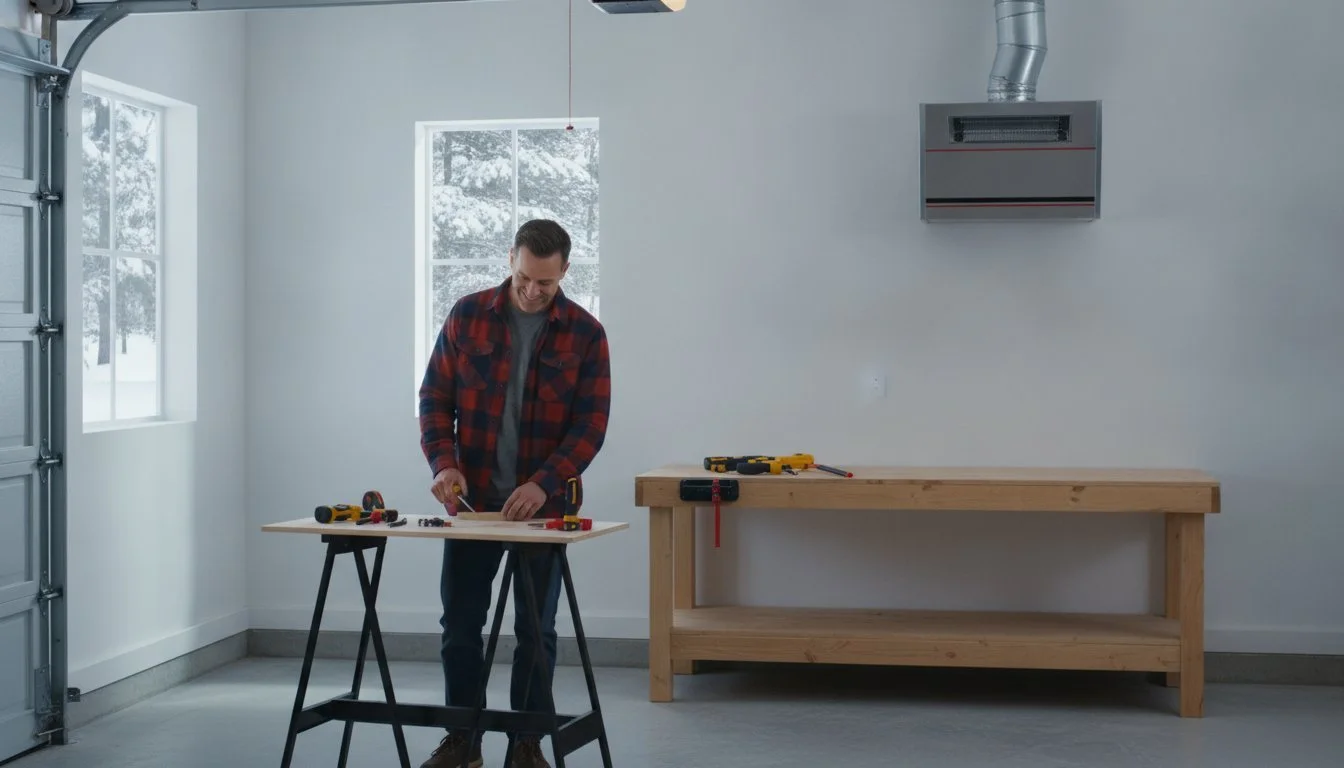
Professional Garage Heater Installation in Andover, MN: Year-Round Comfort
Imagine it's a Tuesday morning in mid-January, and the thermometer outside reads twenty below. You're already running late, but when you turn the key, your car battery is frozen solid and simply won't start. It's a frustrating, bone-chilling experience that many of our neighbors face every year. A professional garage heater installation in Andover MN changes this scenario completely. It turns a freezing storage area into a functional, climate-controlled extension of your home where your vehicles stay protected and your projects never have to pause.
We understand that you want a warm workspace without the stress of high utility bills or safety concerns. While the City of Andover requires a $95.00 permit for these systems, the long-term value of protecting your home mechanics and stored items is well worth the initial setup. You deserve a solution that's safe, code-compliant, and tailored to the specific size of your garage. This article will show you how professional sizing and expert venting create a reliable heat source that stands up to the harshest Minnesota winters. We'll walk through the installation process and help you decide which system provides the best efficiency for your specific needs.
Key Takeaways
Protect your vehicles from sub-zero starts and gain valuable year-round square footage for hobbies, home gyms, or workshops.
Learn the practical differences between forced-air and radiant tube systems to choose the most efficient heating method for your specific layout.
Discover why proper insulation and air sealing are essential steps to take before scheduling your garage heater installation in Andover MN.
Understand the professional installation process, including unit placement and gas line safety tests that ensure compliance with local building codes.
Find out why working with local, NATE-certified experts ensures your heating system is built to handle the unique demands of a Minnesota winter.
Table of Contents
Why Install a Garage Heater in Andover, MN?
Living in the North Metro means dealing with some of the most demanding winter conditions in the country. A professional garage heater installation in Andover MN provides a reliable shield against these elements, transforming a cold storage area into a valuable part of your home. While many residents view a heated garage as a luxury, it's actually a strategic investment in property maintenance and vehicle longevity. It's about more than just personal comfort; it's about protecting your assets from the brutal Minnesota freeze.
Cold starts are one of the biggest stressors for local drivers. When temperatures drop below zero, your car battery loses significant cranking power, and engine fluids become thick and sluggish. By maintaining a steady temperature, you eliminate the morning anxiety of a car that won't turn over. Beyond the driveway, a heater protects the infrastructure of your house. Many Andover floor plans feature plumbing in walls shared with the garage. During a polar vortex, these pipes are at high risk of freezing and bursting. A consistent heat source prevents these costly mechanical failures and the water damage that follows.
The Impact of Minnesota Winters on Your Garage
Andover's climate patterns often include extended periods of sub-zero weather. During these stretches, unheated garages suffer from what experts call the "refrigerator effect." The massive concrete slab and the items inside soak up the cold, keeping the space freezing even after the outdoor air starts to thaw. This constant deep-freeze ruins sensitive items like latex paint, wood glue, and expensive power tool batteries. A dedicated heater breaks this cycle, ensuring your tools and supplies remain in peak condition throughout the season.
Benefits Beyond Simple Warmth
Adding heat to your garage significantly increases your home's usable square footage. It allows you to use the space for a home gym, a woodworking shop, or a dedicated hobby area regardless of the weather outside. From a real estate perspective, a professionally installed system adds considerable buyer appeal in the North Metro market. It also helps manage humidity levels, which reduces the salt-related corrosion that eats away at your vehicle's undercarriage. Whether you are researching different types of electric heaters or considering a gas-powered unit, the goal is to create a safe, warm transition zone that enhances your daily routine. The City of Andover requires a $95.00 permit for these installations, ensuring your system is code-compliant and safe for your family.
Choosing the Right Heater: Forced Air vs. Radiant Heat
Selecting the right equipment is the most critical step in a successful garage heater installation in Andover MN. Every garage layout is unique. The way you use your space dictates whether you need a quick blast of hot air or a steady infrared glow. Most residential setups in the North Metro rely on natural gas, which generally offers lower running costs over time compared to electric models. Propane is a reliable alternative for properties that aren't currently connected to a municipal gas line. Choosing the wrong fuel source or unit type can lead to uneven heating and unnecessarily high utility bills.
Determining the correct BTU (British Thermal Units) capacity is a technical task that prevents you from overpaying for energy. For a standard two-car garage, a 45,000 BTU unit is usually recommended to combat the Minnesota cold. Larger three-car garages or spaces with high ceilings often require 60,000 BTUs to maintain comfort when the wind picks up. If you're weighing these options, a professional evaluation of your workspace can help you choose the most cost-effective model for your specific square footage.
Forced Air Unit Heaters: Fast and Efficient
These units work like a miniature furnace, blowing heated air across a heat exchanger and into the room. They are the most popular choice for Andover homeowners because they provide rapid heat recovery. When you pull your car in and the big door closes, a forced-air unit can bring the temperature back up in minutes. They are cost-effective to install and easy to maintain. However, because they use a powerful fan, they can circulate sawdust or floor debris. This makes them less ideal for fine woodworking or painting projects.
Radiant Heaters: Silent and Consistent
Radiant tube heaters use infrared energy to warm objects directly, including your workbench, the floor, and your vehicles. They don't heat the air itself, which makes them incredibly efficient for garages with high ceilings where hot air would otherwise get trapped at the roofline. These systems operate in complete silence and provide a very consistent level of warmth. Because they don't move air, they won't blow dust around your shop. You must follow strict Heater safety guidelines regarding clearance from the ceiling and stored items. These units require more vertical space and have a higher initial equipment cost, but the comfort they provide is unmatched for long hours of stationary work.
Preparing Your Andover Garage for Efficient Heating
Before you schedule a garage heater installation in Andover MN, you need to look at your garage as a thermal envelope. A high-quality heater can only do so much if the warmth immediately escapes through thin walls or a drafty door. We often tell our neighbors that the "Insulate First" rule is the most important part of the process. Heating an uninsulated garage is essentially throwing money out the window. It forces your new unit to run constantly, which increases wear and tear and spikes your monthly utility costs. Proper preparation ensures that your investment provides the comfort you expect without breaking the bank.
The goal is to create a space that holds heat effectively. This requires a combination of high-quality insulation and a tight seal against the wind. In our North Metro climate, the temperature difference between your heated garage and the outdoors can be sixty degrees or more. This massive gap puts immense pressure on your garage's structure. If you haven't checked your insulation levels lately, now is the time to do it. A well-prepared space makes the transition to a heated workspace much smoother and more affordable.
Insulation Basics for North Metro Homeowners
Attached garages often share a wall with your living space, which usually has some insulation, but the exterior walls and ceiling are frequently overlooked. Detached garages are even more prone to heat loss. The garage door represents the largest surface area for cold air to penetrate. R-value is the measurement of a material's resistance to heat flow, and higher values are essential for surviving Andover winters. For our climate, look for garage door insulation kits with an R-value of at least R-8 to R-12. Don't forget the vapor barrier. In Minnesota, warm indoor air hitting a cold exterior wall creates condensation. A proper vapor barrier prevents this moisture from rotting your studs or causing mold growth inside the walls.
Sealing the Envelope
Even the best insulation won't help if you have significant air leaks. Check the weatherstripping around the perimeter of your overhead door. If it's cracked or brittle, it's letting in a constant stream of sub-zero air. Pay close attention to the bottom seal. Over time, concrete can settle, creating a "threshold gap" where snow and wind whistle through. You can easily replace these seals yourself before the professional installer arrives. Check your windows for drafts and use a high-quality silicone caulk to seal any gaps in the siding or around trim. Taking these simple DIY steps ensures that when we complete your garage heater installation in Andover MN, you get the maximum comfort for every dollar spent on fuel.
Professional Smart Thermostat Installation in White Bear Lake, MN
What if your thermostat did more than just click on the heat, actually protecting your White Bear Lake home from frozen pipes and summer humidity while you're away? For many neighbors, the frustration of rising heating costs and uneven temperatures between floors is a winter reality that feels impossible to solve. It's common to feel overwhelmed by technical talk about C-wire requirements or whether a new device will even work with an older furnace. A professional smart thermostat installation White Bear Lake homeowners trust can bridge that gap, turning a complex upgrade into a seamless improvement for your home's efficiency and comfort.
You've likely heard that ENERGY STAR certified models can save you an average of 8% on heating and cooling costs. We agree that managing your home's climate should be simple and cost-effective, not a source of stress. In this article, you'll discover how a professional setup helps you claim up to $50 in rebates from providers like CenterPoint Energy while ensuring your AC and heating work in perfect harmony. We will walk through the benefits of remote smartphone control and how proper system integration solves those stubborn cold spots for good.
Key Takeaways
Learn how to optimize your HVAC system for sub-zero Minnesota winters to effectively reduce your monthly heating costs.
Discover how modern controllers manage humidity and air purity to create a healthier, more comfortable indoor environment.
Understand the technical requirements for a successful smart thermostat installation White Bear Lake, including compatibility checks for older boilers and furnaces.
Identify the safety risks of DIY electrical work so you don't accidentally short-circuit your system's control board.
See why professional calibration provides a better return on investment and helps maintain your home's mechanical systems for years to come.
Table of Contents
Why Upgrade to a Smart Thermostat in White Bear Lake?
Understanding what a smart thermostat is starts with looking past the simple temperature dial on your wall. These devices are Wi-Fi-enabled HVAC controllers that study your daily routines to optimize energy consumption automatically. In our community, this technology specifically addresses the "Minnesota Factor." When sub-zero temperatures hit the North Metro, your heating system works overtime. A professional smart thermostat installation White Bear Lake homeowners choose helps manage that workload by ensuring your furnace only runs at full capacity when you're actually home to enjoy it.
Many homes in our area feature reliable, older furnaces that still have plenty of life left. You don't always need a full system replacement to enjoy modern efficiency. By upgrading the controller, you breathe new life into an aging system, giving it the precision of a modern unit. This upgrade also appeals to the growing number of tech-savvy buyers moving into the region. Integrated home automation is increasingly seen as a standard feature that boosts local property value and makes a listing stand out in the competitive White Bear Lake market.
Lowering Your North Metro Energy Bills
Heating a home in Minnesota is a significant expense. According to ENERGY STAR data, certified smart thermostats can save homeowners an average of 8% on their annual heating and cooling costs. One of the most effective features for local residents is geofencing. This technology tracks your smartphone's location. When you start your morning commute to the Cities, the system automatically lowers the heat to an energy-saving level. It then warms the house back up just as you head back home. To make the upgrade even more accessible, local utility providers like CenterPoint Energy offer rebates of up to $50 for qualifying Wi-Fi-enabled devices installed during 2026.
Protecting Your Home from Frozen Pipes
A smart thermostat installation White Bear Lake service provides more than just comfort; it offers a vital safety net for your property. During a polar vortex, a furnace failure can lead to frozen pipes and thousands of dollars in water damage within a few hours. Smart systems send 24/7 health notifications and low-temperature alerts directly to your phone. If you're traveling or spending time at a cabin up north, you'll know immediately if your home's temperature drops below a safe threshold. This constant monitoring provides a level of security that a traditional thermostat simply can't match, acting as a silent guardian for your home while you're away.
Maximizing Comfort with Advanced HVAC Integration
Modern comfort is about more than just a number on a screen. In a climate like ours, where temperatures can swing over 100 degrees between January and July, your HVAC system needs to be agile. Smart thermostats use learning algorithms to anticipate these changes. They don't just react to the cold; they prepare for it. We often hear from neighbors who worry that the Wi-Fi setup will be too complicated. The reality is that once our team completes your smart thermostat installation White Bear Lakeresidents trust, the interface is as simple as using a smartphone. We handle the technical heavy lifting so you can enjoy the results.
At C&M Heating and Air, we view a smart thermostat as the brain of your entire home. It’s the central point that coordinates your furnace, air conditioner, and indoor air quality accessories. A professional smart thermostat installation White Bear Lake service ensures that every component talks to each other perfectly. These devices are designed to deliver energy savings while managing air purity and airflow. This integration allows for precise management rather than just blasting air until a sensor is satisfied. If you're looking to modernize your home's performance, we can help you find the right balance for your specific layout.
Humidity Control for Minnesota Winters
Dry air is a major problem during our sub-zero winters. It cracks wood floors and irritates your skin. By linking your smart thermostat to a whole-home humidifier, you can maintain the perfect moisture level automatically. These systems use outdoor temperature sensors to adjust indoor humidity. This prevents that annoying window condensation that happens when it's too humid inside during an extreme cold snap. In the summer, the same system manages dehumidification, keeping your home crisp and comfortable even when the lake humidity is at its peak.
Zone Control: Eliminating Hot and Cold Spots
Many multi-story homes in White Bear Lake suffer from the "basement freezer, upstairs sauna" effect. Heat naturally rises, leaving lower levels chilly while bedrooms stay too warm. Smart thermostats can integrate with Zone Control Systems to solve this. By using motorized dampers in your ductwork, the system directs air exactly where it's needed. If you're spending the evening in the living room, the system prioritizes that area without wasting energy on empty guest rooms. This level of precision is only possible when your thermostat is professionally integrated with your home's physical infrastructure.
Choosing the Right Smart Thermostat for Your Home
Selecting the right hardware for your home depends entirely on your specific heating setup. Whether you rely on a traditional boiler or a modern multi-stage furnace, the thermostat must communicate with your equipment correctly. For homeowners using a heat pump alongside a gas furnace, "Dual Fuel" support is a non-negotiable feature. This allows your system to switch between electric and gas heating based on outdoor temperatures, optimizing efficiency as the weather shifts. By choosing a device that matches your system's capabilities, you can save as much as 10% a year on your total heating and cooling costs.
User interface preferences also play a role in your satisfaction. Some residents prefer high-resolution touchscreens that display local weather and air quality data. Others want the tactile feel of a traditional dial or the hands-free convenience of voice control through home assistants. During a smart thermostat installation White Bear Lake homeowners often ask which brand we recommend. Our focus is always on long-term reliability and how well the device integrates with your existing furnace or air conditioner. We help you weigh the pros and cons of each interface to ensure your new tech feels like a help, not a headache.
Essential Features for Local Performance
Remote sensors are vital for larger homes in our community. They detect the temperature in a specific nursery or home office rather than just the hallway where the main unit sits. This ensures the furnace keeps running until the occupied room is actually comfortable. Adaptive recovery is another local favorite. It learns how long your system takes to heat your home from 62 to 70 degrees on a sub-zero January morning. This feature ensures your home reaches the target temperature exactly when your alarm goes off. Additionally, filter change reminders act as a simple insurance policy for your furnace by preventing airflow restrictions that lead to mechanical stress.
The 'C-Wire' Dilemma in Older Homes
Many older residences in the White Bear Lake area lack a "C-wire," also known as a common wire. This wire provides a continuous flow of power to the thermostat's Wi-Fi radio and color screen. If your current setup only uses two wires for a boiler or an older furnace, you will face power issues with most modern devices. While some manufacturers offer power-extender kits, these are often temporary workarounds that can cause buzzing sounds or intermittent connectivity. A professional smart thermostat installation White Bear Lake project usually includes a permanent wiring solution. We can assess your current electrical path and provide the necessary rewiring to keep your system online and stable 24/7.
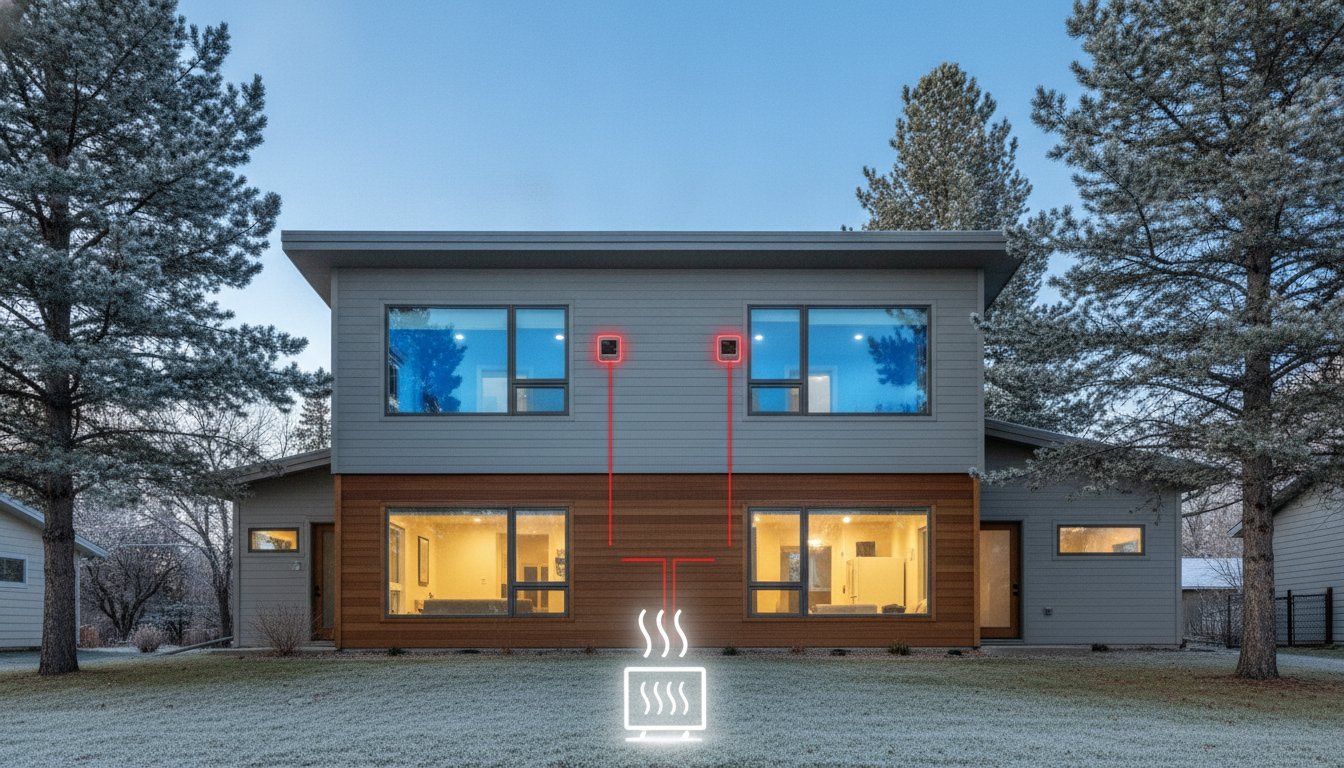
Zone Control HVAC System Cost in Onamia, MN: 2026 Homeowner’s Guide
Why are you paying to heat your Onamia basement to a tropical temperature just so your upstairs master bedroom stops feeling like a walk-in freezer? It is a common frustration for many families in Mille Lacs County. You are likely tired of seeing high utility bills from heating rooms you don't even use. We understand that achieving a consistent temperature across multiple floors often feels like a losing battle against the laws of physics.
If you have wondered about the zone control hvac system cost Onamiacontractors quote, you are looking for more than just a price tag. You want to know if your current furnace can handle the upgrade and how much you will actually save on your monthly energy bill. This 2026 guide explains the specific factors that influence installation pricing, from the number of dampers required to the 50 dollar Mille Lacs County permit fee. We will show you how local homeowners are using smart technology and federal tax credits to create a comfortable, energy-efficient home that stands up to the toughest Minnesota winters.
Key Takeaways
Learn how dampers and multiple thermostats eliminate cold spots in your basement while keeping upper floors comfortable.
Understand the specific hardware and labor factors that define the total zone control hvac system cost Onamia homeowners should expect in 2026.
Discover how to reduce monthly utility bills by 20% to 30% by only heating and cooling the rooms you actually use.
Determine if your current furnace or air conditioner is compatible with zoning or if a multi-stage upgrade is required for peak performance.
Explore the importance of professional installation and precision damper calibration to ensure your system survives the harsh Mille Lacs winters.
Table of Contents
Retrofitting vs. New Installation: Is Your Current System Compatible?
Professional Zone Control Installation with C&M Heating and Air
Understanding Zone Control HVAC Systems in Onamia Homes
Living in Onamia means preparing for extreme temperature swings. A zone control system is a strategic mechanical upgrade that allows you to divide your home into separate climate areas. Instead of one thermostat trying to manage the entire house, you have multiple sensors that communicate with a central brain. This setup uses motorized dampers installed inside your existing ductwork to direct air exactly where it is needed most. It is a sophisticated way to manage comfort that goes far beyond the capabilities of a standard single-thermostat system.
The need for zoning often comes down to the physics of comfort. Heat naturally rises, which explains why Onamia basements often feel like iceboxes in January while the upstairs bedrooms are uncomfortably warm. Standard systems simply push air everywhere at once, regardless of whether a room is occupied or what floor it is on. When you evaluate the zone control hvac system cost Onamia homeowners typically find that the precision of these components solves these architectural challenges once and for all.
A reliable system relies on three primary components working in harmony. Multiple thermostats act as the sensors for each area. The zone control panel serves as the brain, receiving data and making decisions. Finally, motorized dampers act as the gates within your vents. You can learn more about how zone dampers work to understand how they physically regulate airflow without straining your equipment. This is a critical distinction because simply closing manual floor registers can actually damage your furnace. Closing vents increases static pressure, which leads to blower motor failure or a cracked heat exchanger; zoning safely manages that pressure through the control panel.
Why Onamia Homeowners Choose Zoning
Many local families deal with the "hot second floor" syndrome during our humid Minnesota summers. Zoning allows your air conditioner to focus its cooling power on those upper levels during the day while keeping the main floor steady. It is also an ideal solution for guest wings or home offices in the Mille Lacs area that stay empty for most of the week. You can keep those spaces at a baseline temperature and only ramp up the comfort when they are actually in use.
The Role of the Zone Control Panel
The control panel is the foundation of a reliable system. It manages the complex communication between your furnace, air conditioner, and individual dampers. Modern smart panels now offer integration with Wi-Fi thermostats and outdoor sensors, allowing the system to adjust automatically based on the weather outside. Choosing a high-quality panel ensures that your zoning system remains responsive and durable through years of heavy use in our local climate.
Breaking Down the Cost: What Determines Your Investment?
Calculating the zone control hvac system cost Onamia homeowners face involves balancing hardware choices with the specific architectural needs of a Minnesota home. While the technology itself is standardized, the implementation varies based on how your house is built. Professional installation ensures that these components work together without compromising the lifespan of your furnace or air conditioner. When evaluating the zone control hvac system cost Onamia residents should also consider the potential for federal tax credits that can offset the initial investment.
Hardware serves as the first major component of your investment. Motorized dampers, which physically regulate airflow, typically range from 150 to 300 dollars each. The control panel, which acts as the system’s brain, can range from 200 to 500 dollars. Beyond these basics, your choice of thermostats plays a significant role. Upgrading to smart multi-zone units increases the initial cost but offers better precision and remote control through your smartphone. These devices allow you to monitor your home from anywhere, providing peace of mind during a deep freeze.
Labor is often the most variable factor. In Onamia, many homes have finished basements or complex duct layouts that require careful navigation. Electricians and HVAC technicians must fish wires through existing walls to connect the new thermostats to the central panel. This process is labor-intensive and requires a steady hand to avoid unnecessary drywall damage. You should also account for the 50 dollar Mille Lacs County permit fee. All mechanical permits in our area must be submitted through the county’s online portal to comply with local regulations and safety standards.
The "Number of Zones" Factor
The total number of zones is the primary driver of the final price. A two-zone system, usually separating the living areas from the sleeping quarters, is the most common entry point. It is highly effective for standard ranch or split-level homes. Larger lakefront properties on Mille Lacs often require three or four zones to account for sun exposure on the water side versus the shaded side of the house. Planning these zones all at once is much more cost-effective than attempting to add a single zone later, which would require re-wiring and a potential panel upgrade.
Ductwork Accessibility and Modification
Accessibility determines how quickly a technician can install the dampers. Homes with open basements allow for fast, straightforward installation. If your ceilings are finished, labor costs will naturally rise due to the extra time needed for access. We often find that older Minnesota homes require custom-sized dampers to fit non-standard ductwork. Additionally, a bypass damper is usually necessary to prevent static pressure buildup. This component protects your blower motor when most zones are closed. According to the U.S. Department of Energy on zone heating, proper system design is essential to maximize the efficiency of modern equipment like heat pumps.
If you are unsure how many zones your specific layout needs, a professional home comfort assessment can provide the clarity you need to move forward confidently.
Retrofitting vs. New Installation: Is Your Current System Compatible?
Before you commit to an upgrade, we must determine if your existing equipment can handle the physical demands of zoning. The gold standard for any zoned home is a multi-stage furnace or a variable-speed heat pump. These systems are designed to adjust their output based on demand. If only one small zone needs heat, a variable-speed blower slows down to deliver the exact amount of air required. This prevents the system from "short cycling" and ensures a quiet, efficient operation during those long Onamia winters.
Many homeowners ask about the "Retrofit Tax" associated with older properties. When we add zoning to a finished home, the labor involves fishing communication wires through existing walls to connect thermostats to the control panel. This process is more complex than a new build where the studs are exposed. This extra labor is a significant factor in the total zone control hvac system cost Onamiaresidents pay for retrofitted solutions. While wireless thermostats are an option, hardwired connections remain the most reliable choice for long-term performance in the Mille Lacs area.
We also perform a rigorous system health check before moving forward. It's rarely a good investment to install a sophisticated zoning system on a furnace that is more than 12 to 15 years old. If your current unit is nearing the end of its life, we will recommend a full replacement instead. For single-speed furnaces that are still in good health, we utilize smart bypass solutions. These components safely redirect excess air pressure, allowing older technology to support multiple zones without overheating the heat exchanger.
Assessing Your Current Ductwork
Zoning will only be as effective as the ducts carrying the air. We check for leaks because even a small gap can waste the energy you are trying to save. In Onamia, ducts running through unconditioned attics must be heavily insulated to prevent heat loss when it's 10°F outside. Static pressure refers to the resistance your HVAC system faces when pushing air through the ducts; keeping it balanced is vital for protecting your blower motor from premature failure.
When to Consider a Full System Replacement
Sometimes, the most cost-effective path is to bundle your zoning project with a new furnace or heat pump installation. You can often save on labor by having everything installed at once. Modern high-efficiency systems often come with factory-designed zoning capabilities that offer superior communication between components. This setup provides the best possible ROI by maximizing the 30% federal tax credit available for energy-efficient upgrades. Choosing a complete system ensures every part is engineered to work together, providing the reliability you need for a Minnesota January.

Best Air Purifier for Allergies in Milaca: Whole-Home Solutions for 2026
If you’re tired of dragging a portable air cleaner from room to room while still battling itchy eyes, you aren't alone. In a farming community like Milaca, a single-room unit is often overmatched by the sheer volume of agricultural dust and seasonal pollen. Most local homeowners understand the struggle of keeping older Minnesota homes clean when the wind picks up across the fields. You've likely tried every gadget on the market, only to find that the air quality in your living room remains poor. Finding the best air purifier for allergies Milaca families can rely on means looking beyond the small plastic boxes sitting in the corner of your bedroom.
We want to help you breathe easier by explaining why whole-home air purification is the gold standard for consistent relief. This guide will show you how to reduce your reliance on allergy medication by filtering your entire house at once rather than one room at a time. You'll learn the technical differences between standard HVAC filters and HEPA systems, including the latest 2026 energy efficiency standards. We will also break down how to interpret MERV ratings and the "2/3 rule" for air delivery to ensure your home stays a sanctuary from the outdoor elements.
Key Takeaways
Understand how Milaca's unique agricultural landscape and harvest seasons impact your indoor air quality and seasonal health.
Discover why a whole-home system is the best air purifier for allergies Milaca residents can use to ensure consistent relief in every room.
Learn to identify the ideal MERV rating that balances superior air filtration with the long-term health of your HVAC system.
Explore how combining air purification with humidity control creates a comprehensive strategy to eliminate dust mites and dander.
See why professional installation from local experts is essential for optimizing air quality systems in the specific Minnesota climate.
Table of Contents
Understanding Milaca's Allergy Landscape & Air Quality Challenges
Whole-Home Air Purifiers vs. Portable Units: Which is Best for You?
Understanding Milaca's Allergy Landscape & Air Quality Challenges
Living in Milaca means being close to the land. While the open fields are a hallmark of our community, they bring unique challenges for your home’s air. Our agricultural surroundings mean we deal with significantly higher pollen counts than many urban areas. When harvest season hits, the dust doesn't just stay in the fields. It finds its way into every corner of your home, settling into carpets and furniture. The dust is relentless.
An air purifier is a specialized system built to trap and remove these microscopic irritants. We're talking about mold spores, pet dander, and that fine agricultural dust that triggers constant sneezing. According to the EPA, indoor air is often two to five times more polluted than the air outside. This is a startling fact for many neighbors, but it makes sense when you realize how modern, energy-efficient homes trap pollutants inside. Finding the best air purifier for allergies Milaca homeowners can install involves understanding these local environmental pressures and how they affect your family's health.
Common Local Allergens in Central Minnesota
Milaca and Princeton residents know the seasonal cycles well. Ragweed and grass pollen peaks can make summer and fall miserable for anyone with sensitivities. Our high Minnesota humidity also creates a breeding ground for dust mites and mold, especially in basements or older homes. We also frequently see fine particulate matter (PM2.5) from regional wildfires or intensive farming operations. These tiny particles are small enough to bypass your body's natural defenses, making high-quality filtration a necessity rather than a luxury.
Why Room Purifiers Often Fall Short in Larger Homes
Many people start their journey toward cleaner air with a portable unit. They're easy to buy, but they have major limitations. The Clean Air Delivery Rate (CADR) of most portable units isn't enough for the open-concept layouts common in our region. If you put a purifier in your bedroom, it does nothing for the air quality in your kitchen or living room. You'd need a unit in every single room to see real results. Running multiple units is noisy and clutters your living space with cords and bulky machines. For true relief, a system that meets the HEPA filter standard and integrates directly with your HVAC system is the superior choice. It treats the air throughout the entire house simultaneously, ensuring no room is left unprotected.
Whole-Home Air Purifiers vs. Portable Units: Which is Best for You?
Choosing between a portable unit and a central system is really a question of scale. Most people start with a small, plug-in air cleaner because it seems simple. These units work well for a single bedroom or a small office. However, they struggle to make a dent in the air quality of a typical Milaca home with an open floor plan. A portable unit only cleans the air in its immediate vicinity. It leaves the rest of your house vulnerable to the agricultural dust and pollen we discussed earlier. If you want the best air purifier for allergies Milaca families can rely on, you need a solution that covers every square inch of your living space.
Whole-home systems leverage your existing HVAC infrastructure. Instead of sitting in a corner, these systems are installed directly into your ductwork. They treat 100% of the air that passes through your furnace or air conditioner. This means every time your blower motor runs, your air is getting scrubbed. It is a more efficient way to manage indoor air quality because it uses the equipment you already own. You can find more details on how these technologies differ in this EPA guide to air cleaners, which highlights the effectiveness of central filtration.
The Science of Whole-Home Filtration
The installation process is straightforward for a professional. We integrate the purifier into your return air ductwork. This placement is strategic. It ensures that all air being pulled back into your furnace is cleaned before it is redistributed. This creates a cycle of continuous cleaning. For residents dealing with severe asthma or chronic allergies, this consistency is vital. It prevents "pockets" of dirty air from lingering in hallways or spare rooms. It just works. If you're ready to upgrade your home’s defense, consider our professional air purifiers designed for central systems.
Comparing Maintenance and Long-Term Costs
Maintenance is where the differences become very clear. Portable units often require filter changes every few months. If you have four or five units throughout your house, that is a lot of time and money spent on replacement filters. Whole-home media filters are much larger and more robust. Most only need to be replaced once or twice a year. You also save on your monthly utility bills. Running several small motors in various rooms consumes significantly more electricity than using your furnace’s high-efficiency blower motor. When you factor in the cost of filters and electricity, a central system often provides better long-term value for local homeowners.
Key Features to Evaluate: MERV Ratings, HEPA, and CADR
Understanding the technical specs of your filtration system is the next step in finding the best air purifier for allergies Milaca residents need for long-term comfort. It isn't just about catching dust; it's about how that filter interacts with your furnace motor. We often see homeowners buy the highest-rated filter they can find, only to realize later that it is choking their HVAC system's airflow. This creates a problem called static pressure. High static pressure forces your system to work harder, which can lead to expensive repairs or even a total blower motor failure. Balancing filtration power with airflow is the key to a healthy home.
Most residential systems use MERV ratings to measure effectiveness. This rating tells you exactly what size particles the filter can trap. While basic filters only stop large clumps of dust, higher-rated options can catch microscopic irritants like smoke and bacteria. For a deep dive into how these ratings impact your indoor environment, you should review the EPA's Guide to Air Cleaners in the Home. Additionally, many high-end purifiers include activated carbon layers. These layers are essential if you want to neutralize household odors or volatile organic compounds (VOCs) that often trigger chemical sensitivities.
Choosing the Right MERV Rating for Your HVAC System
The MERV scale runs from 1 to 16 for most residential applications. Selecting the right one depends on your specific health needs and your equipment's capabilities:
MERV 8: These provide basic protection. They catch large particles like dust and lint but won't do much for fine pollen.
MERV 11-13: This is the "sweet spot" for allergy sufferers. These filters are highly efficient at trapping pet dander, mold spores, and agricultural pollen common in Milaca.
MERV 16: These offer hospital-level filtration. However, you should always consult a professional before installing one to ensure your furnace can handle the resistance.
Understanding True HEPA and Electronic Air Cleaners
A True HEPA filter is a filter that traps 99.97% of particles as small as 0.3 microns. This is the gold standard for particulate removal. While many portable units claim to be "HEPA-type," they often fail to meet this strict scientific requirement. Electronic air cleaners offer another layer of protection by using ionization. These systems give incoming particles an electrical charge, causing them to stick to internal collection plates like a magnet. This is particularly effective for the smallest microscopic irritants. Many neighbors also choose to integrate UV light systems. While the filter traps the dust, the UV light works to kill airborne bacteria and viruses, providing a comprehensive defense for your family.
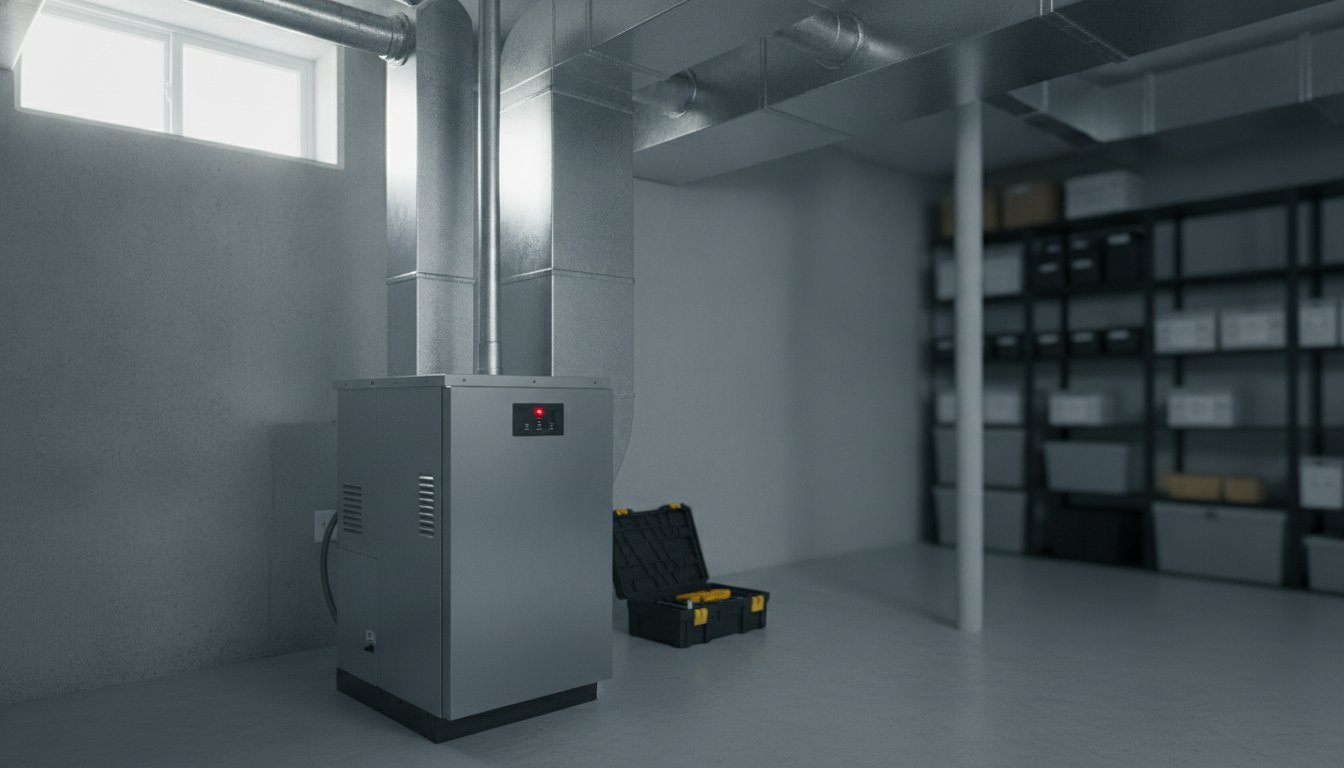
Cost to Install Whole House Dehumidifier in Princeton, MN: 2026 Price Guide
Did you know that high humidity in your Princeton home is essentially a hidden tax on your air conditioner and your health? You've likely noticed that sticky feeling in your basement or seen your energy bills climb as your AC struggles to keep up during a humid Minnesota summer. Dealing with musty odors and the constant threat of mold isn't just a comfort issue. It's a home maintenance headache that many of our neighbors in the North Metro face every year.
We understand that you want a dry, healthy home without the stress of dampness affecting your property value. This guide will help you understand the real-world cost to install whole house dehumidifier Princeton homeowners can expect in 2026. We'll explore the local factors that influence your total investment and the long-term savings you'll see on your utility bills once your cooling system doesn't have to work double time. We'll also break down the differences in unit capacities and show you why a permanent, low-maintenance solution is the best way to protect your home's structural integrity and your family's comfort.
Key Takeaways
Learn the average 2026 price range for professional equipment and labor to help you budget effectively for your home improvement project.
Understand how your home's layout and specific unit capacity impact the total cost to install whole house dehumidifier Princetonhomeowners can expect.
Discover the long-term energy savings and superior moisture removal performance that whole-home systems offer compared to standard portable units.
Identify why Princeton’s unique geography and high water tables near the Rum River make high-capacity dehumidification a necessity for protecting your foundation.
See how local expertise from a family-owned provider ensures your system is sized correctly for the specific demands of the North Metro climate.
Table of Contents
Average Cost to Install a Whole-House Dehumidifier in Princeton, MN (2026)
Whole-Home vs. Portable Dehumidifiers: Calculating Long-Term Value
Average Cost to Install a Whole-House Dehumidifier in Princeton, MN (2026)
Pricing for home upgrades in the North Metro can vary based on your specific needs. In 2026, professional installation for a whole-home system generally falls within a range that accounts for both high-quality hardware and expert labor. While national averages provide a starting point, Princeton homeowners often see quotes that reflect our local labor market and the specific moisture challenges of Mille Lacs County. Before diving into the numbers, it helps to understand What is a Whole-House Dehumidifier? and how it differs from the portable units you might find at a big-box store.
Determining the cost to install whole house dehumidifier Princeton families need involves looking at the total scope of work. Hardware usually represents about 60% to 70% of the total investment. Labor and specialized materials, like dedicated ducting and drainage components, make up the rest. A standard installation involves connecting the unit directly to your existing furnace or heat pump. A custom retrofit might involve running new electrical lines or modifying ductwork in tight crawlspaces, which naturally increases the final investment. Industry data for the North Metro suggests that hardware costs for 60 to 130-pint units remain the primary driver, followed by the complexity of the plumbing and electrical integration.
What is Included in a Professional Installation Quote?
A comprehensive quote from a local expert covers more than just the box. It includes a unit capacity-matched to your home's square footage to ensure it doesn't short-cycle or leave the air feeling sticky. The installation also involves dedicated ductwork integration with backdraft dampers. These dampers are vital because they prevent air from moving backward through the system, which keeps your air conditioner running efficiently. Finally, your quote includes a permanent drainage solution. Whether it uses a p-trap, a condensate pump, or direct routing to a floor drain, this setup means you'll never have to empty a heavy water bucket again.
Estimated Permit and Inspection Fees in Mille Lacs County
Mechanical permits are a required part of any whole-home indoor air quality upgrade in Princeton. These permits ensure that the electrical and ducting work meets the current Minnesota building codes. In Mille Lacs County and surrounding townships, permit costs generally range from $50 to $200 depending on the project's valuation. While this is an extra step, the final inspection provides immense value. It serves as official documentation for your home insurance provider and protects your manufacturer's warranty. Having a pro handle the paperwork ensures your system is safe, legal, and fully covered if you ever decide to sell your home.
Key Factors That Drive Your Installation Total
Calculating the exact cost to install whole house dehumidifier Princetonhomeowners face depends on several variables beyond just the unit price. Every home in the North Metro has a unique layout. A compact rambler near the city center will have different requirements than a sprawling two-story home closer to the Rum River. Your final quote is shaped by the physical size of your living space, the current state of your HVAC system, and the specific moisture challenges your property faces. Understanding the benefits of controlling indoor humidity is the first step in seeing why these factors matter for your home's long-term health.
Installation complexity is often the biggest variable. If your furnace is easily accessible in a wide-open basement, labor costs stay lower. However, if the unit must be tucked into a tight crawlspace or an unfinished attic, the time required for ducting and drainage increases. We also look at your brand selection and warranty tiers. Premium units often come with longer parts-and-labor guarantees, providing more peace of mind for an appliance that will run almost constantly during our humid Minnesota summers. If you're unsure about your current system's compatibility, a quick professional evaluation can clarify your specific requirements.
Sizing the Unit: Pints vs. Square Footage
Dehumidifiers are rated by how many pints of water they can remove in a 24-hour period. For a typical Princeton home, a 60-pint unit might suffice for a well-sealed 2,500-square-foot space. Larger homes or those with chronic basement dampness often require 90 to 120-pint industrial-grade units. While it's tempting to buy the biggest unit available, "oversizing" is a common mistake. A unit that is too large will short-cycle, meaning it turns on and off too frequently. This causes excessive wear on the compressor and fails to remove humidity effectively, eventually leading to higher repair costs.
Electrical and Plumbing Modifications
Most whole-home dehumidifiers require a dedicated 15 to 20-amp circuit to operate safely. If your electrical panel is already full, you may need to budget for a sub-panel or a circuit expansion. Plumbing is equally important. While routing a drain line to a nearby floor drain is standard, homes without a convenient drain might need a condensate pump to move water uphill or across a room. Attempting to handle these connections yourself is risky, as DIY electrical work almost always voids manufacturer warranties and can lead to safety hazards in your mechanical room.
Whole-Home vs. Portable Dehumidifiers: Calculating Long-Term Value
When you compare a $300 portable unit from a local hardware store to a professional system, the initial price gap seems wide. However, the true cost to install whole house dehumidifier Princeton homeowners pay includes long-term operational savings that portables simply can't match. Portable units are often designed for single rooms. To treat an entire 2,000-square-foot home, you would need multiple units running simultaneously. This approach cluttering your hallways with noisy machines that require daily attention. Emptying a heavy water bucket every morning is a chore that most people eventually tire of doing, often leading to the units being turned off and moisture problems returning.
Operational efficiency is where the value really shifts. Central systems are built with industrial-grade components designed to move large volumes of air with minimal electricity. Choosing an ENERGY STAR certified whole-home dehumidifier ensures you're using the most efficient technology available. These systems are tucked away in your mechanical room, integrated directly into your HVAC ductwork. This setup provides a quiet, "set-and-forget" solution that maintains consistent air quality throughout every room, rather than just the immediate area around a portable plug-in.
The ROI of Improved AC Efficiency
Dry air feels cooler on the skin. This isn't just a feeling; it's basic physics. When humidity levels drop, your body's natural cooling works more effectively. You can often raise your thermostat by 3 to 5 degrees during a sticky Minnesota July without losing a bit of comfort. This adjustment leads to significant utility savings over the summer months. Your air conditioner is designed to cool air, but it spends a massive amount of energy removing moisture first. By offloading that work to a dedicated dehumidifier, you reduce the mechanical load and can extend the overall lifespan of your expensive AC unit.
Preserving Home Value and Health
Princeton homes, especially those near the Rum River or in areas with high water tables, often struggle with seasonal moisture shifts. High humidity causes hardwood floors to expand and cup, while millwork and door frames can warp over time. A central system stabilizes these materials, preventing costly structural repairs. Maintaining your home within the ideal humidity zone of 30% to 50% is the most effective way to prevent biological growth and protect your home's structural millwork. This proactive approach also eliminates the risk of expensive mold remediation in your basement, which can cost thousands of dollars and damage your home's resale value.
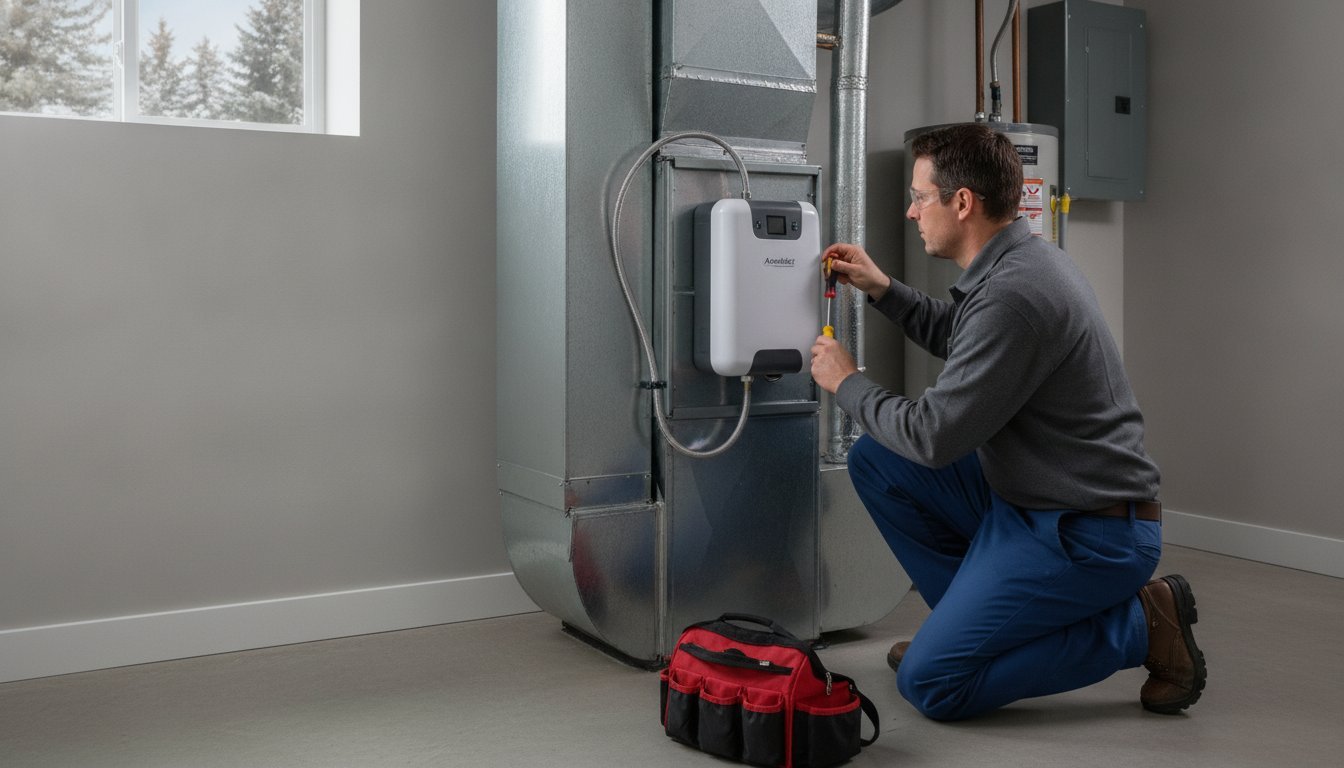
Whole Home Humidifier Installation in Elk River, MN: The Ultimate Guide
You reach for the bedroom doorknob on a freezing January morning in Elk River and a sharp static shock jolts you awake before you've even had your coffee. It's a frustrating ritual for many Minnesota homeowners, often accompanied by scratchy throats, dry nasal passages, and the sight of new gaps appearing in your hardwood floors or crown molding. When the outdoor temperature drops, your furnace works overtime, but it also strips the moisture right out of your indoor air. You shouldn't have to choose between being warm and being comfortable.
We understand that maintaining a healthy home environment is a top priority for our neighbors. Professional whole home humidifier installation Elk River offers a permanent solution that protects both your family's health and your home's structural integrity. By integrating directly with your existing HVAC system, these units maintain a consistent 25% to 50% relative humidity as recommended by state standards. This guide will walk you through how a "set it and forget it" system can lower your heating bills through better heat retention and ensure every room stays cozy. We'll also cover the importance of meeting the Minnesota State Building Code and securing the necessary city permits to ensure your installation is safe, efficient, and built to last.
Key Takeaways
Learn why Elk River's unique geography and winter wind patterns make your home lose moisture faster than you might expect.
Compare the technical differences between bypass and fan-powered systems to find the most efficient fit for your specific furnace setup.
Avoid the "one room trap" by understanding how whole home humidifier installation Elk Riverprovides consistent protection for your entire property with minimal effort.
Get a clear picture of the professional installation process, from the initial site assessment to the strategic integration with your supply or return air.
See why local expertise matters when handling the specific indoor air quality and water challenges found in North Metro homes.
Table of Contents
Why Elk River Homes Face Extreme Winter Dryness
Elk River's unique position in the North Metro makes it a prime target for the "Polar Vortex" each winter. When those freezing gusts sweep across the open landscapes of Sherburne County and the Mississippi River valley, they carry almost zero moisture. Once that brittle air enters your home and your furnace heats it to a comfortable 70 degrees, the relative humidity plummets. This creates what experts call the "desert effect." Inside a heated Minnesota home, the air can actually become drier than the Sahara Desert, which typically maintains about 25% humidity. Without a dedicated Humidifier integrated into your HVAC system, your furnace will continue to cycle this parched air through every room in the house.
Local building styles in our community also play a role in how we experience dryness. Many Elk River homes feature open floor plans and vaulted ceilings that make air circulation and moisture balance a constant struggle. Additionally, because we follow the Minnesota State Building Code Chapter 1346, our homes are built to be airtight for energy efficiency. While this is great for your heating bill, it traps dry air inside and prevents natural moisture exchange. This is why professional whole home humidifier installation Elk River is more than a luxury; it's a necessary step to counteract our specific regional climate and the physics of modern home construction.
The Health and Property Costs of Dry Air
Low humidity does more than just make you reach for the lotion. It dries out your nasal passages and throat, which are your body's primary filters against winter viruses. When these membranes are parched, your immune system's first line of defense is weakened. Beyond your health, your property itself is at risk. In Elk River, we frequently see beautiful hardwood floors and custom trim begin to separate or "check" during the peak of January. This happens because the dry air literally sucks the moisture out of the wood fibers, causing them to shrink and crack. You might also notice increased snoring or restless sleep as the dry air irritates your respiratory system throughout the night.
Static Electricity: More Than Just an Annoyance
If you're tired of getting a sharp shock every time you touch a doorknob or a light switch, your home is likely well below the healthy benchmark of 30% to 45% humidity. Static electricity builds up because dry air acts as an insulator, allowing electrons to accumulate on your body rather than dissipating. While it's frustrating for you, it's a genuine risk for your technology. Modern homes are filled with sensitive smart home devices and high end electronics that can be permanently damaged by a single static discharge. Investing in whole home humidifier installation Elk River provides a consistent shield for both your family's comfort and your expensive home investments.
Types of Whole-Home Humidifiers for Minnesota Furnaces
Selecting the right technology for whole home humidifier installation Elk Riverdepends heavily on your home's square footage and your existing furnace configuration. In the North Metro, we primarily see three types of systems designed to handle our harsh winters. Each has its own method of moisture delivery, and choosing the wrong one can lead to inefficient operation or insufficient humidity during a deep freeze. Understanding these differences ensures your home remains a sanctuary against the dry outdoor air.
Bypass humidifiers are the reliable, cost-effective standard for many local residences. They work by tapping into the pressure differential between your furnace's supply and return ducts. A portion of the heated air is diverted through a water-soaked evaporator pad, picking up moisture before being recirculated. Because they have very few moving parts, they are exceptionally durable. However, they do require enough ductwork space for the bypass piping, which might be a challenge in some smaller utility rooms.
Fan-powered humidifiers offer a step up in moisture output. Unlike bypass models, these units feature an internal fan that pulls air across the evaporator pad independently. This design is ideal for homes where the furnace plenum is too small for extra ductwork or for homeowners who want maximum moisture delivery without relying solely on the furnace blower's speed. If you're ready to upgrade your indoor comfort, our technicians can help you choose the right system through a complimentary air quality assessment.
Bypass vs. Power Humidifiers: A Comparison
When evaluating the installation footprint, bypass models generally require more "elbow room" around the furnace for the additional ducting. Power humidifiers are more compact since they mount directly to the supply plenum. In terms of water usage, both systems are efficient, but power humidifiers often provide better moisture saturation in larger floor plans. Maintaining these systems according to EPA guidelines on humidifier use ensures that your indoor air stays clean and free from mineral buildup. Most homeowners find that a simple annual pad change during their fall furnace tune-up is enough to keep either system running perfectly all winter.
Why Steam Humidifiers are Gaining Popularity
Steam humidifiers are considered the gold standard for whole home humidifier installation Elk River, especially for larger homes or properties with expensive wood investments. These systems operate by boiling water to create pure steam, which is then injected directly into the airflow. Because they don't rely on the furnace's heat to evaporate water, they can run even when the furnace is off. This provides unmatched precision through digital humidistats. This level of control is perfect for protecting vaulted ceilings and intricate woodwork from the "desert effect" of a Minnesota January. They are the ultimate "set it and forget it" solution for total climate control.
Whole-Home Systems vs. Portable Humidifiers
Many homeowners in our community start their journey toward comfort with a small, portable unit from a big-box store. While these devices can provide temporary relief in a single bedroom, they often lead to what we call the "one room trap." You might feel comfortable while sleeping, but the moment you step into the hallway or living room, the parched air returns. Choosing whole home humidifier installation Elk River ensures that moisture is distributed evenly through every square foot of your property. Instead of managing "pockets" of comfort, your entire living space benefits from a balanced environment that protects both your family and your belongings.
The difference in daily life is immediate. Portable units require constant attention, usually involving heavy water tanks that must be refilled every 24 hours. If you forget to fill the tank, your humidity levels crash. A whole-home system is tied directly into your home's water line. It operates automatically based on your thermostat settings, providing a true "set it and forget it" experience. This professional integration also eliminates the noise of a buzzing fan in your bedroom. Because the system works within your HVAC ductwork, the only thing you'll notice is the consistent, silent comfort in the air.
The Problem with Portable Units
Beyond the inconvenience, portable humidifiers carry hidden downsides that many people overlook. Ultrasonic models often create a fine "white dust" on furniture, which is actually a concentrated mineral buildup from your tap water being dispersed into the air. More importantly, standing water in small reservoirs is a breeding ground for bacteria and mold if not scrubbed every few days. From an aesthetic standpoint, portables are bulky eyesores that require trailing power cords and take up valuable floor space. A whole-home installation keeps the mechanics in the utility room and out of your sight.
Efficiency and Integration
A professionally installed system uses your furnace blower to push humidified air through your existing vents. This is far more efficient than a small fan trying to move moisture across a large room. By maintaining the 30% to 50% range suggested by EPA guidelines on indoor humidity, you can actually save money on your monthly energy bills. Humid air holds heat much better than dry air. This means you can often lower your thermostat by two or three degrees without feeling a difference in warmth. Over several Minnesota winters, those savings help offset the initial cost of your whole home humidifier installation Elk River, all while adding permanent value to your home's mechanical systems.
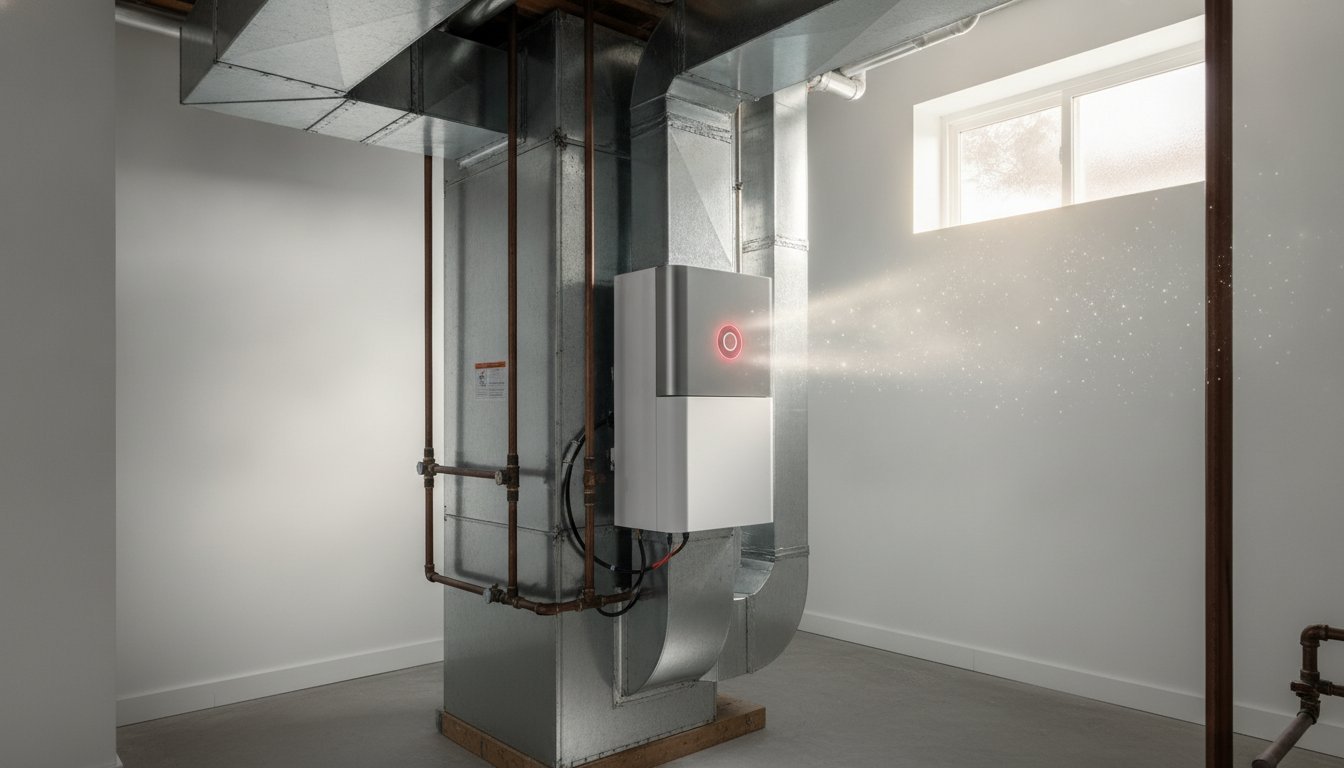
Whole Home Air Purifier Installation in Dayton, MN: The Complete 2026 Guide
Did you know the air inside your home could be two to five times more polluted than the air outside? For families in Dayton, Minnesota, this isn't just a statistic; it's a daily reality felt through persistent allergies, excessive dust on the furniture, and odors that never seem to leave. When we seal our homes tight for the long winter months, we inadvertently trap contaminants inside with us. Investing in professional whole home air purifier installation Dayton MN is the most effective way to break this cycle and ensure your family breathes clean, scrubbed air every single day.
We understand that choosing between HEPA filters and UV light systems feels overwhelming, especially with new 2026 energy codes and refrigerant regulations in play. You want a healthier living environment without the confusion of technical jargon. This guide will clarify your options and show you how the right purification system protects your HVAC coils from buildup, which can lower your long term maintenance costs. We'll walk through everything from local permit requirements to the best technology for your specific ductwork, giving you total peace of mind about the air you breathe.
Key Takeaways
Learn why Dayton’s energy-efficient homes often trap pollutants and how to neutralize common North Metro allergens.
Understand how whole home air purifier installation Dayton MNintegrates directly into your existing HVAC system to scrub air before it reaches your living spaces.
Compare the benefits of HEPA filtration for microscopic dust removal against UV-C light systems that neutralize viruses and mold.
Discover the importance of professional system sizing to ensure your purifier matches your furnace’s specific airflow requirements.
See how a tailored air quality solution can lower your HVAC maintenance costs by keeping your internal components cleaner.
Table of Contents
Why Dayton, MN Homeowners Need Whole Home Air Purification
Dayton is growing fast, and the new homes popping up across the North Metro are marvels of modern energy efficiency. These houses feature high-R-value insulation and tightly sealed envelopes designed to keep the brutal Minnesota cold out. However, this "tight home" design creates a hidden health challenge. Without a way to cycle fresh air effectively, your living space traps everything from cleaning chemicals to skin cells. The EPA has found that indoor pollutant levels can be two to five times higher than outdoor levels. This makes whole home air purifier installation Dayton MN a practical necessity for modern suburban households.
Seasonal shifts in the North Metro bring unique air quality triggers. During the spring and fall, agricultural dust and pollen from nearby fields saturate the air. In the summer, high humidity makes these particles "sticky," allowing them to cling to your ductwork and AC coils. When winter hits and the furnace runs 24/7, the air becomes incredibly dry. This dryness keeps pollutants suspended in the air longer, where they're easily inhaled. For families dealing with asthma or allergies, this constant exposure often leads to disrupted sleep and chronic respiratory irritation throughout the year.
Dayton's Specific Air Quality Challenges
The North Metro is seeing significant residential development. Local construction projects stir up fine particulate matter that migrates into your home every time a door opens. Inside, pet dander and Volatile Organic Compounds (VOCs) from new furniture or carpets contribute to a "stale" environment. Because our windows stay shut for nearly six months of the year, these irritants simply recirculate through your vents without any chance of escape. This build-up can eventually impact the efficiency of your furnace and central air system.
Whole-Home vs. Portable Purifiers
Many homeowners try to solve these issues with small, plug-in units. While these might help a single bedroom, they don't address the root of the problem. A whole-home system integrates directly into your HVAC return air plenum, scrubbing the air at the source before it ever reaches your living spaces. Various air purifier technologies, like HEPA or electronic filtration, work much more efficiently than a fleet of noisy portable fans.
Energy Efficiency: One integrated unit uses significantly less energy than running multiple portable cleaners in different rooms.
Simplified Maintenance: You only have one system to service rather than managing filters for several individual units.
Quiet Operation: The system is hidden in your mechanical room, keeping your bedrooms and living areas quiet and clutter-free.
Choosing a professional whole home air purifier installation Dayton MN ensures your entire square footage is covered. It's the most reliable way to provide consistent, medical-grade air protection for every member of your family, regardless of which room they're in.
How Whole Home Air Purifiers Work with Your HVAC System
A whole-house system doesn't sit in the corner of your living room taking up floor space. Instead, it's integrated directly into your existing ductwork, typically in the return air plenum. This is the critical junction where air from your home is sucked back into the system to be conditioned. When you schedule a whole home air purifier installation Dayton MN, our technicians place the unit at this gateway. This ensures that every cubic foot of air is scrubbed clean before it ever touches your furnace burners or air conditioning coils.
These systems generally fall into two categories: active and passive. Passive systems use dense media filters to catch physical particles like dust and pet dander. Active systems use advanced technologies like UV-C light or ionization to neutralize biological threats such as mold spores and viruses. According to the EPA's guide to home air cleaners, the overall effectiveness of any system relies on the volume of air it can process. By using your home's central blower, a whole-home unit treats the entire house simultaneously, which is far more efficient than small portable units. If you're unsure which technology fits your ductwork, you can consult with our air quality expertsfor a personalized assessment.
The Role of the Furnace Blower
Your HVAC fan is the engine of your air purification process. For maximum benefit, many Dayton homeowners choose to run their furnace blower in "Fan On" mode rather than "Auto." This keeps air moving through the purification stage even when the system isn't actively heating or cooling. We carefully balance the MERV rating of your filters with your furnace's specific CFM (Cubic Feet per Minute) requirements. This prevents the purifier from creating too much static pressure, which could otherwise stress your blower motor and lead to premature mechanical failure.
Maintenance and Longevity
Modern 2026 purification models are built for durability, often lasting as long as the furnace itself with proper care. Maintenance usually involves a simple annual filter change or a UV bulb replacement. Keeping the air clean doesn't just help your lungs; it also protects your expensive AC evaporator coils. By removing dust and organic matter before it reaches the wet environment of the cooling coils, you prevent "dirty sock syndrome" and maintain higher energy efficiency. This proactive approach to whole home air purifier installation Dayton MN preserves the life of your entire HVAC investment while keeping your indoor environment pristine.
Comparing Purification Technologies: HEPA, UV, and Electronic
Not all air purifiers are created equal, and the right choice depends entirely on what you're trying to remove from your Dayton home. Selecting the right technology for whole home air purifier installation Dayton MN requires understanding your family's specific health priorities. While some systems focus on physical debris, others target invisible biological threats. Most homeowners find that a combination of technologies provides the most comprehensive protection against the unique mix of agricultural dust and indoor pollutants we face in the North Metro.
High-Efficiency Particulate Air (HEPA) filters are the heavy hitters for dust, pollen, and pet dander. These dense filters capture 99.97% of particles as small as 0.3 microns. Because they are so thick, they require a professional assessment to ensure your furnace blower can handle the increased resistance. Without enough power, a HEPA filter can actually choke your system's airflow, leading to higher energy bills or mechanical strain. Electronic air cleaners offer an alternative by using ionization to give incoming particles an electrical charge. These charged particles then clump together, making them much easier for your main filter to grab.
UV-C germicidal lamps don't trap particles. Instead, they use short-wave ultraviolet light to scramble the DNA of microorganisms. This process neutralizes mold, bacteria, and viruses before they can circulate through your vents. Research on the effectiveness of UV air purifiers shows they are most successful when installed near the evaporator coil, where moisture often leads to biological growth. For homeowners concerned about lingering cooking smells or chemical vapors, Photocatalytic Oxidation (PCO) technology is the answer. It uses a catalyst and UV light to break down Volatile Organic Compounds (VOCs) into harmless water vapor and carbon dioxide.
Choosing the Right Tech for Your Needs
If you suffer from seasonal allergies, HEPA is non-negotiable for filtering out North Metro agricultural dust. For households with pets, PCO and activated carbon are the best defense against stubborn odors. Families with young children or seniors often prioritize UV-C systems to provide an extra layer of protection against airborne pathogens that can cause illness.
Compatibility with MN HVAC Systems
Most Dayton homes use standard forced-air gas furnaces, which are highly compatible with integrated purification. If you've recently upgraded to a dual-fuel system or a modern heat pump using the latest low-GWP refrigerants, we ensure the purifier's housing doesn't interfere with sensitive sensor arrays. For a typical 2,500 square foot Dayton home, the ideal configuration involves a high-MERV media filter paired with a dual-lamp UV-C system to provide both particulate capture and biological neutralization.
High Energy Bills in Winter: Why Your Minnesota Heating Costs Are Soaring in 2026
Did you know that Minnesotans currently owe more than $150 million in overdue utility bills? This staggering figure highlights the intense financial strain many of our neighbors feel while facing high energy bills in winter Minnesota. Between the 6.8% interim rate increase for Xcel Energy natural gas and the recent 9.62% hike for Dakota Electric members, it's clear that staying warm has become much more expensive in 2026.
We understand how stressful it is to deal with utility "sticker shock" while your home still has cold spots or uneven heating. You shouldn't have to pay a premium just to keep your family comfortable. We promise to show you the real reasons behind these soaring costs and provide practical, expert-backed strategies to lower your heating bills immediately. We'll break down the current rate structures, explain how your furnace's mechanical health impacts your wallet, and help you decide when it's time to call a professional for a furnace tune-up.
Key Takeaways
Identify the specific factors, from wholesale price spikes to delivery fees, that are driving up your utility costs this season.
Uncover how mechanical issues like dirty filters or aging components create an "inefficiency tax" and lead to high energy bills in winter Minnesota.
Master practical, immediate savings techniques including the "8-degree rule" for thermostats and the warmth-boosting "humidity hack."
Learn to distinguish between simple DIY fixes and the critical signs that your system requires a professional diagnostic or furnace tune-up.
Get clear guidance on evaluating the long-term financial benefits of upgrading to a high-efficiency heating system versus continuing frequent repairs.
Table of Contents
Why Are Energy Bills So High in Minnesota This Winter (2026)?
The Invisible Culprits: How Your Furnace Impacts Monthly Costs
Practical Strategies to Lower Winter Heating Costs Immediately
Why Are Energy Bills So High in Minnesota This Winter (2026)?
Many homeowners across the North Metro opened their utility statements this month only to find "sticker shock" waiting for them. Seeing high energy bills in winter Minnesota is a common frustration as we navigate the start of 2026, but this year feels different. It isn't just a matter of how much fuel you used during the bitter January cold snaps. Instead, it's a combination of rising base rates, delivery fees, and recovery surcharges that make our local heating costs feel significantly heavier than those in neighboring states.
Minnesota operates in a regulated energy market, which means you can't shop around for a different provider based on price. You're also likely seeing a surcharge on your natural gas bill that will continue through most of 2026 to recover costs from Winter Storm Uri. Additionally, the state's current line extension allowance policy adds an estimated $34 million annually to the bills of existing customers. These factors, combined with the 6.8% interim rate increase that Xcel Energy implemented on January 1, 2026, create a perfect storm for your wallet.
It's helpful to differentiate between your actual therm usage and "Peak Demand" charges. While your usage reflects the gas burned by your furnace, peak charges are based on the strain placed on the entire utility grid during the coldest hours of the month. If you are a Dakota Electric Association member, you likely noticed the final rate increase of 9.62% that went into effect in June, which included a higher monthly fixed charge. You're paying more just to stay connected to the grid, even before you turn the thermostat up.
The 2026 Natural Gas Price Surge
Supply chain disruptions caused by national winter storms earlier this year sent wholesale natural gas prices climbing. Major regional gas utilities don't absorb these extra costs; they pass them directly to North Metro consumers. The purchased gas adjustment (PGA) is the mechanism utilities use to pass the fluctuating wholesale cost of natural gas directly to consumers without any added profit. This means when the market price for gas spikes during a storm, your next bill reflects that reality immediately.
The Impact of Prolonged Sub-Zero Temperatures
When the thermometer stays below zero for days, your furnace doesn't just run longer; it works significantly harder to maintain a safe indoor temperature. Understanding household energy consumption patterns is essential because heating accounts for the largest portion of your winter utility budget. During "Polar Vortex" events, many of us naturally crank the heat higher for comfort, but in wind-exposed areas like Blaine and Ramsey, the wind chill accelerates heat loss through your home's exterior walls. This forces your system into a state of constant operation, driving up your therm usage and your bill simultaneously.
The Invisible Culprits: How Your Furnace Impacts Monthly Costs
While market rates set the price per therm, your equipment's mechanical health determines how many therms you actually burn. Many homeowners overlook the "inefficiency tax" that comes with an aging or neglected system. If your furnace has an older 80% AFUE rating, twenty cents of every dollar you spend on gas literally disappears up the flue pipe. Upgrading to a modern unit with a 97% AFUE rating can reduce heating costs by 20% to 35%. For an average home in the Twin Cities, that translates to $400 to $800 in annual savings. Without high-efficiency equipment, you're paying a premium for heat you never actually feel.
In communities like Andover and Coon Rapids, a dirty air filter remains the number one cause of high energy bills in winter Minnesota. When a filter is clogged with dust and pet dander, your system has to work twice as hard to move air. This often leads to "short-cycling," where the furnace turns on and off rapidly. This constant starting and stopping burns significantly more fuel than a steady, efficient heating cycle. It also places immense strain on internal components, leading to a higher likelihood of an expensive furnace repairduring a cold snap.
Restricted Airflow and Blower Motor Stress
A clogged filter doesn't just block heat; it forces the blower motor to draw more electricity to compensate for the resistance. This mechanical friction creates a spike in your electric bill alongside your gas costs. You can perform a simple "Filter Test" today by holding your current filter up to a bright light. If you can't see the light through the fibers, your furnace is suffocating. Maintaining clear airflow is one of the most effective U.S. Department of Energy tips for keeping seasonal costs under control.
Thermostat Miscalibration and Zone Issues
Old manual thermostats often "overshoot" your target temperature because they lack the precision of modern sensors. This wastes energy by heating the home beyond what's necessary. Multi-story homes in our region also struggle with "Ghost Heat," where rising warm air makes the upstairs thermostat think the whole house is warm while the basement remains freezing. This imbalance causes the furnace to run at odd intervals, never quite finding an efficient rhythm. If your furnace runs constantly but the house still feels chilly, the problem might be a calibration error rather than a lack of heating power.
DIY Troubleshooting vs. Professional Energy Audits
Before you assume your high energy bills in winter Minnesota are purely the result of utility rate hikes, take a closer look at your home's envelope. Older residences in Anoka and Champlin often feature character and charm, but they also tend to have unique insulation gaps. Settling foundations can create hairline cracks around window frames that let heat escape. While a general energy auditor might point out a lack of attic insulation, an HVAC professional looks at how your home and furnace interact as a single system. Balancing these DIY checks with professional insights ensures you aren't just treating the symptoms of high costs while the root cause remains hidden.
Homeowner Quick-Fixes for Immediate Relief
You can start identifying energy leaks today without specialized tools. A simple "Incense Stick Test" is a great way to find drafts. Hold a lit incense stick near window sills, door frames, and electrical outlets; if the smoke wafts horizontally, you've found a leak that needs weatherstripping. Another easy adjustment involves your water heater. Lowering the temperature to 120 degrees can provide subtle monthly savings without sacrificing comfort. For more ideas, educational resources offer several winter energy conservation tips that focus on low-cost behavioral changes. Be careful not to close too many registers in unused rooms, though. Restricting airflow too much can actually increase pressure in your ductwork and cause your furnace to work harder, negating any potential savings.
When to Call a Professional for a Furnace Diagnostic
There are times when DIY efforts aren't enough to curb soaring utility costs. If your furnace makes banging or whistling noises, or if you notice a faint metallic smell, your system is likely struggling mechanically. A professional HVAC diagnostic goes far beyond a visual inspection. We use combustion analysis to measure your fuel-to-heat ratio accurately. This test tells us exactly how much of the gas you're paying for is actually being converted into warmth for your family.
At C&M Heating and Air, we also prioritize checking duct integrity. "Leaky Ducts" are a major culprit for heat loss, especially when they run through unconditioned spaces like crawlspaces or attics. If your ducts have gaps, you're paying to heat the outdoors rather than your living room. The cost of a professional furnace tune-up is often offset by the immediate reduction in your monthly therm usage. Investing in a diagnostic now prevents the "inefficiency tax" from draining your budget all through the 2026 winter season.
Thermostat Not Working After Power Outage in Anoka? Here is How to Fix It
Imagine the relief you feel when the lights finally flicker back on after a storm, only to realize ten minutes later that the house is still getting colder. You check the wall, but the display is blank or unresponsive. Dealing with a thermostat not working after power outage Anoka homeowners often experience can be incredibly stressful, especially when the threat of frozen pipes is looming during a harsh Minnesota winter. It's frustrating to have electricity restored while your furnace or air conditioner remains silent.
We understand that your first instinct might be to worry about expensive equipment damage or complex electrical failures. It's a common concern, but often the solution is simpler than it seems. Our goal is to help you safely restore your home's climate control and gain peace of mind about your HVAC system's health. In this guide, we'll walk you through the essential steps to troubleshoot your device, from checking circuit breakers to performing a proper system reset. You'll learn exactly how to get your heating or cooling back online quickly and how to tell if a power surge requires professional attention.
Key Takeaways
Identify whether your HVAC issue is simple "digital confusion" or actual equipment damage caused by a localized power surge.
Follow a clear, five-step guide to safely reset your system, including how to handle a thermostat not working after power outage Anokahomes often face.
Learn why smart thermostats may require a specific "recharge period" before they can reconnect to your home's Wi-Fi and resume normal operation.
Recognize critical red flags, such as the smell of burnt plastic or ozone, that signal a need for professional furnace or air conditioning repair.
Understand the importance of verifying grid stability through Anoka Municipal Utility before attempting to restart your mechanical systems.
Table of Contents
Why Your Thermostat Stays Blank After an Anoka Power Outage
A blank screen on your wall is the last thing you want to see when the lights finally come back on. While Anoka Municipal Utility works hard to restore power quickly, the process of bringing the grid back online can create electrical fluctuations. A thermostat not working after power outage Anoka residents experience is often the result of a protective shutdown or a scrambled internal processor. When the grid fluctuates, your home's sensitive electronics may "freeze" to prevent permanent damage. To understand why this happens, it helps to know What is a Thermostat? and how it interacts with the rest of your heating and cooling system.
Most modern thermostats don't get their power from a standard wall outlet. Instead, they rely on a small 24V transformer located inside your furnace or air handler. If a localized surge occurs during grid restoration, this transformer can temporarily stop sending power, or the thermostat's logic might get stuck in an error loop. In Anoka, secondary trips are common during major storms as the local grid stabilizes. This means your power might flicker several times, potentially confusing your HVAC system's controls and leaving you with a dead display even though the rest of the house has electricity.
Tripped Breakers vs. Blown Fuses
Start your troubleshooting at the main electrical panel. Look for the breaker labeled "HVAC" or "Furnace." Breakers don't always flip completely to the "OFF" side when they trip. Instead, they often land in a "Center-Trip" position, where the switch looks like it's still on but has actually disconnected internally. You must flip the breaker firmly to the OFF position before switching it back to ON to reset the internal mechanism. This simple action often restores power to the furnace transformer and brings your thermostat back to life.
The Battery Backup Misconception
Many homeowners assume their thermostat is strictly hardwired, but hidden batteries are incredibly common. Even if your system uses a "C-wire," which is a dedicated wire that provides continuous 24-volt power to the device, it likely still has AA or AAA batteries for memory backup. These batteries act as a bridge during a surge. If they are old or dead, the thermostat won't have the "spark" it needs to wake up and reboot once the main power returns. Check behind the faceplate; replacing these batteries is often the quickest way to restore your home's climate control after a storm.
5 Steps to Restore Your Thermostat in Anoka
Fixing a thermostat after a storm requires a methodical approach. Start by verifying the Anoka Municipal Utility status to ensure the local grid is stable. If the power is still flickering, any reset you perform might be undone by the next surge. Official guidance on preventing damage from electrical surges suggests waiting until the grid is fully restored before cycling your sensitive electronics. Once the power is steady, follow these five steps to get your climate control back online.
Step 1: Check the Grid. Confirm with your neighbors or the local utility map that power is fully restored to your specific block in Anoka.
Step 2: Hard Power Cycle. Go to your breaker panel and find the switch for your HVAC system. Flip it completely to the OFF position, wait for a full minute, and then flip it back to ON.
Step 3: Inspect the Base. Gently pull the thermostat faceplate off the wall. Look for any loose wires or scorched contacts that might indicate a high-voltage surge damaged the unit.
Step 4: Replace Batteries. Even if your thermostat is hardwired, install a fresh set of high-quality alkaline batteries. This often provides the necessary "jumpstart" for the internal processor.
Step 5: Test Fan Only Mode. Switch your thermostat to "Fan" and "On" rather than "Auto." If the blower motor kicks in, you know the communication between the thermostat and the furnace is still intact.
If these steps don't bring your system back to life, you might be dealing with a failed transformer or a blown control board. In these cases, it's best to call for expert furnace repair to avoid further electrical issues.
The 30-Second Rule for HVAC Resets
Timing is everything when rebooting modern HVAC equipment. A thermostat not working after power outage Anokahomeowners face often stays unresponsive because the internal capacitors are still holding a residual charge. By leaving the breaker off for at least 30 to 60 seconds, you allow that electricity to dissipate completely. This forced "cold boot" allows the furnace control board to perform a fresh handshake with the thermostat. You'll know it worked when you hear the distinct clicking of relays or see the screen backlight flicker to life.
Checking the Furnace Power Switch
Many homeowners overlook the simplest solution: the furnace power switch. This looks exactly like a standard light switch and is usually mounted on the side of the furnace cabinet or a nearby wall. During the chaos of a power outage, someone may have accidentally flipped it while reaching for a flashlight or checking for damage. Additionally, ensure the furnace blower door is seated perfectly. A safety interlock switch prevents the system from receiving power if that panel is even slightly loose. Tighten the door screws and ensure the switch is toggled to the "up" or "on" position.
Troubleshooting Smart Thermostats and Wi-Fi Issues
Smart thermostats provide incredible convenience, but they are often the most sensitive components during an electrical event. A thermostat not working after power outage Anoka homeowners frequently report is actually a smart device stuck in a "low battery loop." Unlike traditional models, devices like Nest or Ecobee rely on internal lithium-ion batteries to maintain their Wi-Fi connection. If the outage lasted several hours, that battery might have drained completely. When the power finally returns, the device may stay blank or show a spinning icon for 20 to 30 minutes while it recharges to a minimum operating voltage. Be patient and give the unit time to reach its power threshold before assuming the hardware is fried.
Digital screens may also display specific error codes, such as "No Power to RC/RH Wire." This message indicates that the thermostat doesn't detect the 24V signal coming from your HVAC system. While this can point to a blown transformer, it is often just a software glitch caused by the sudden surge. If your home is getting chilly and you need heat immediately, you can often manually override the smart settings. Most units have a "Test" or "Equipment" menu that allows you to trigger the furnace blower and burners directly, bypassing the Wi-Fi and schedule logic entirely while you wait for the system to stabilize.
Resetting Wi-Fi and Gateway Connections
The sequence of operations is critical when restoring connectivity. Always ensure your internet router has finished its reboot cycle completely before you attempt to fix the thermostat's connection. Many smart models only operate on 2.4GHz bands. If your router's settings changed during the reboot, the thermostat might fail to see the network. If the device remains "Offline" in your app, use the "Forget Network" option on the thermostat screen. This nuclear option clears the old, scrambled connection data and allows you to perform a fresh handshake with your home Wi-Fi.
Model-Specific Reset Commands
Each brand has a unique method for a hard reboot. For Nest users, press and hold the entire display unit against the wall for 10 seconds until the screen turns black and the Google logo appears. Honeywell Home users typically need to navigate through the "Menu" to find the "Reset" sub-menu, where they can select "Schedule" or "Wi-Fi" resets. For Ecobee owners, the most reliable method is to gently pull the unit straight off its baseplate, wait 30 seconds to clear the internal memory, and then snap it back into place. This physical disconnect ensures the hardware performs a full power cycle.
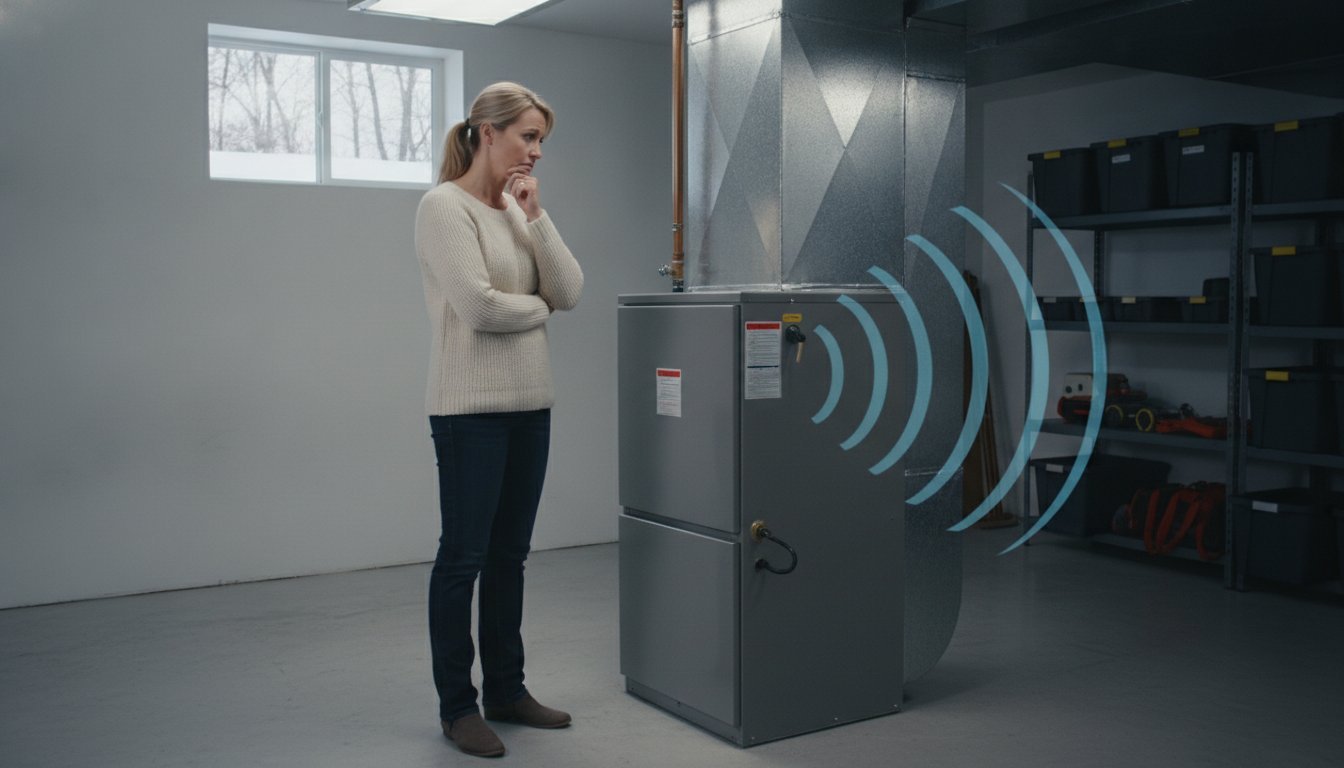
Furnace Making Loud Humming Noise? Troubleshooting Guide for Coon Rapids Homeowners
Imagine it's a typical January night in Coon Rapids, and while the wind howls outside, your home is filled with a constant, vibrating hum that seems to shake the walls. You're likely wondering if your furnace is about to give out just as the temperatures drop below zero. It's incredibly stressful to deal with a noisy system, especially when you're worried about potential repair costs or a total breakdown during a brutal Minnesota freeze. That steady vibration isn't just a distraction; it's often a signal that your heating system is working harder than it should.If you've noticed your furnace making loud humming noise Coon Rapids, you're not alone in wanting a quick and reliable answer. We understand the need for a home that feels both safe and quiet. This guide will help you identify the specific causes behind that sound and help you decide if it's a simple fix or time to call in a local expert. We'll walk through common culprits like failing blower motors, loose transformers, or capacitor issues. By the end, you'll have a clear path toward restoring quiet operation and the peace of mind that your home will stay warm all winter long.
Key Takeaways
Learn how to distinguish between normal operational sounds and a furnace making loud humming noise Coon Rapids that signals a mechanical or electrical issue.Discover the most common causes of humming, such as failing transformers or blower motors that are struggling to keep your home warm.Understand the difference between mechanical friction and electrical resistance to help you accurately describe the problem to a technician.Learn how simple maintenance tasks, like changing a dirty air filter, can sometimes eliminate disruptive vibrations and restore quiet operation.Identify the warning signs that indicate you should skip the DIY steps and call a local professional for a safe and reliable repair.
Table of Contents
Is Your Furnace Humming? Understanding the Noise in Your Coon Rapids Home4 Common Reasons for a Loud Humming FurnaceHumming vs. Buzzing: When Should You Worry?Troubleshooting Your Furnace Noise Before Calling a ProReliable Furnace Repair Services in Coon Rapids and the North Metro
Is Your Furnace Humming? Understanding the Noise in Your Coon Rapids Home
Every Coon Rapids homeowner knows the sound of their furnace kicking on. It's the comforting background noise of a warm house. However, there is a distinct difference between a healthy operational drone and a furnace making loud humming noise Coon Rapids residents shouldn't ignore. While some manufacturers claim all humming is normal, a sudden increase in volume usually points to a component under stress. Understanding how a furnace works helps clarify why these sounds happen. Your system relies on a delicate balance of electrical current and mechanical movement. When that balance shifts, the resulting vibration can travel through your ductwork, turning a small rattle into a loud household nuisance.A loud furnace hum typically indicates an electrical struggle or a mechanical imbalance. If the noise is constant and vibrating, it might be a transformer or a motor reaching the end of its lifespan. These sounds often seem much louder during quiet Coon Rapids nights when the rest of the neighborhood is still. Because the furnace is often attached directly to the home's framing or ductwork, the metal acts like a megaphone. What starts as a minor internal vibration can quickly become a distracting sound that echoes through every room in your house.
The Impact of Minnesota Winters on Heating Systems
Minnesota winters are notoriously unforgiving. When temperatures plummet in the North Metro, your furnace runs for longer cycles with very little rest. This extreme demand accelerates the wear on internal components. In 2026, we've seen weather patterns that push older units to their absolute limit. The constant cycle of metal expanding when hot and contracting when cold can loosen the furnace housing or mounting brackets. This physical stress often leads to the vibrating hum you hear today. Older units in the Twin Cities are particularly susceptible to these structural shifts after years of battling sub-zero stretches.
When a Low Hum Becomes a High-Priority Problem
It's easy to dismiss a new sound as "just part of the house aging," but the shift from background noise to mechanical distress is a warning sign. There is a real psychological toll to hearing your furnace struggle when it's -10°F outside. You shouldn't have to spend your evening wondering if the heat will last through the night. Identifying the problem early in Coon Rapids often saves you from the stress of an emergency breakdown. Catching a failing part now is a proactive way to maintain your peace of mind and ensure your family stays safe and warm regardless of the forecast.
4 Common Reasons for a Loud Humming Furnace
Identifying the source of a furnace making loud humming noise Coon Rapidshomes often experience starts with knowing which parts are most prone to failure. While your heating system has many moving pieces, a distinct hum is almost always tied to electrical components or physical vibration issues. Understanding these common culprits helps you describe the problem more accurately when you need professional help. Here are the four primary reasons your furnace might be making that disruptive sound:Faulty furnace transformers: These are the most common source of electrical humming, especially in older units.Failing blower motors: This is the heart of your system, and a loud hum often means it's struggling to spin.Weak or dead capacitors: These act like a battery to help your motor start up; without them, the motor just sits and hums.Loose ductwork or cabinet panels:Sometimes the noise is just metal vibrating against metal due to loose screws or poor fittings.
Transformer Issues and Electrical Vibrations
A furnace transformer is a vital component that converts 120-volt current into a safer 24-volt current to operate your thermostat and control board. In 2026 HVAC standards, these parts are built for high efficiency, but they can still develop a hum if the internal laminations loosen over time. If you hear a constant, low-pitched buzz that doesn't stop even when the blower shuts off, the transformer is likely the culprit. This typically happens as the part nears the end of its lifespan, signaling that it can no longer handle the electrical load cleanly. It's a small part that can cause a big distraction throughout the house.
Blower Motor and Capacitor Fatigue
The blower motor and capacitor work in tandem to circulate heat through your home. Think of the capacitor as a high-powered battery that gives the motor the "kick" it needs to start spinning. When a capacitor weakens, it can't provide enough torque to get the blades moving. This leaves the motor stuck in a stationary position, drawing power but not spinning, which creates a very loud, distinct hum. You'll often notice a furnace making loud humming noise Coon Rapidsresidents find particularly stressful when they realize no air is actually coming out of the vents. These components often fail during the peak of the Minnesota heating season because they're under constant, heavy stress. If troubleshooting these parts feels overwhelming, our experienced team provides reliable furnace repair to get your system back to quiet operation quickly.Sometimes the noise isn't electrical at all. Because furnaces are made of large metal sheets, even a tiny loose screw can cause a panel to vibrate rapidly against the frame. This physical vibration often mimics a mechanical failure, but it's much easier to solve. You can check for this by gently pressing your hand against different parts of the furnace cabinet while it's running. If the sound stops or changes significantly, you've likely found a simple vibration issue rather than a failing internal part. Ensuring all panels are tight is a great first step in restoring peace and quiet to your mechanical room.
Humming vs. Buzzing: When Should You Worry?
When you hear a new sound coming from your basement, the specific pitch and rhythm tell a story about what is happening inside the cabinet. Homeowners often use the terms humming and buzzing interchangeably, but for a technician, they mean very different things. A low-pitched hum usually relates to mechanical friction or a vibrating transformer. A higher-pitched buzz often indicates electrical resistance, such as a failing relay or a struggling capacitor. Paying close attention to these nuances helps you decide whether you can wait until morning or if you need to shut the system down immediately.The timing of the sound provides another critical clue for diagnosis. If you notice a furnace making loud humming noise Coon Rapids at the very beginning of a heating cycle, the issue is likely tied to the startup components. If the noise only begins after the heat has been running for several minutes, the blower motor or ductwork is the more probable culprit. Mechanical friction noises tend to get louder as the motor heats up, while electrical humming often stays at a constant, steady volume from the moment the power engages.
Normal Operational Sounds in Modern Furnaces
Modern high-efficiency furnaces aren't silent. When your thermostat calls for heat, the first thing you should hear is the inducer motor. This small motor creates a whirring sound as it clears the combustion chamber of any leftover gases. Next, you might hear a series of clicks. These are normal; it's simply the igniter or the gas valve opening to start the burners. Finally, a steady "whoosh" of air movement through your ductwork is the sign of a healthy system. These sounds are predictable and shouldn't cause alarm unless they suddenly change in volume or tone.
Red Flag Noises That Demand Immediate Attention
Some sounds are more than just a nuisance; they are warnings of a potential safety hazard. If you hear a loud buzzing noise accompanied by a faint burning smell, stop the system. This combination often points to an electrical short or a seized motor that is overheating. Heavy vibrating that causes the furnace cabinet to shake is another red flag. This indicates a severe mechanical imbalance that could damage the entire heat exchanger if left unaddressed. Finally, if a steady hum suddenly turns into a high-pitched screech, your motor bearings have likely failed. Shutting the unit off immediately prevents further damage to the internal components and helps keep your repair costs manageable.
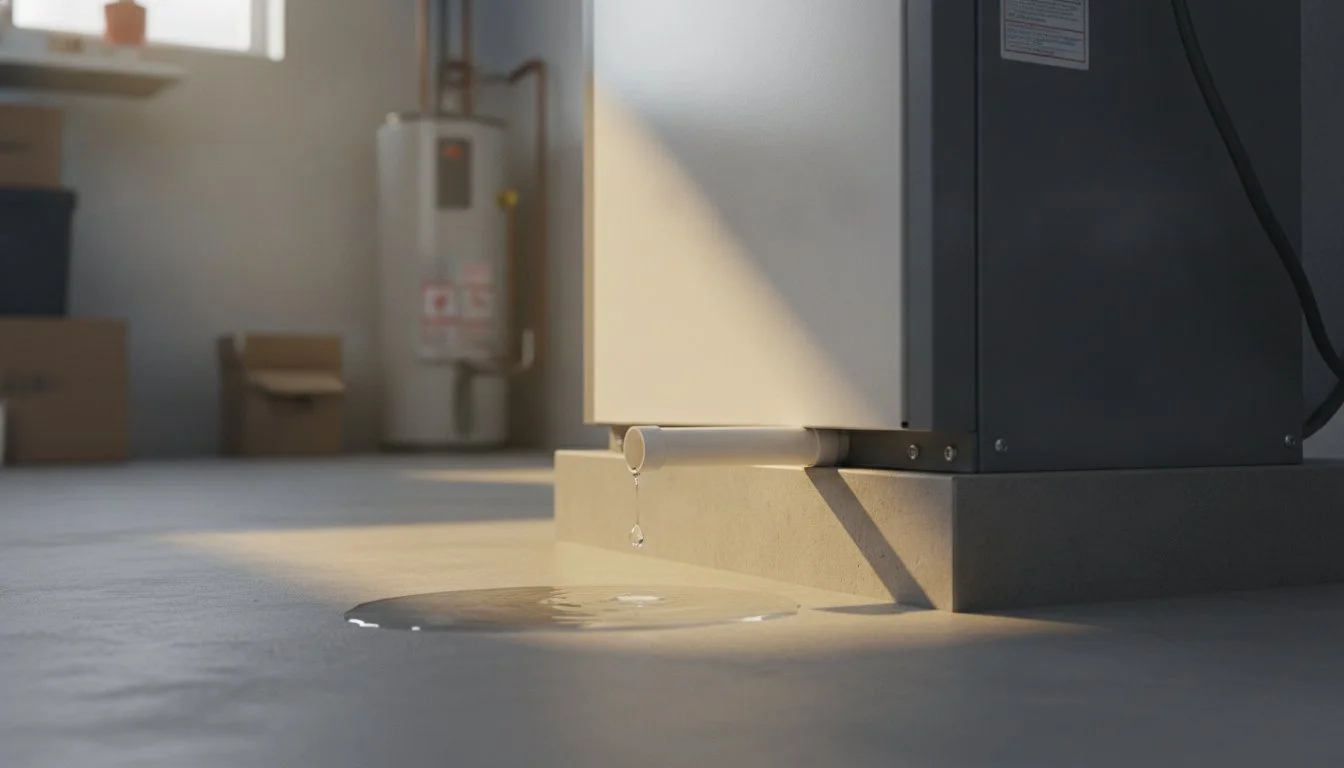
AC Unit Leaking Water in Andover? Causes and Fast Local Fixes
You walk into your utility room on a humid July afternoon only to find a puddle spreading across the floor. If you've discovered your ac unit leaking water Andover, your first instinct is likely a mix of frustration and worry about mold growth or a total system failure. It's stressful to deal with a mechanical issue when the Minnesota heat is at its peak, and you aren't alone in wondering if this means an expensive replacement is on the horizon. Most homeowners feel that same spike of anxiety when they see standing water near their HVAC equipment.
The good news is that many AC leaks are manageable if you catch them early. This guide will help you identify exactly why your air conditioner is leaking and show you how to protect your Andover home from costly water damage. We will walk through the most common causes, from clogged drain lines to frozen coils, and help you decide if it's a simple DIY fix or time to call in a local professional. Our goal is to help you stop the leak quickly and ensure your home stays cool and dry all summer long.
Key Takeaways
Learn how your air conditioner’s condensate system is designed to manage moisture and why this process can fail during a humid Minnesota summer.
Identify the most frequent causes for an ac unit leaking water Andover, including clogged drain lines and frozen evaporator coils.
Discover simple DIY troubleshooting steps you can perform, such as checking for dirty air filters and inspecting the indoor drain pan for sludge.
Understand the serious risks of delaying repairs, from rapid mold growth to permanent damage to your home’s furnace and electrical components.
Find out when it’s time to call a licensed Andover professional to handle complex repairs and protect your utility closet from future water damage.
Table of Contents
Why is My AC Unit Leaking Water? (Immediate Steps for Andover Homeowners)
Finding an ac unit leaking water Andovercan be alarming, but it's helpful to understand that your system is actually designed to create moisture. As your air conditioner cools your home, it also removes humidity from the air. This moisture condenses on the cold evaporator coils, much like sweat on a cold glass of iced tea on a humid day. In a properly functioning system, this water drips into a collection pan and exits your home through a dedicated condensate drain line. Understanding how air conditioning works helps clarify that water itself isn't the problem; it's when that water fails to exit the system correctly that issues arise.
If you see water pooling around your indoor unit, your very first step must be to turn the system off at the thermostat. Don't just turn up the temperature; switch the setting to "Off." This stops the cooling process immediately and prevents more water from being generated. Be extremely careful when inspecting the area. Standing water near your furnace or air handler creates a significant electrical hazard. If the water has reached any electrical outlets or the base of the furnace, do not touch the equipment or step in the puddle. Your safety is more important than the hardware.
Is a Leaking AC Unit an Emergency?
Whether a leak is an emergency depends on the volume and the location. A few slow drips into a floor drain might not be an immediate crisis, but a steady stream can quickly saturate drywall or ruin flooring in a finished Andover basement. Water doesn't stay in one place. It seeps into subflooring and behind baseboards, where mold can begin to grow within 24 to 48 hours. If the leak is accompanied by a hissing sound or visible ice on the copper lines, you likely have a refrigerant leak or a major mechanical failure that requires professional attention before you lose cooling entirely.
The "Turn It Off" Rule
It is tempting to keep the AC running during a hot Minnesota afternoon, but doing so often makes the problem worse. If the leak is caused by a frozen evaporator coil, continuing to run the system will only build more ice. When that ice eventually melts, it will overwhelm your drain pan and flood your utility room. More importantly, an ac unit leaking water Andover can leak directly onto the furnace blower motor or the expensive integrated circuit boards inside your heating system. If you need some relief, you can switch your thermostat to "Fan Only" mode. This keeps air moving through your home without active cooling, which can actually help melt any ice buildup safely while you wait for a technician.
5 Common Causes of Air Conditioner Leaks in Minnesota
If you've discovered your ac unit leaking water Andover, identifying the root cause is the first step toward a dry utility room. In our experience serving the North Metro, most leaks stem from a few predictable mechanical failures. While some are simple fixes, others require technical expertise to prevent long term damage to your home's infrastructure.
Clogged condensate drain lines: This is the most frequent culprit we see in Andover homes. Over time, dust, algae, and sludge build up inside the PVC pipe, forcing water to back up and overflow the internal drain pan.
Frozen evaporator coils: When airflow is restricted, the coils can drop below freezing and turn moisture into ice. Once the unit cycles off, that ice melts rapidly, often overwhelming the drainage system.
Damaged or rusted drain pans: Many older units throughout the Twin Cities use metal drain pans that can corrode over time. Small pinholes or rusted through corners allow water to leak directly onto your furnace.
Disconnected or cracked drain lines:Physical shifts in your home or accidental bumps in the utility closet can cause PVC joints to loosen or crack, leading to water pooling on the floor.
Malfunctioning condensate pumps: If your AC is located in a basement without a floor drain, it likely uses a pump to move water up and out. If the motor fails or the float gets stuck, the reservoir will overflow quickly.
The Role of Andover’s High Summer Humidity
Minnesota humidity forces your AC to work much harder at removing moisture than systems in drier climates. During a typical July heatwave, your unit can produce gallons of water every single day. If your drainage system isn't perfectly clear, this high volume of condensation will quickly find the path of least resistance, which is usually your floor. Andover’s dramatic seasonal shifts mean your drainage cycles go from completely dormant in winter to maximum capacity in summer, which often triggers leaks during the first major heat spike.
Dirty Air Filters and Airflow Blockages
There's a direct link between a dusty filter and a frozen, leaking AC unit. When air can't move over the coils, they get too cold and freeze. This problem is compounded in the North Metro by cottonwood seeds and heavy spring pollen that can clog outdoor units and restrict overall system performance. We've seen many instances where a simple filter change could have prevented a major mess. Regular AC tune-ups are the best way to prevent these common blockages before they lead to the health risks of mold caused by standing water. If you aren't sure when your system was last checked, scheduling a professional AC repair assessment can save you from a much larger headache later this summer.
DIY Troubleshooting: What to Check Before Calling a Pro
Finding an ac unit leaking water Andoverdoesn't always mean you're facing a massive repair bill. Before you request a service visit, there are several simple steps you can take to identify the problem. Many drainage issues are caused by basic maintenance oversights that you can resolve in just a few minutes. Safety remains the priority, so ensure your system is powered down before you begin these checks.
Step 1: Check and replace your air filter.If your filter looks gray, furry, or clogged, it restricts airflow. This causes the evaporator coil to get too cold and freeze. When that ice melts, it creates a leak.
Step 2: Inspect the indoor drain pan. Use a flashlight to look at the pan underneath your indoor coil. Check for visible cracks, rusted out corners, or a thick layer of standing sludge that might be blocking the exit hole.
Step 3: Locate the condensate exit point.Walk around the exterior of your Andover home to find where the PVC drain line ends. It should be dripping water while the AC runs. If it's bone dry despite the leak inside, you have a clog.
Step 4: Verify the condensate pump power. If your system uses a small plastic reservoir pump, make sure it's plugged in and the circuit breaker hasn't tripped. A pump without power will overflow in minutes.
Step 5: Use a wet/dry vac on the exterior line. You can often clear minor clogs by holding a wet/dry vac hose to the end of the outdoor drain pipe for about 30 seconds. This can pull out the "sludge" that is backing up the system.
Inspecting the Condensate Drain Line
The condensate drain line is the white or clear PVC pipe leading away from your indoor AC coil. Over the course of a humid Minnesota summer, algae and mold can grow inside this warm, wet environment. You might see a dark buildup through the walls of the tubing or near the joints. A common maintenance trick is to pour a half cup of distilled white vinegar down the drain line access point once a year. This kills small amounts of algae before they become a blockage. If the line is already completely backed up, however, vinegar won't be enough to clear the obstruction.
When to Stop and Call C&M Heating and Air
Quick action is vital because the dangers of water damage include rapid mold growth and degraded indoor air quality. If you hear hissing or bubbling sounds coming from your unit, the leak is likely caused by low refrigerant levels rather than a simple clog. This is a technical issue that requires specialized tools and licensing. Additionally, if you see water bypassing the drain pan and leaking directly into your furnace cabinet, you risk shorting out the blower motor or control board. Persistent leaks that return after you've cleared the line require a professional air conditioning repairassessment to find the underlying mechanical fault.
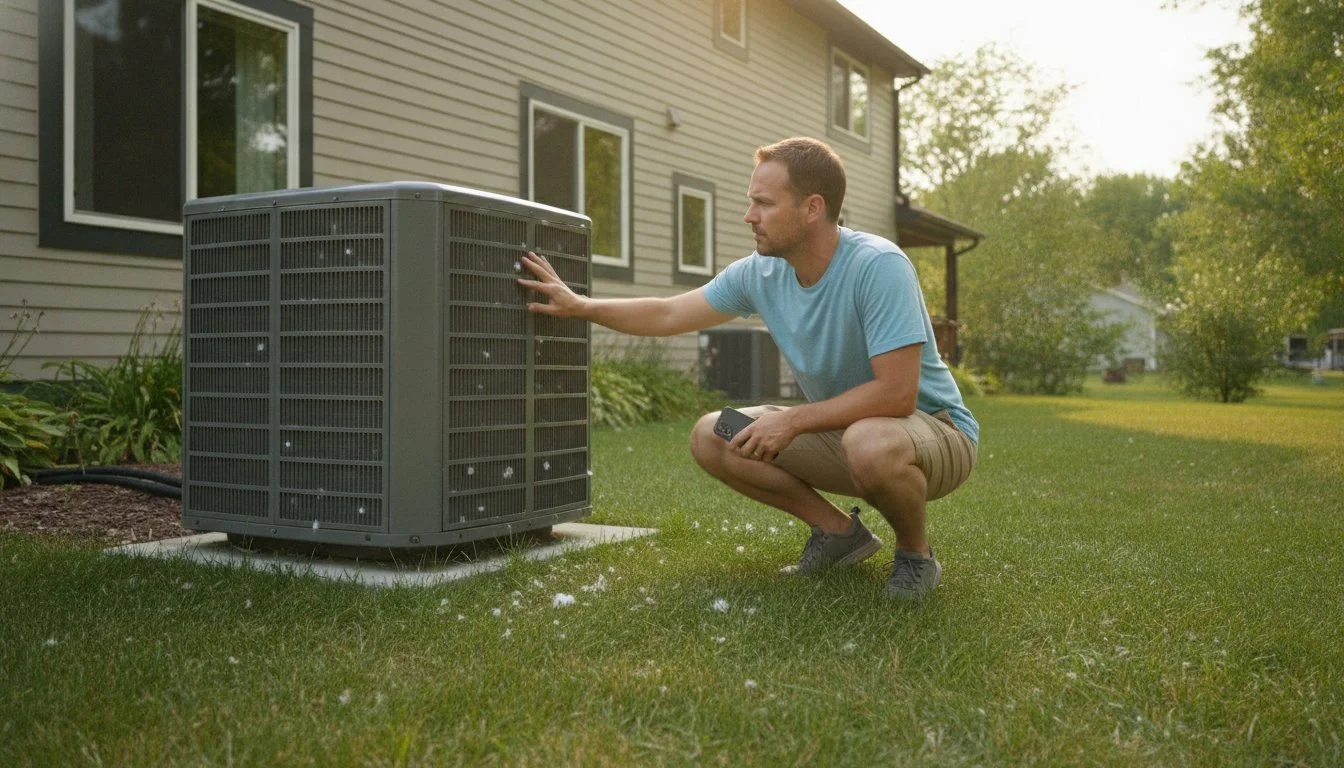
Air Conditioner Not Turning On in Blaine? Troubleshooting & Local Repair Guide
You walk through the front door after a humid afternoon at Lakeside Commons Park, expecting a blast of cool air, but instead, you're met with a wall of stagnant heat. You check the thermostat, nudge the settings, and wait, but there's only silence. Dealing with an air conditioner not turning on Blainehomeowners often experience is a frustrating event that instantly brings up fears of expensive compressor replacements or long, sticky nights without sleep.
We understand how vital a cool home is for your family's comfort and peace of mind. It's natural to feel uncertain about whether you're facing a simple tripped breaker or a complex mechanical failure. The good news is that many cooling issues have straightforward solutions you can verify yourself. This guide will help you identify the common culprits behind a silent AC unit before you decide to call for professional backup. We'll walk through the quick fixes you can try today, explain the local requirements for repairs in our community, and show you how better maintenance leads to lower energy bills.
Key Takeaways
Perform simple DIY checks on your thermostat and electrical panel to rule out easy fixes before you schedule a repair.
Learn why an air conditioner not turning on Blaine residents often experience could be a simple electrical fix or a common mechanical failure.
Discover how local environmental factors, including Blaine's "cottonwood season," can cause system clogs and reduced cooling efficiency.
Recognize the critical warning signs, such as unusual smells or noises, that signal it's time to bring in a professional HVAC technician.
Find out how a family-owned expert with over 40 years of local experience provides the reliable service your North Metro home deserves.
Table of Contents
AC Not Turning On in Blaine? Start With These 5 Quick DIY Checks
Understanding Why Your Air Conditioner Won’t Start: Common Mechanical Failures
Blaine-Specific AC Challenges: From Cottonwood Clogs to Power Surges
Reliable Air Conditioning Repair for Blaine Homeowners: The C&M Difference
AC Not Turning On in Blaine? Start With These 5 Quick DIY Checks
Dealing with an air conditioner not turning on Blaine homes often face is a stressful experience, especially when the humidity spikes. Before you assume the worst, there are five critical areas you can inspect yourself. These checks often save homeowners the cost of a service visit for what turns out to be a minor oversight. It's about ruling out the simple stuff first so you can get back to a comfortable home as quickly as possible.
The Thermostat: More Than Just Batteries
Many newer homes in the North Metro use smart thermostats that rely on a constant 24-volt power supply from the furnace. If your screen is blank, it doesn't always mean the batteries are dead; it often indicates the indoor unit has lost power entirely. Check if your system is actually set to "Cool" rather than "Heat" or "Auto," as seasonal transitions in Minnesota can lead to incorrect settings. Keep in mind that most systems have a built-in five-minute delay to protect the compressor. If you just adjusted the temperature, give it a few minutes to engage. To test for an immediate response, try setting the temperature five degrees below the current room reading and ensure the "Hold" or "Manual" mode is active to bypass any existing schedules.
Electrical Breakers and Disconnects
During a heavy Blaine heatwave, your system works harder to maintain indoor comfort. This increased load can cause the system to over-amp and trip the circuit breaker. Locate your main electrical panel and look for a switch that is slightly out of alignment with the others. To properly reset it, you must flip it to the full "OFF" position before clicking it back to "ON." Additionally, check the outdoor disconnect box located near your condenser unit. This box contains either a toggle switch or a pull-out handle that serves as a safety shut-off. If this was bumped during yard work or left off after a previous maintenance visit, your system won't receive the power it needs to start.
Your Heating, ventilation, and air conditioning (HVAC) system is designed with safety sensors that prevent operation under certain conditions. A clogged air filter restricts airflow so severely that the system may shut down to prevent the evaporator coil from freezing. Similarly, if your condensate drain line is blocked by algae or debris, the drain pan will fill with water. This triggers a float switch that cuts power to the unit to prevent water damage to your home. Ensure your filter is clean and the drain pan is empty before concluding that the system is broken.
Understanding Why Your Air Conditioner Won’t Start: Common Mechanical Failures
If your initial DIY checks didn't bring the system back to life, the problem likely sits within the mechanical or electrical components of the unit itself. When dealing with an air conditioner not turning on Blaine homeowners often find that the extreme temperature swings of the North Metro put significant stress on internal parts. These components are designed to last for years, but they eventually succumb to wear and tear. Identifying the specific sound or symptom can help you understand what's happening inside the cabinet before a technician arrives.
The Role of the Capacitor
The capacitor is arguably the most common culprit behind a silent AC unit. Think of it as a heavy-duty battery boost that provides the massive jolt of energy needed to kickstart the compressor and fan motors. Without this "start" or "run" energy, the motors simply cannot overcome their own resting state. You can often spot a failed capacitor by looking for a bulging or "swollen" top, or by noticing oily residue leaking from the silver canister. Capacitors are high-voltage components and should not be handled by DIYers. While maintaining your air conditioner through regular cleaning can reduce the heat that kills these parts, they remain a frequent repair item during our humid Minnesota summers.
Contactors and Electrical Relays
Your system's contactor acts as the physical bridge between your low-voltage thermostat and the high-voltage power required by the outdoor unit. When the thermostat calls for cooling, a small magnetic coil pulls the contactor shut to complete the circuit. Over time, the silver coating on these electrical "points" can wear down, a process known as pitting. This creates a poor connection or causes the points to weld shut. If you hear a distinct "clicking" sound followed by total silence when you turn the AC on, the contactor is likely trying to engage but failing to pass the necessary current. If you suspect an electrical failure, scheduling a professional air conditioning repair is the safest way to diagnose the issue.
Beyond electrical parts, safety "lockouts" are a common reason for a system refusal to start. Most modern units feature high and low-pressure switches. If a refrigerant leak has caused your pressure to drop below a safe threshold, these switches will cut power to the compressor to prevent it from burning out. Similarly, if the outside unit runs but you hear nothing from your basement or utility closet, the blower motor in your furnace or air handler may have failed. This prevents cool air from circulating through your vents, even if the outdoor unit is technically "working."
Humming sound: Often indicates a seized motor or a failed capacitor.
No sound at all: Suggests a total loss of power or a triggered safety lockout.
Rapid clicking: Usually points to a failing contactor or a low-voltage electrical issue.
Understanding these mechanical failures helps demystify why your system has suddenly stopped. While these parts aren't user-serviceable, knowing the symptoms allows you to provide better information to your repair team, leading to a faster and more accurate fix.
Blaine-Specific AC Challenges: From Cottonwood Clogs to Power Surges
While mechanical wear is a factor for any cooling system, Blaine presents a specific set of environmental hurdles that can lead to a sudden system failure. If you are currently facing an air conditioner not turning on Blaine's local climate and unique foliage might be the hidden culprits behind the silence. Understanding how our North Metro surroundings affect your equipment helps you troubleshoot more effectively and prevent future breakdowns.
The Cottonwood Seed Problem
Blaine is home to a high concentration of cottonwood trees that release massive amounts of white, fluffy seeds every June. These seeds are naturally drawn toward your outdoor condenser unit by the pull of its powerful fan. Once inside, they cling to the aluminum fins, creating a thick, felt-like blanket that prevents the system from releasing heat into the outside air. When heat exchange is blocked, the internal pressure and temperature of the compressor rise rapidly, eventually triggering a thermal overload switch that shuts the unit down to prevent permanent damage. Check your outdoor unit for "white fuzz" on the metal fins before calling for a professional repair.
North Metro Humidity and Drain Lines
The North Metro frequently experiences humidity levels above 90% during the peak of summer. To maintain a comfortable indoor environment, your system must remove gallons of water from the air every single day. This moisture collects in a drain pan and flows out through a PVC condensate line. Algae and household dust can easily clog these lines in a typical Blaine basement or utility closet. When the water has nowhere to go, a safety float switch will trip and cut power to the entire system to prevent a flood. Understanding these common AC problems can help you spot a simple drainage issue before it becomes a household crisis. For more localized advice, you can also view our Andover DIY Guide for cleaning coils.
Beyond natural factors, local grid stability and neighborhood growth play a role. Summer storms across the Twin Cities often cause power surges or "brownouts" that can scramble the control boards of modern, high-efficiency units. If a storm just moved through Anoka County and your AC won't start, a simple reset at the breaker might be all it needs. Additionally, in developing parts of Blaine, fine dust from new construction projects can quickly bypass standard filters and coat your indoor evaporator coil. This silt buildup restricts airflow and can lead to the same air conditioner not turning on Blaine homeowners see when their systems are neglected. Keeping a close eye on these local variables ensures your home stays cool regardless of what's happening outside.